

After securing an 81-37 win over Verdugo Hills at home to start the season, Valencia girls’ basketball defeated Granada Hills Charter on Thursday and began the year with back-to-back wins. The Vikings defeated the Highlanders 69-26, with sophomore guard Kamila Basyrova leading all Valencia scorers with 21 points “I thought it was great to see our progress from game one to game two. I thought our defense was really standout today, especially in the first half,” Valencia head coach Jared Honig said. “I felt like we gave up a little but to many points in the first game, but tonight’s first-half defense was outstanding.” Basyrova and Cara Mckell had six steals combined in the win and were defensive anchors for their team as both players were playing full court press defense all four quarters despite the big lead Valencia held throughout the game. And junior Keira McLaughlin earned praise from her head coach after the game as not only was she tied for second in most points scored in the game with 13 but also had two blocks along with stops on defense that led to scoring possessions for Valencia. “I told her she has to be aggressive today because we knew they were going to try to implement a triangle in two, and she’s lethal out there,” Honig said. “They want to take away those two, well, now you’re leaving other people open. So, we just had to capitalize on that. And she’s outstanding. So, she mixed it up inside, hit the outside shot, get everyone involved.” During the first quarter, that aggressiveness that Honig stated was on display as McLaughlin blocked a Highlanders shot and in the following series, the Vikings capitalized off the turnover with a 3-pointer. In total, seven different Vikings scored in the win, and the ball was getting passed around to anyone that stepped on the court as the Basyrova and Mckell duo combined for eight assists. Freshman guard Sophia Sarkar also dished out three assists in the game as well as scored eight points in Thursday’s night win. With the win, Honig has his team right where the Vikings left off last season as Valencia won four out of their last five alongside an appearance in the Division 1 playoffs. And the competition is exactly where he wants his team as the competition is expected to get tougher for Valencia as the team wants to be ready for when the Foothill League season begins. “We have Brentwood next, and they’re one of the top teams in the state. We have Moorpark out in a Showcase than we have Redondo Union, who’s also supposed to be like D1 pushing for open division,” Honig said. “So, two out of the next three are against some of the top dogs. So, we’ll see how we measure up against those teams.” The Vikings play again on Saturday on the road against Brentwood with tip-off scheduled for 7 p. m.
https://signalscv.com/2025/11/valencia-girls-basketball-begins-season-with-back-to-back-wins/
Monthly Archives: November 2025

Fonda-Fultonville CSD pool closes indefinitely
The pool at the Fonda-Fultonville Central School District is closed for an “unidentified amount of time” due to a heater pump issue, the district announced on Wednesday.
https://www.news10.com/news/montgomery-county/fonda-fultonville-csd-pool-closes-indefinitely/


Endemic Fraud in Minnesota’s Somali Community Is an Issue; but the Problem Doesn’t Involve Illegals
President Trump took to Truth Social on Friday to lash out at the reports about Somali remittances from the United States funding the ongoing civil war in Somalia; see Minnesota Fraud Feeding Terror: Autism, Meals Scams Bankroll Al-Shabaab RedState. Minnesota, under Governor Waltz, is a hub of fraudulent money laundering activity. I am, as President of the United States, hereby terminating, effective immediately, the Temporary Protected Status (TPS Program) for Somalis in Minnesota. Somali gangs are terrorizing the people of that great State, and BILLIONS of Dollars are missing. Send them back to where they came from. It’s OVER! President DJT My colleague, Rusty Weiss, has more on the depth and breadth of fraud coming from one immigrant community. Unfortunately, the President’s announcement is not going to come close to solving the problem. The Somali population in Minnesota is about 86, 000. It is concentrated in the Twin Cities area, and dates from the early 1990s, and the refugee stream from the civil war that resulted in our military involvement and the Black Hawk Down incident; see Operation GOTHIC SERPENT. October 3-4, 1993 RedState. That Somalia civil war is not to be confused with the current one. More importantly, the majority, 58 percent, were born in the United States. The remaining 42 percent were born in Somalia, and most of them are naturalized U. S. citizens. The Temporary Protected Status for Somalis ends on March 17, 2026, unless otherwise extended. Work authorization expired on September 17, 2025. Of the non-resident Somalis in the United States, only 705 are here under TPS. Don’t get me wrong, I’m all for ending TPS for most nationalities, but let’s not pretend that canceling it for Somalis will have any measurable impact on fraud and support for terrorism. In short, revoking TPS for Somalis will reduce the number of Somali immigrants by a fraction of a percent, assuming the case is adjudicated before TPS naturally expires, and there is no evidence that the fraud originating in Minnesota’s Somali community is by non-U. S. citizens. The most recent arrest for “material support of terrorism” was a 23-year-old Somali who was a naturalized citizen. I suspect that U. S. citizens, not Somali nationals, led the massive $250 million ripoff of the Feeding Our Future program. Likewise, the $14+ million “autism” scam seems to have been led by a U. S. citizen. The problem, as I see it, is multidimensional. The core problem was the decision to settle a large number of Third (if that) World refugees in a fairly homogenous community. That resettlement achieved a critical mass that allowed the Somalis to avoid assimilation, see any speech by Democrat Representative Ilhan Omar (MN-05) if you need evidence. It also allowed the implantation of Somali culture into the United States. For instance, the recent election for mayor of Minneapolis hinged on the Somali clan identity of one of the candidates; see We’re Doomed. Omar Fateh Lost the Minneapolis Mayor’s Race Because He Lost the Loyalty of Somali Clans RedState. Part of that culture sees outsiders as fat sheep to be fleeced. The idea of “outsiders” leaves no one safe. Me and my clan against the world; Me and my family against my clan; Me and my brother against my family; Me against my brother. -The hierarchy of priorities, as ordered by a Somali proverb From Me Against My Brother; At War in Somalia, Sudan and Rwanda; by Scott Peterson. A free online PDF of the book is at this link; the quote can be found on page 27. Small wonder that grants that are part of a high-trust society are pillaged for the benefit of family and self. And if part of that family is in a terrorist group back home, who cares? The second part of the problem is that theft and corruption on this scale can’t exist without the authorities’ knowledge. Christopher Rufo acknowledges that in his epic expose of Somali corruption. David Gaither, a former Minnesota state senator and a nonprofit leader] believes the mainstream media, alongside Minnesota’s Democratic establishment, have long turned a blind eye to fraud within the Somali community. This, in turn, allowed the problem to metastasize. “The media does not want to put a light on this,” Gaither said. “And if you’re a politician, it’s a significant disadvantage for you to alienate the Somali community. If you don’t win the Somali community, you can’t win Minneapolis. And if you don’t win Minneapolis, you can’t win the state. End of story.” As if to prove the point, here is a thoroughly stump-broke Minneapolis Police Chief Brian O’Hara apologizing to the Somali community for doing his job. Not to put too fine a point on it, there is a massive dose of Whtle liberal guilt at work. If you see the Somalis as downtrodden “POC,” victimized by “systemic racism,” you’re not very likely to make yourself part of a government you hate by reporting blatant fraud to the police. It is estimated that 30, 000 women and girls in Minnesota have undergone female genital mutilation, despite it being a felony. Undoubtedly, some of those were sent back to Somalia for the festivities, but common sense tells you that if a majority of Somali women have had the procedure, there is a thriving underground community of “reproductive health” providers. Part of the solution is to shut down the refugee flow so the Somali community distances itself from the “old country.” Another vital part of the solution is a comprehensive audit followed by the firing and selected imprisonment of government and non-profit officials who knew, or should have known, what was going on and did nothing. Some consideration should be given, where possible, to denaturalizing people involved in this fraud. I’d think that most naturalized citizens supporting the al-Shabaab terror group could lose citizenship just as easily as Nazi death camp guards did. Perhaps the problem will go away, but I wouldn’t bet on it. The only way it ends is with fearless enforcement of the law and the same type of federal scrutiny that crushed the Sicilian Mafia.
https://redstate.com/streiff/2025/11/22/endemic-fraud-in-minnesotas-somali-community-is-an-issue-but-the-problem-doesnt-involve-illegals-n2196469


Man arrested in Battle Creek after allegedly threatening woman with AR-15 rifle
BATTLE CREEK, MI A man was arrested in Battle Creek this weekend after allegedly threatening a woman with a rifle and assaulting her. Officers were called to the scene of the incident after 3 a. m. on Saturday, Nov. 22, following a report of a man holding an AR-15 rifle in the 20th block of South 23rd Street, according to a news release. As officers made their way to the area, they were notified by dispatch that individuals were leaving the scene in a sports car. Officers stopped the vehicle and determined that the occupants were not involved in the incident, police said. After arriving at the scene, officers spoke with the suspect and the caller who reported the incident. A woman told police the suspect threatened her with the weapon and pushed her face. The 27-year-old woman also claimed she was attacked by two women, one of whom hit her with a liquor bottle. The other woman is accused of firing multiple shots from a handgun that hit the alleged victim’s vehicle, police said. Officers attempted to track down the two women accused of attacking the alleged victim but were unsuccessful. Police eventually located the AR-15 allegedly used in the incident concealed in a trash can on South 24th Street, and the 31-year-old man accused of threatening and attacking the woman was arrested on felony assault and felony weapons charges. The suspect also had multiple outstanding warrants, police said. The alleged victim was evaluated by LifeCare Ambulance, but she did not sustain any visible injuries, according to police. In addition to LifeCare Ambulance, the Battle Creek Police Department was assisted by the Calhoun County Sheriff’s Office.
https://www.mlive.com/news/kalamazoo/2025/11/man-arrested-in-battle-creek-after-allegedly-threatening-woman-with-ar-15-rifle.html

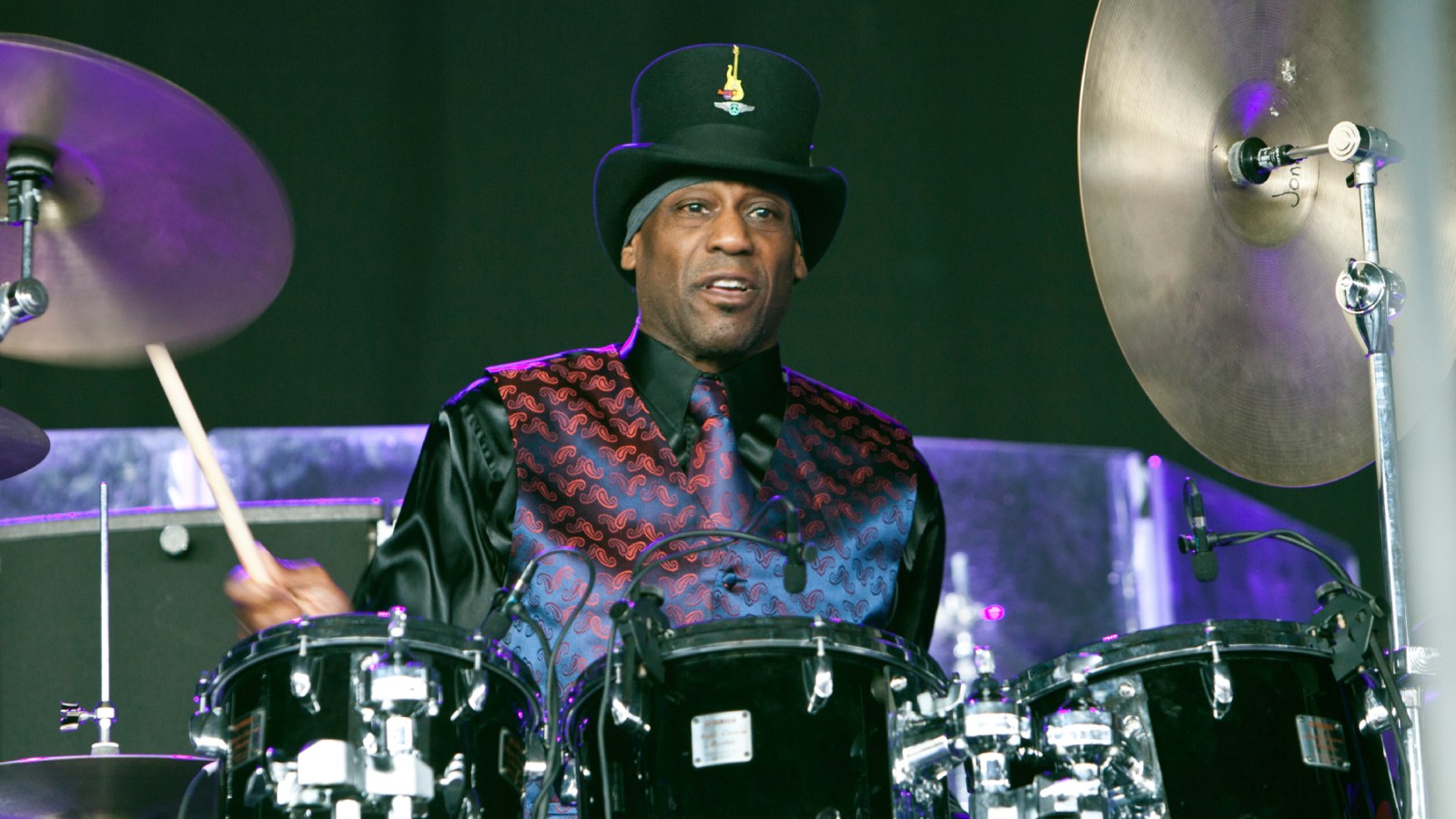
Jellybean Johnson, the Time Musician and a Pioneer of the Minneapolis Sound, Dead at 69
Jellybean Johnson one of the pioneers of the Minneapolis Sound, the original and only drummer for the Time, and multi-instrumentalist/producer died on Friday, Nov. 21. He was 69. No cause of death has been disclosed. His death was confirmed by his friend and bandmate Morris Day, lead singer of Morris Day and the Time, which was also later known as the Original 7ven. “Jellybean was a friend of mine since the age of 11 years old,” Day said in a statement to Rolling Stone. “He wasn’t just a bandmate, he was more like a brother to me. As one of the original members of the Time, Bean was a consummate musician. All he ever wanted to do was play and talk music. Even after our concerts, he would find a local pub, get on stage, and Jam with the house band. I’m certain he’s up in heaven now with Prince assembling an All-Star lineup of some of the baddest musicians to ever do it. Bean will forever be missed.” “With a heavy heart my dear friend Jellybean passed away a couple of hours ago. We are devastated by this news,” Sheila E., his longtime friend and collaborator wrote on social media on Friday. In her post, she said she first met Johnson in 1981 or 1982 while on tour with Prince. She added, “He was a kind human being, extremely talented and funny. He had a great sense of humor and was an awesome guitar player. Yesterday was your birthday, I forgot to call you and I’m so sorry. I loveu Bean. Rest in peace and power.” Jellybean Johnson was born Garry George Johnson in Chicago on Nov. 19, 1956. His family moved to Minneapolis when he was age 13. There, his mother bought him his first drum kit and he also taught himself to play guitar. He soon befriended others in his North Minneapolis neighborhood who shared his love of music, including Jimmy Jam, Terry Lewis, Morris Day, and Prince. “We would have this huge festival in the summertime and all the rival bands and neighboring bands would come and play in front of thousands of people,” Johnson told Fox 9 in 2021. “So we cut our teeth doing that as youngsters.” Editor’s picks After Prince scored his first record deal with Warner Bros. at age 18, he recruited his friends, which included Johnson, and appointed him the drummer for the Prince-created band the Time. Several of the Time members came from the already existing funk band Flyte Tyme, which included Johnson, Jimmy Jam and Terry Lewis, Anton Johnson, David Eiland, and Monte Moir. Prince expanded the Time to include Day and Jerome Benton, replacing the band’s original singer, Alexander O’Neal. “Prince told Morris, ‘You go back and get Jellybean and we’ll do the band and you’re gonna sing,’” Jellybean told Fox. “And Morris was like, ‘I don’t want to sing, I want to play the drums.’ And he was like, ‘No, I’ll teach you.’” Their musical approach defined the Minneapolis Sound. The funk-rock and R&B style that blended components of new wave and synth-pop into the mix ruled the Eighties charts and continues to heavily influence pop music today. The Time featured prominently in Prince’s 1984 blockbuster Purple Rain. However, there was tension brewing before the movie was released, with Jam, Lewis, and Moir’s departure before Purple Rain filming commenced. And after three albums, which primarily featured Day and Prince’s work, the Time broke up shortly thereafter. After the Time split up, Johnson joined the short-lived Prince-affiliated the Family, which released a self-titled album in 1985 before dissolving. Johnson then turned to producing, songwriting, and serving as a session musician, re-teaming with Jam and Tems at Flyte Tyme Productions on a number of projects. Among his work with Jams and Tems, he co-wrote and played on his former Flyte Tyme bandmate O’Neal’s 1987 “Criticize” single, co-produced songs on New Edition’s 1988 album Heart Break, and produced Janet Jackson’s “Black Cat” from her fourth studio album, 1989’s Rhythm Nation 1814. Related Content In 1990, the Time’s original seven members reunited for Graffiti Bridge and the Time album Pandemonium. Johnson continued to produce and work as a session musician, as well as hit the road with Day and the Time. From 2003 to 2012, he also toured as a guitarist with Chicago bluesman Ronnie Baker Brooks. Trending Stories In 2021 at age 64, Johnson released his long-gestating debut album, Get Experienced, under the name Jellybean Johnson Experience, which features his guitar work. He completed it during the Covid pandemic shutdown.
https://www.rollingstone.com/music/music-news/jellybean-johnson-the-time-prince-dead-obituary-1235471010/

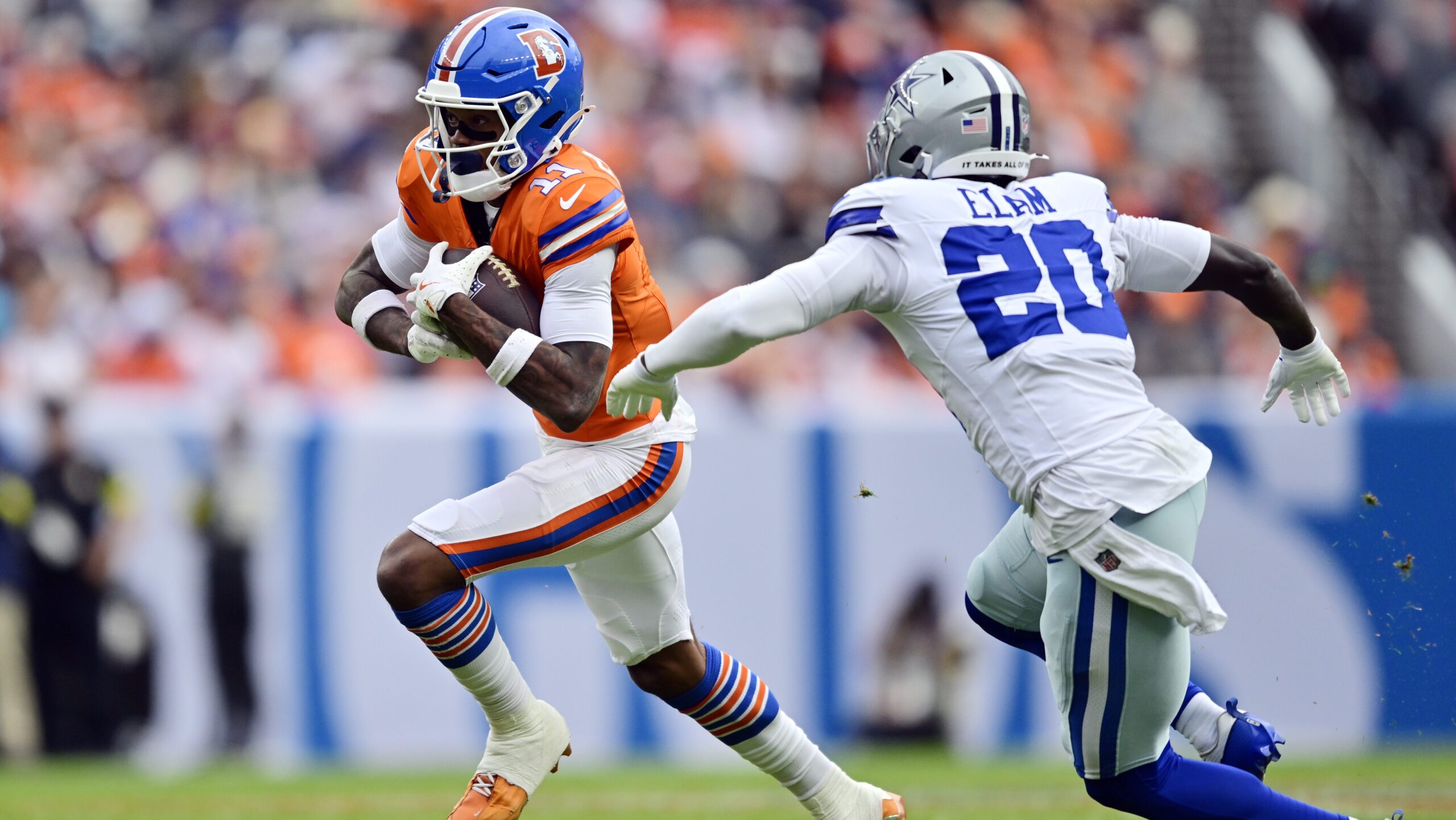
Cowboys Cut Ties with Former 1st Round Pick Cornerback
The Dallas Cowboys earned a much-needed win over the Las Vegas Raiders in Week 11, keeping their dim playoff hopes alive for at least one more week. If they really want to give themselves a shot at finding their way into the postseason, taking down the Philadelphia Eagles in Week 12 would certainly help their cause. For much of the season, the Cowboys have been piecing things together on the defensive side of the ball, particularly when it comes to their secondary. One guy who has been helping out on the backside of the defense was former first-round cornerback Kaiir Elam, but his time with the team came to an abrupt end on Saturday afternoon. Cowboys Release Kaiir Elam Before Week 12 Meeting with Eagles Entering the season, the Cowboys were hoping to be able to rely on their top duo of Trevon Diggs and DaRon Bland at cornerback, but injuries have once again limited their time together on the field. Diggs is currently on injured reserve with a concussion, while Bland missed a pair of games earlier in the season due to a foot injury. With Diggs and Bland in and out of the lineup, Elam took on a bigger role in the secondary. The No. 23 overall pick in the 2022 NFL Draft, Elam was traded to Dallas from the Buffalo Bills over the offseason after he struggled mightily early in his career. Unfortunately, those struggles continued with the Cowboys. Elam suited up for all 10 of Dallas’ games this season, racking up 29 tackles and a pass deflection. His coverage numbers were still awful, though, as he allowed a passer rating of 105. 0 when he was the closest defender in coverage. With Bland healthy and Caelen Carson and Reddy Steward earning more snaps, the front office decided to cut Elam before their upcoming matchup in order to open up a roster spot for running back Malik Davis. “The Cowboys waived CB Kaiir Elam and signed RB Malik Davis from the practice squad,” Tom Pelissero of NFL Network shared in a post on X. Cowboys Looking to Get Revenge vs. Eagles After Week 1 Loss While Elam continued to earn snaps for the Cowboys, it was more due to a lack of available options. Since entering the NFL, the young cornerback has been unable to hold up in coverage, which is why he’s looking for a new home once again after getting traded just a couple of months ago. Another team could look to take a flier on Elam, but his tape simply is not good, and it’s fair to wonder what the future holds for him. In the meantime, Dallas will continue putting the final touches on its preparations for its upcoming matchup with Philadelphia. After suffering a hard-fought 24-20 loss to the Eagles back in Week 1, the Cowboys will be eager to get some revenge, and a win here may be the only shot they have at salvaging their season. Kickoff for this highly anticipated divisional matchup is scheduled for 4: 25 p. m. ET on Sunday afternoon.
https://heavy.com/sports/nfl/dallas-cowboys/kaiir-elam-waived-cut/

Colleen Hoover’s ‘Regretting You’ Is New On Streaming This Week, Report Says
The romantic drama Regretting You, starring Allison Williams, Mckenna Grace, Mason Thames and Dave Franco, is reportedly coming to digital streaming this week. Directed by Josh Boone (The Fault in Our Stars), Regretting You is based on the bestselling book of the same name by Colleen Hoover (It Ends with Us). The film also stars Scott Eastwood, Sam Morelos, Willa Fitzgerald and Clancy Brown. Forbes‘Wicked: For Good’ Eyes $151 Million Opening At Weekend Box Office After Huge Take In Previews Regretting You opened in theaters on Oct. 24. The official summary for the film partially reads, Regretting You introduces audiences to Morgan Grant (Williams) and her daughter Clara (Grace) as they explore what’s left behind after a devastating accident reveals a shocking betrayal and forces them to confront family secrets, redefine love, and rediscover each other. 25, When to Stream recently reported. While the streaming tracker is typically accurate with its PVOD reports, the release date for Regretting You has not been announced or confirmed by the film’s studio, Paramount Pictures, and it is subject to change. ForbesPhotos: Stars Attending Oscars’ 2025 Governors Awards Ceremony When Regretting You becomes available on PVOD, it will be available for digital purchase or rental on such platforms as Apple TV, Fandango at Home, Prime Video and YouTube. Currently, Prime Video has the film available for pre-order for purchase for $19. 99. Since digital rentals are generally $5 less, viewers can expect to rent Regretting You on PVOD for 48 hours for $14. 99. Josh Boone Says A Film Like ‘Regretting You’ Is In His ‘Wheelhouse’ In an interview with Entertainment Weekly in July, Regretting You director Josh Boone noted how the film fit his sensibilities as a filmmaker. “I’d say it’s a romantic drama, one that has levity and humor,” Boone told EW. “You’ll laugh the whole time as well as cry, hopefully, all that. But it’s in the same ballpark as Stuck in Love and The Fault in Our Stars, very much in my wheelhouse.” ForbesIs Wait Too Long For ‘KPop Demon Hunters’ Dolls? Here Are Some Alternatives Boone also told the publication that he was thrilled for the opportunity to make a human drama for the big screen. “There are so few movies that come out in theaters nowadays that aren’t big spectacle movies, and it seems really special to get a grounded human drama in a movie theater that’s great for moms and daughters to go see together,” Boone told EW. Rated PG-13, Regretting You is expected to debut on PVOD on Tuesday.
https://bitcoinethereumnews.com/finance/colleen-hoovers-regretting-you-is-new-on-streaming-this-week-report-says/

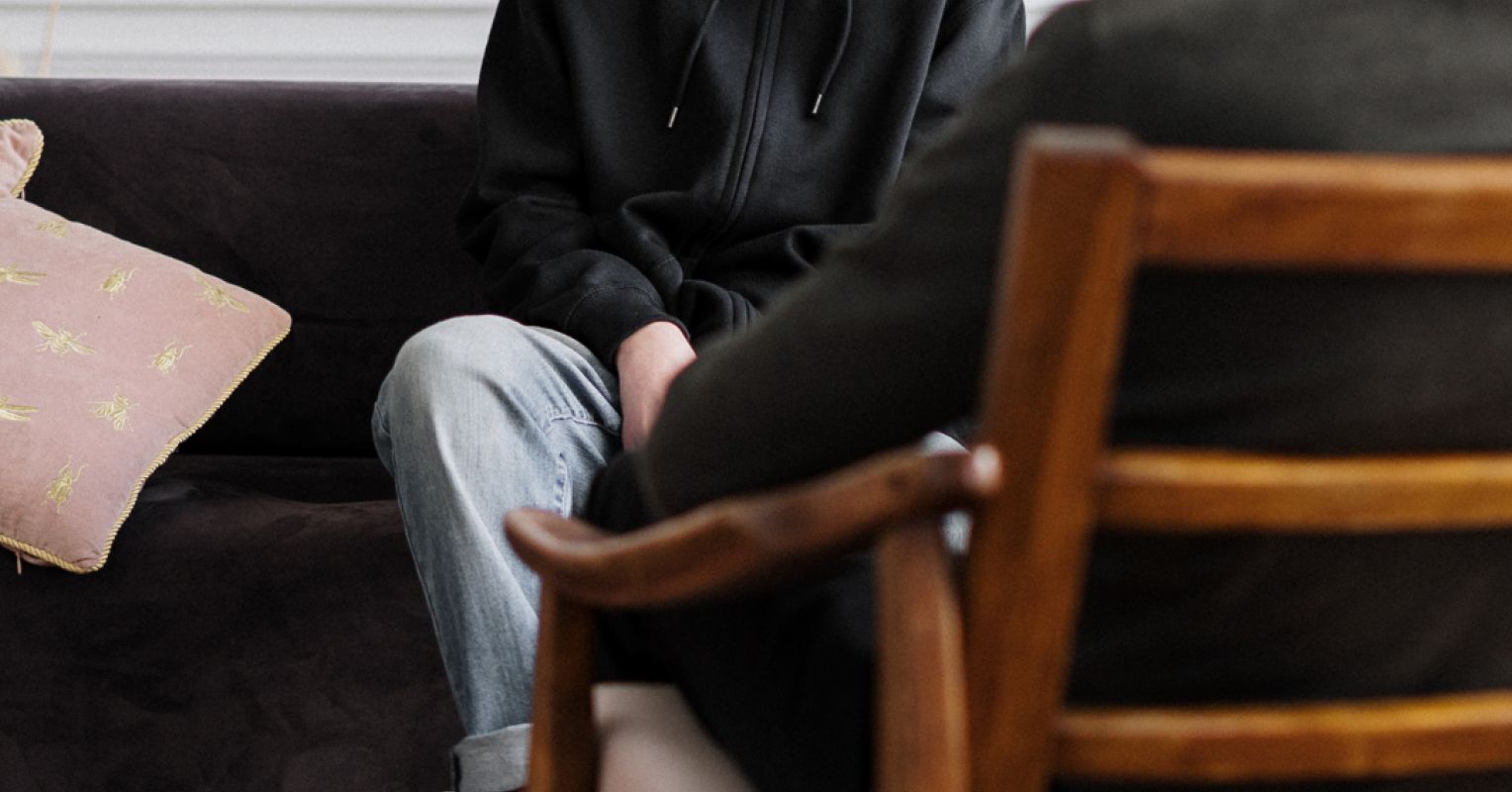
Is Your Child’s Behavior Actually a Sign of Neuroinflammation?
Our children are sitting in therapy offices with inflamed brains. Psychiatrists are prescribing medications for immune-driven symptoms. Parents are being counseled on behavior while their child’s immune system attacks the brain. This is not rare. This is systematic. The mental health system is structurally designed to miss neuroimmune disease, not because clinicians are incompetent, but because the diagnostic framework itself cannot see what it was never built to recognize. Every intake form, every assessment protocol, every treatment algorithm moves a child with brain inflammation directly into psychiatric care without ever asking if the brain itself is diseased. For example, a mother brings her 12-year-old daughter for a psychiatric evaluation. The intake focuses on family stressors, school functioning, trauma history, mood patterns, and behavioral challenges. What the therapist does not ask is equally important. No one asks whether she was recently sick. No one asks about tick exposure, sudden cognitive slowing, episodes where she seems disconnected, or rages that look panicked rather than oppositional. No one asks whether symptoms shift dramatically from one day to the next in ways that do not fit any psychological pattern. Or if there are significant fluctuating changes after she gets sick. This is not due to incompetence. The standard intake form does not include these questions. The diagnostic model does not recognize these clues. The child has a neuroimmune disorder. The intake will not uncover it. Psychiatric treatment starts. Her condition worsens. And because no one is trained to consider brain inflammation, no one identifies the true cause. How the System Misses Neuroimmune Root Causes The mental health system is structurally incapable of recognizing neuroimmune disease. Psychiatrists are trained in psychopharmacology, not immunology. Therapists are trained to observe symptoms from a psychological perspective, not infectious disease. We operate in separate domains. A child with brain inflammation falls through the gaps. Our diagnostic categories describe phenomenology, not causation (Insel, 2013). “Major depressive disorder” tells us about symptoms, nothing about whether those symptoms originate from monoamine deficiency, hypothyroidism, or brain inflammation. We treat the category without investigating the mechanism. Before psychiatric diagnosis, we should rule out five critical neurological root causes (Gertel Kraybill, 2020): underlying infections (including PANS/PANDAS and autoimmune encephalitis) traumatic brain injury medication side effects genetic predisposition environmental factors Yet insurance reimburses therapy and medication management but resists comprehensive medical workups for “behavioral” symptoms (Swedo et al., 2012). The system incentivizes psychiatric treatment rather than medical investigation. What Neuroimmune Reactive Avoidance Reveals Neuroimmune Reactive Avoidance (NRA) is a framework I developed to understand how immune dysregulation produces specific behavioral manifestations often misidentified as psychiatric resistance (Gertel Kraybill, 2025). The avoidance is not psychological; it is a direct neurological consequence of neuroinflammation. When the brain is inflamed, it cannot properly execute motor planning and behavioral initiation. When the prefrontal cortex is compromised by immune attack, it cannot regulate impulse and emotion (Dalmau & Graus, 2018). The child experiences demand as neurologically intolerable because the neural circuits required to respond are actively compromised. This is why cognitive-behavioral interventions fail. We attempt to modify behavior by engaging cognitive processes in a brain that cannot execute those processes. The inflammation must be addressed first. Clinical features distinguishing NRA Parents describe children as “not there,” having vacant eyes, and confused by their own behavior. This is altered consciousness and loss of volitional control, not anxiety or opposition. Symptoms fluctuate with immune activity. A child is functional for three days, incapacitated for two, and then functional again. This correlates with immune flares (Chang et al., 2015; Gertel Kraybill, 2025). Psychiatric conditions don’t fluctuate in this way. The symptom constellation crosses domains: avoidance plus motor tics plus urinary urgency plus handwriting deterioration plus sleep fragmentation plus sudden food restrictions (Gertel Kraybill, 2020). These reflect inflammatory processes affecting multiple brain regions. Most significant is the response to immunological treatment versus psychiatric treatment. When immune dysregulation is addressed, symptoms can improve dramatically (Frankovich et al., 2015). With only psychiatric medications, improvement is minimal or absent. The Sliding Doors: The Moment a Child Is Saved or Lost A 10-year-old develops strict avoidant/restrictive food intake disorder (ARFID) and almost stops eating, repeating, “I want to die.” Door #1: Intake. Depression diagnosis. SSRI prescribed. Activation syndrome. Switch medications. Antipsychotic added. Day 120: Three medications, out of school for four months, parents devastated, marriage fracturing. The child has autoimmune encephalitis. Every day without treatment, inflammation continues. The condition becomes more chronic and resistant to any intervention. Door #2: Day 1: Clinician recognizes acute presentation, asks about recent illness, and refers to a neurologist. Day 7: Elevated inflammatory markers, positive autoantibodies, recent strep. Day 8: Treatment begins. Day 14: Significant improvement, child is eating, and suicidal ideation has resolved. Day 30: Continued improvement with accommodations. The difference is medical treatment of disease versus years of psychiatric intervention for symptoms caused by untreated inflammation. The Mother Who Knew Her son got the flu. Two weeks later, everything collapsed. He could not tolerate anyone speaking, developed tics, washed his hands compulsively, and screamed about things touching him when nothing was there. The pediatrician said it was anxiety. The therapist said it was OCD. The psychiatrist said they should start an SSRI. She kept repeating that it all began after he was sick and that something was wrong with his brain. They kept insisting that children can develop anxiety suddenly and that he needed therapy and medication. She documented every symptom. She found information about PANDAS, brought articles to appointments, and was dismissed. She was told it was controversial and that her son simply had anxiety. Eventually, she found a PANS-informed doctor four hours away and paid out of pocket. Testing showed elevated strep antibodies. Treatment began. Her son improved. She said that she spent six months fighting every professional. Her son’s pediatrician and two others told her she was wrong. But what happens to parents who trust the system? What happens to families without resources? Those children fall apart while everyone believes they are doing the right thing. I Am That Mother My story is different yet grounded in the same core reality. I was dismissed repeatedly by medical providers even though I, as the parent, held the only complete perspective on my child’s symptoms and their timeline (read more here). This should never hinge on whether I am a therapist or a stay-at-home parent. Clinicians must treat parents as the primary source of information, the ones who witness the onset, the pattern, and the suffering, and who hold the deepest authority on their child’s well-being. What Must Change Medical screening before psychiatric diagnosis. For any child with acute-onset neuropsychiatric symptoms, medical rule-outs should be mandatory: inflammatory markers, autoimmune screening, and infection testing. If red flags exist, there should be an immediate neurology referral. Integrated training. Every mental health professional should recognize presentations warranting neuroimmune investigation and know when to refer. Interdisciplinary care. We need clinics where psychiatrists work alongside neurologists and immunologists. These are extremely rare. For Parents and Clinicians Parents: You know something is medically wrong. Your knowing is dismissed as denial. You watch treatment fail while being counseled on consistency. Trust your observations. Document everything. Find clinicians who investigate rather than dismiss. Do not accept a diagnosis until neuroimmune root causes are ruled out. Clinicians: We are failing these children and their families. Learn to recognize these presentations. Develop relationships with neuroimmune specialists. Refer early. Listen when parents insist that something is medically wrong. This Reality Is Unacceptable When a child presents with NRA, we are looking at brain inflammation producing neurological symptoms that manifest behaviorally. Until our diagnostic frameworks, training, insurance systems, and clinical practice align around this reality, children and their families will continue to suffer from well-intentioned treatment of the wrong thing. We know how to identify these conditions. We know how to treat them. We are simply not doing it.
https://www.psychologytoday.com/us/blog/expressive-trauma-integration/202511/is-your-childs-behavior-actually-a-sign-of


The Charities That Let Donors Down — And What You Should Know Before Giving Again
Charitable giving is built on trust. Donors believe their contributions will support meaningful causes, from feeding the hungry to funding medical research. Yet not all charities live up to these expectations. Some organizations mismanage funds, spend excessively on overhead, or fail to deliver promised results. When charities let donors down, the damage extends beyond wasted money-it erodes public confidence in philanthropy itself. The Problem of Transparency Transparency is the cornerstone of nonprofit accountability, but many charities fall short. Donors often struggle to find clear information about how funds are used. Annual reports may be vague, and websites sometimes highlight emotional stories without financial details. Without transparency, donors cannot evaluate whether their money truly supports programs. Charities that hide or obscure financial data raise red flags for responsible givers. Examples of Charities That Disappointed Donors Over the years, watchdog groups have identified charities that failed to meet basic standards. Some organizations spend less than half of their donations on actual programs, funneling the rest into salaries, marketing, or administrative costs. Others exaggerate their impact, claiming to serve more people than they actually reach. In extreme cases, charities have been caught misusing funds entirely, directing donations toward personal expenses or fraudulent schemes. These examples remind donors that not every nonprofit deserves blind trust. The Role of Watchdog Groups Organizations like Charity Navigator, GuideStar, and the BBB Wise Giving Alliance provide independent evaluations of nonprofits. They rate charities based on financial health, accountability, and transparency. Donors who consult these resources gain valuable insights before giving. Watchdog ratings reveal which charities spend responsibly and which ones fail to meet standards. Using these tools empowers donors to make informed decisions and avoid disappointment. Red Flags to Watch For Several warning signs indicate a charity may not use donations wisely. Excessive executive compensation is one red flag, especially when leaders earn six‑figure salaries while programs remain underfunded. Another warning sign is vague mission statements that lack measurable goals. Charities that spend more on fundraising than on programs also raise concerns. Donors should be wary of organizations that resist independent audits or fail to publish clear financial reports. Recognizing these red flags helps prevent wasted contributions. The Emotional Appeal Trap Many charities rely on emotional appeals to attract donations. Heartfelt stories and urgent pleas can inspire generosity, but they sometimes mask inefficiency. Donors moved by emotion may give without researching the organization. Unfortunately, emotional appeals can be exploited by charities that prioritize marketing over impact. Responsible giving requires balancing compassion with scrutiny. Donors should feel moved but also informed. Why Some Charities Struggle Not all disappointing charities are fraudulent-some simply struggle with management. Rapid growth can overwhelm small nonprofits, leading to poor financial oversight. Others lack experienced leadership or fail to adapt to changing needs. While these organizations may have good intentions, their inefficiency still lets donors down. Donors must distinguish between struggling charities and those that deliberately mislead. Both require caution, but the solutions differ. How Donors Can Protect Themselves Donors can protect themselves by researching charities before giving. Reviewing financial statements, consulting watchdog ratings, and asking direct questions are essential steps. Donors should also consider giving to organizations with proven track records. Supporting local charities where impact is visible can reduce risk. Ultimately, informed giving ensures that donations truly support meaningful causes. The Importance of Accountability Accountability is not just about protecting donors-it strengthens charities themselves. Organizations that embrace transparency build trust and attract more support. Accountability also improves efficiency, ensuring funds reach those in need. Charities that resist accountability risk losing credibility and donations. Donors who demand accountability help raise standards across the nonprofit sector. Remaining Vigilant Charities that let donors down remind us that generosity must be paired with vigilance. Transparency, accountability, and watchdog ratings are essential tools for responsible giving. Donors should recognize red flags, resist emotional traps, and research organizations carefully. By giving wisely, donors protect both their money and the integrity of philanthropy. Moving forward, informed generosity ensures that charities fulfill their missions and truly serve the communities they claim to help. Have you ever felt disappointed after donating to a charity? Sharing your experience could help others give more wisely. You May Also Like.
https://www.savingadvice.com/articles/2025/11/22/10307474_the-charities-that-let-donors-down-and-what-you-should-know-before-giving-again.html
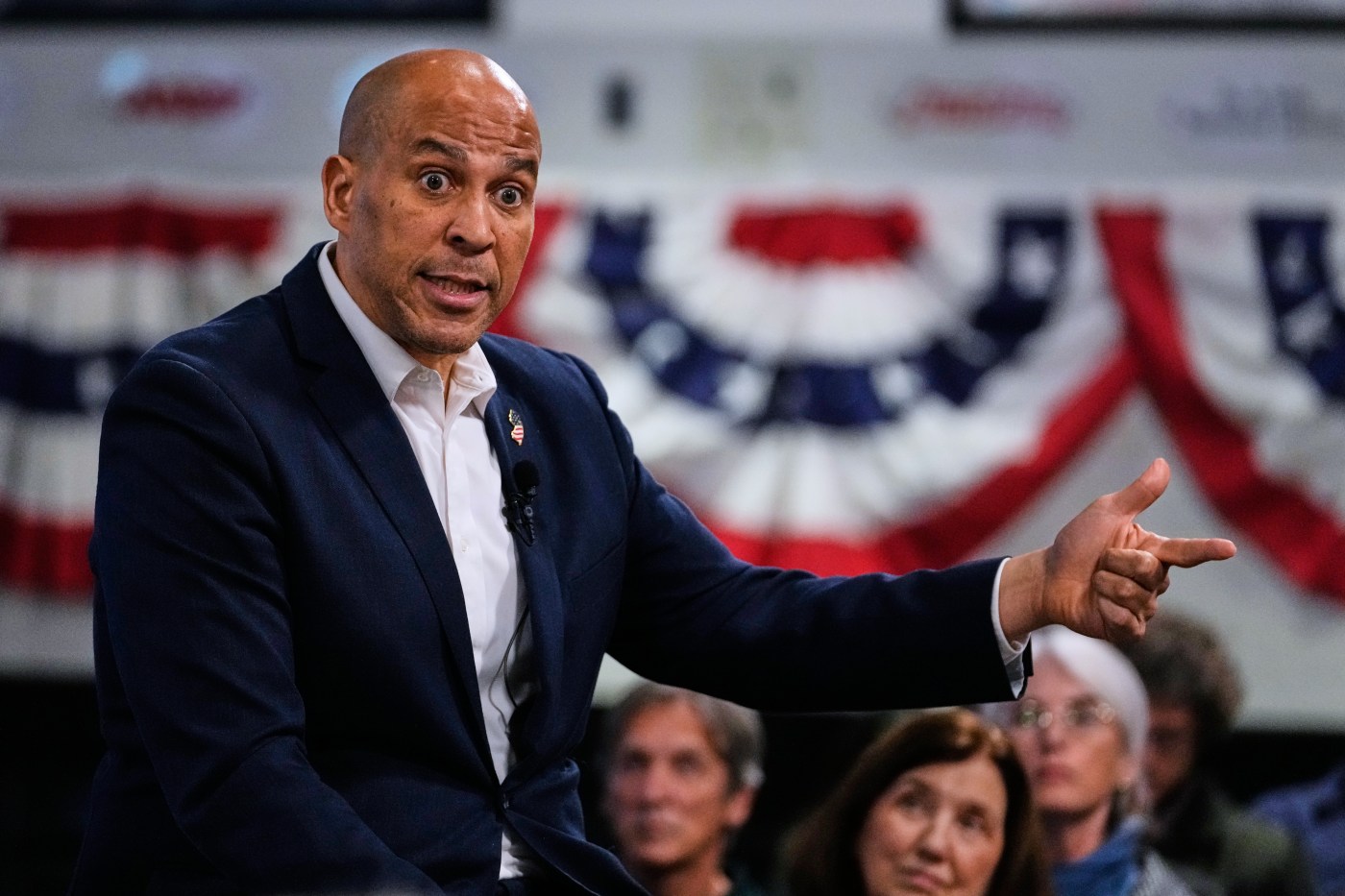
Potential presidential candidates are less coy about 2028 plans: ‘Of course I’m thinking about it’
Deadlines: Monday-Friday 8: 30am-4: 00pm, Call 610-915-2226 (Proofs will be provided for accuracy only, they will not be styled/formatted like the finished product) Obituaries submitted on Saturday, Sunday and Holidays are accepted from 8: 30 a. m. to 3: 00 p. m. by email only Obit@delcotimes. com (No proofs will be furnished. Pricing will not be available until the next business day after 10: 00am by calling Dianne at 610-915-2226) Obituaries received after Deadline will not be published in the following edition of the paper. Sending Procedure: Email is the preferable method for receiving Obituaries (and the only method on Saturday, Sunday and Holidays), they can be sent to Obit@delcotimes. com (Feel free to call and confirm that we’ve received the email) Formatting: Obituaries will continue to visually look the same as they currently do, but you will no longer be restricted in what you can say (ex. As much Family can be listed as you’d like; Wording like “Went to rest with the Lord” is now permissible) Other: There is a cost for each obituary. Pricing and payments are only available Monday through Friday, 8: 30 am to 4: 00 pm. All weekend and holiday submissions will be provided a cost the next business day. Exceptions: All New accounts, Out of State Funeral Homes and Private Parties will require prepayment upon approval of the obituary. Weekend and Holiday staff are not authorized to set up a new account or process payments Deadline for the above is before 4: 00 PM Mon Fri. only (Holiday schedules may vary). Prepayment required submissions will be handled on the very first business day following the weekend and/or holiday schedule. A complete name, address and best contact phone number are required upon submittal of your obituary request to set up your account. A proof will then be emailed for review but placed on hold until payment is received. By JILL COLVIN Associated Press NEW YORK There was a time when presidential hopefuls played coy about their ambitions, crisscrossing the country under the guise of helping other candidates and deflecting when pushed on their obvious plans. Not so for some Democrats considering running in 2028. With no clear party leader and Democratic voters raring for a fight, some could-be candidates are being far more transparent about their intentions, doing away with pretensions as they try to gain maximum visibility at a time when authenticity is in high demand. “Of course I’m thinking about it. I haven’t ruled it out,” New Jersey Sen. Cory Booker recently told Fox News during a trip to early-voting New Hampshire, even as he stressed that his focus is on 2026, when he will be up for reelection. “I’d be lying otherwise. I’d just be lying and I can’t do that,” California Gov. Gavin Newsom told CBS when pressed on whether he will consider a run after the midterms next year. To be sure, many Democrats remain circumspect. Of the dozen potential 2028 candidates The Associated Press requested interviews with to discuss the changing dynamic, none was immediately available. Some Democrats deflect questions and say their attention is elsewhere even as they campaign for others in early-voting states. On the Republican side, an entirely different dynamic is brewing under the surface. Potential candidates are keeping low profiles amid expectations that President Donald Trump will play kingmaker in choosing his would-be successor. Presidential campaign strategists say the Democrats’ less guarded approach makes sense given the wide-open 2028 field and sheer number of candidates competing for attention. Among the others who have said they are considering a run: Kentucky Gov. Andy Beshear, former Chicago Mayor Rahm Emanuel, who also was a White House chief of staff, and Hawaii Gov. Josh Green. “Old rules just don’t apply to anything anymore,” said Jess O’Connell, a Democratic strategist who advised Pete Buttigieg’s 2020 presidential campaign. She said the change was a good thing for the party. “You’ve got to be out there every single day fighting and sharing your vision,” she said. “And I think the more runway they have to talk to people in this moment and to communicate about meeting the needs of the future,” then the better. New dynamics at play Alex Conant, a veteran of the presidential campaigns of Republicans Marco Rubio, a former Florida senator who is now Trump’s secretary of state, and Tim Pawlenty, a former Minnesota governor, said the dynamics of the emerging Democratic primary, with no clear front-runner, have changed the calculus for candidates. “I think the Democratic primary is going to be the longest primary of our life. It’s hard to recall a field that is this wide open. And the Democratic base is so hungry for someone to take on Trump and win back the White House,” he said. “The more crowded it is, the more important it is to start early.” Candidates, he noted, are also “immediately more relevant if you might be the next president,” adding to the incentive to say the quiet part out loud. Voters these days are also turned off by the kind of politician-speak that was once the norm. “One of the takeaways from Trump is that people want authenticity,” Conant said. “Voters are rejecting candidates who sound like politicians, so the rhetorical tricks that politicians have used for decades to avoid answering questions now just irritates voters.” Some are elusive Not everyone has embraced the approach. Illinois Gov. JB Pritzker played coy on stage during a recent interview with journalist Kara Swisher, repeatedly dodging her questions about his expected timeline. “Blah, blah,” she responded as he tried to pivot to talking about the strength of the Democratic bench. Pennsylvania Gov. Josh Shapiro has been equally circumspect, refusing to acknowledge any White House ambitions or even commit to running again for governor, even as the shadow of 2028 follows him everywhere he goes. But during an appearance on “The Breakfast Club” podcast last month, as he reflected on the arson attack on his official residence, he sounded like someone who is eager to remain in the arena. “I love public service,” he said. “You can’t walk away now, with everything that’s on the line. This is not a time to quit.” His perceived national ambitions have become a frequent attack line for his potential GOP rival for governor, state Treasurer Stacy Garrity. “We need somebody that is more interested in Pennsylvania and not on Pennsylvania Avenue,” Garrity said recently on a conservative radio show in Philadelphia. There are risks for candidates That is one of the risks for candidates, said Mike DuHaime, a longtime GOP strategist who advised the presidential campaigns of Chris Christie, John McCain, Rudy Giuliani and George W. Bush. In 2013, he noted, Christie’s opponent in the New Jersey governor’s race often tried to use his national buzz as a campaign issue against him. Candidates, DuHaime said, also need to strike a balance and make that they are not distracting from midterm races by funneling money or attention away from candidates who need them. “I think it makes sense not to be so coy because people kind of get it, but they still should be careful about putting themselves in front of the country cause it could backfire,” he said. They “have to be careful that they still look a little bit like team players.” In other cases, candidates have genuinely not made up their minds, and may be lured by party leaders in early-voting states eager to draw rising stars to their events, DuHaime said. “It’s very intriguing and exciting for candidates and would-be candidates to be asked,” he said, with some deciding, “Let’s go experience it, the national circus. Let’s be part of that.” Along with potential legal considerations, O’Connell, the Democratic strategist, also noted that many of those expected to run have day jobs they need to balance. While picking fights with Trump certainly puts them in the spotlight, it could have ramifications for constituents if the Republican president retaliates, meaning that candidates will need to choose their moments wisely. “You have to fulfill your obligations to the states that you’re in,” she said. “It’s not so much that you’re playing a game, it’s that I think that there are some practical considerations.” “I think we’re going to see people struggling with that,” she added. She also urged candidates to embrace what she called a “Beyonce-Taylor Swift strategy,” referring to the pop stars’ boosting the economies of the cities where they performed on tour. “What I would advise anyone who wants to be president in 2028,” she said, “is to roll up your sleeves and help.”.
https://www.delcotimes.com/2025/11/22/potential-presidential-candidates-are-less-coy-about-2028-plans-of-course-im-thinking-about-it/