Category Archives: law

Mountain View barber, an HIV positive man accused of sexually assaulting 60 men, appears in court

SAN JOSE, Calif. (KGO) — An international effort has led to the arrest of a wanted Mountain View man, Franklin Enrique Sarceño Orla, 35, who appeared in court on Monday.

Sarceño Orla is accused of assaulting at least 19 men, with the number of victims potentially as high as 60, in incidents dating back to 2018. He made his first court appearance in a Santa Clara County courtroom, where he faces charges that could lead to life in prison.

Mountain View Police Department Detective Lauren Riffel, the lead investigator on the case, revealed that Sarceño Orla allegedly drugged and sexually assaulted multiple men while working as a barber.

“When you have more than one, that’s crazy enough,” Det. Riffel said. “When you have more than 5, 10, going all the way up to over 60 people — talking to 60 humans that were victimized in a certain population — it’s terrible to have to hear these stories over and over again.”

Sarceño Orla had fled the country to Guatemala but was recently brought back to the United States for his court appearance. District Attorney Jeff Rosen explained that Sarceño Orla skipped court after posting bail following his arrest for his first alleged rape last fall.

Court documents detail a troubling series of crimes dating back to 2018. Victims reported losing consciousness after sharing drinks with Sarceño Orla, then waking up injured in his home. Some of the victims were clients at his home barber shop in Mountain View, while others were men he met in local nightclubs.

Additionally, DA Rosen confirmed that enhancements have been added to the charges because Sarceño Orla is HIV positive.

“Once this individual fled the country, we made sure that we did everything we could to bring him back,” Rosen said. “We don’t forget.”

Mountain View Police Chief Michael Canfield praised the survivors who came forward, helping to bring this case to justice.

“In my career of almost 27 years, I have never seen a case like this with this scope, with his breadth of impact on our community,” Chief Canfield said. “With this arrest, our community is safer and our victims know that there is justice that they can seek.”

Sarceño Orla remains in custody after a judge ruled no bail will be allowed. He is scheduled to return to court for his next appearance in January.

### Resources
If you or someone you know needs help with sexual assault, rape, or abuse, please seek support from local resources and organizations specializing in victim assistance.
https://abc7news.com/post/franklin-enrique-sarceo-orla-mountain-view-barber-accused-sexually-assaulting-least-19-men-makes-1st-court-appearance/18078303/

Five Arrested in Columbia Probation Search

**Five Arrested During Probation Search on Gunsight Road in Columbia**

Columbia, CA – Detectives from the Tuolumne Narcotics Team, along with county probation officers, recently conducted a probation search at a residence on Gunsight Road in Columbia. The operation resulted in the arrest of five individuals and the seizure of drugs, paraphernalia, and evidence indicating ongoing narcotics activity.

Officers made contact with several people at the home, including Michael Levern Boring, 51; Jessica Jaylene Losey, 40; Christina Marie Andre, 32; Pete Klaus Fenstermaker, 52; Daryn James Pappas, 40; and Arthuro Galindo, 39. Detectives reported that Boring, Andre, and Pappas had outstanding warrants, while Galindo initially refused to identify himself.

During a protective sweep of the residence, detectives observed drug paraphernalia in plain view. A more thorough search of the home and vehicles uncovered suspected fentanyl, methamphetamine, psilocybin mushrooms, and additional drug paraphernalia. Investigators concluded that the property was being used for illegal drug activity.

As a result, Boring, Galindo, Andre, Pappas, and Fenstermaker were arrested and booked into the Dambacher Detention Center on various drug-related charges. Fenstermaker faces an additional charge after deputies discovered he had brought a suspected fentanyl pill into the jail.

Jessica Jaylene Losey was cited at the scene for possession of paraphernalia and for visiting a drug house.

Authorities continue to investigate the case as part of their ongoing efforts to combat narcotics in the community.
https://mymotherlode.com/news/local/10111322/five-arrested-in-columbia-probation-search.html

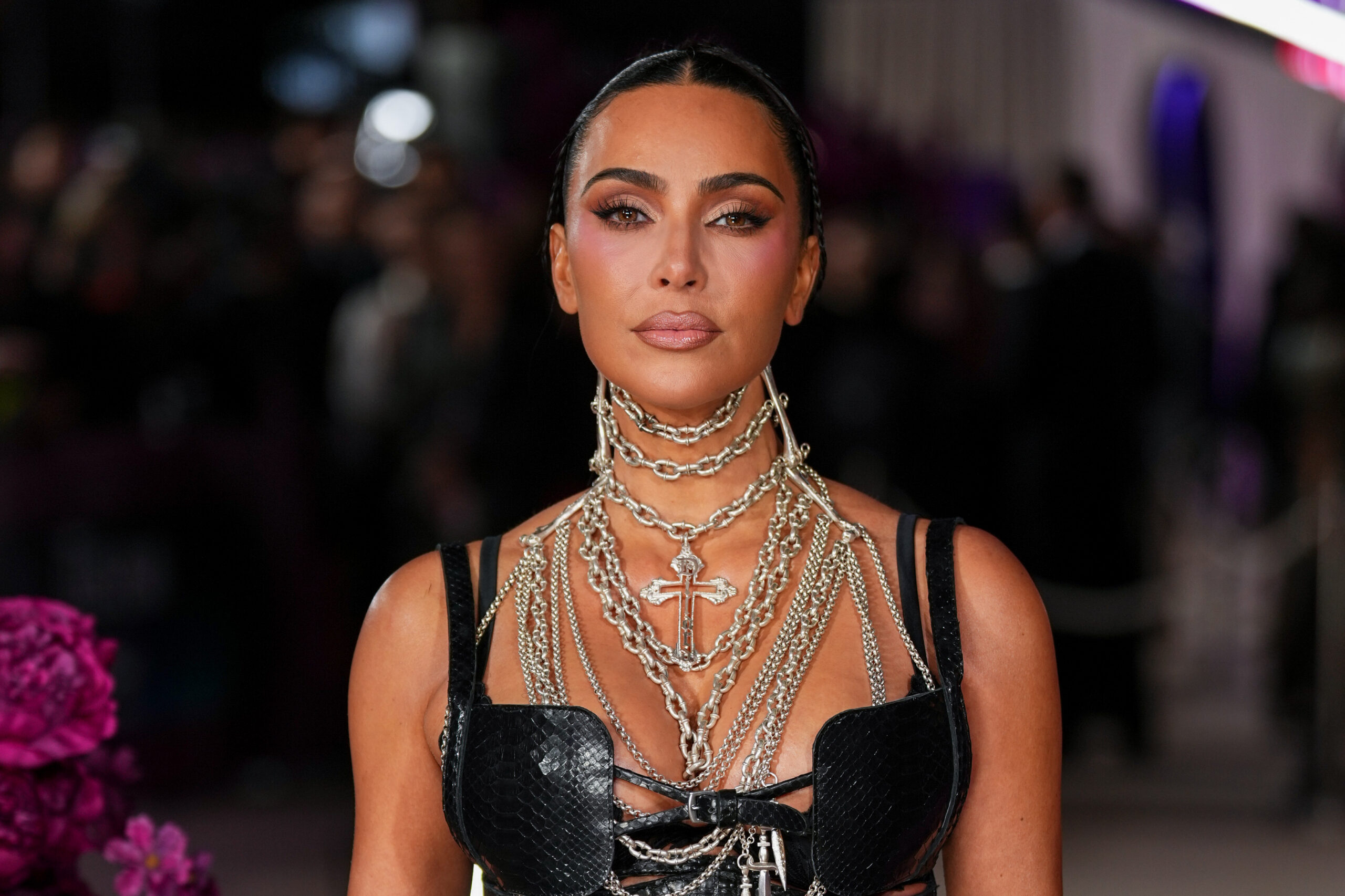
Kim Kardashian planea convertirse en abogada litigante: “Estaré cualificada en dos semanas”

La empresaria e influencer Kim Kardashian confesó que planea hacer cambios importantes en su futuro profesional. La dueña de Skims ha tenido una carrera caracterizada por su glamoroso y polémico estilo de vida. Sin embargo, tras estudiar abogacía durante seis años, Kim Kardashian expresó su intención de dejar atrás su antigua imagen y convertirse en abogada litigante.

Durante su aparición en “The Graham Norton Show”, Kim Kardashian comentó que, tras presentar el examen de derecho en julio, pronto podrá ejercer la abogacía. “Estaré cualificada en dos semanas. Espero ejercer la abogacía. Quizás en 10 años deje de ser Kim K y me convierta en abogada litigante. Eso es lo que realmente quiero”, declaró en el programa.

En mayo de este año, la modelo celebró haber recibido el título en derecho después de estudiar la carrera durante seis años bajo una modalidad especial. Kim Kardashian no cursó abogacía en una universidad tradicional, sino a través de un método especial supervisado por un abogado y un juez.

Kim Kardashian siempre soñó con convertirse en abogada, una decisión influenciada por su fallecido padre, Robert Kardashian, quien participó en el equipo de abogados del polémico caso de O. J. Simpson. “Los mejores abogados me dijeron que este era un camino casi imposible y más difícil que el camino tradicional de la facultad de derecho, pero era mi única opción y me siento muy bien de estar aquí y en camino a lograr mis objetivos”, compartió con Vogue Hong Kong en 2022.

Sin embargo, el camino no ha sido fácil para Kim Kardashian. La empresaria tuvo que compaginar sus extensas horas de estudio con sus múltiples compromisos laborales. Además, en un año reprobó el “baby bar”, un examen especial para estudiantes de primer año, tres veces.

“Esto no fue fácil ni me lo dieron todo. Reprobé este examen tres veces en dos años, pero cada vez me recuperé, estudié más y volví a intentarlo hasta que lo logré”, compartió en una publicación de Instagram en diciembre, tras aprobar finalmente.

Kim Kardashian ha mostrado especial interés en la reforma penitenciaria y confesó que su sueño es fundar un “bufete de abogados exitoso”.

Sigue leyendo.
https://eldiariony.com/2025/10/26/kim-kardashian-planea-convertirse-en-abogada-litigante-estare-cualificada-en-dos-semanas/

Arrest made after Schenectady County Legislator threatened

ROTTERDAM, N.Y. (NEWS10) — Rotterdam police arrested a woman on Saturday evening after she allegedly threatened a Schenectady County Legislator.

Josh Cuomo is speaking out after he says a woman made verbal threats against him while he was campaigning with his family.

Rotterdam Police have confirmed that one person has been arrested in connection with the incident.

What began as…
https://www.news10.com/top-stories/arrest-made-after-schenectady-county-legislator-threatened/

Trump’s $230M DOJ settlement bid likely has few legal backstops

President Trump’s bid to be awarded as much as $230 million by his own Department of Justice as compensation for the various federal probes into his conduct would likely face few legal obstacles if successful.

The president confirmed Tuesday that his personal legal team was seeking a settlement, a request that could prompt his…
https://thehill.com/homenews/5572539-legal-experts-question-trump-settlement/

Stephen Miller Lists Potential Criminal Charges Against JB Pritzker

**JB Pritzker Threatens ICE Agents with Arrest; Stephen Miller Responds on Potential Legal Consequences**

Illinois Governor J.B. Pritzker, on October 12th, suggested that state prosecutors might investigate the conduct of U.S. Immigration and Customs Enforcement (ICE) agents. Speaking to FOX 32 Chicago, Pritzker stated, “The tables will turn one day. These people should recognize that maybe they’re not gonna get prosecuted today, although we’re looking at doing that, but they may get prosecuted after the Trump administration because the statute of limitations would not have run out.”

In response, President Trump’s aide Stephen Miller addressed the issue during a discussion with Will Cain, explaining how arresting a sitting governor like Pritzker could work under federal law.

### Pritzker’s Proposed Commission to Track ICE Agents

Governor Pritzker is reportedly setting up a commission aimed at tracking the activities of ICE agents. His goal is to either prosecute these agents or at least intimidate them by creating a public record of their conduct. According to reports, the commission will “set up a public record of the conduct of federal agents” and will “consider policy recommendations to prevent future harm to these individuals and communities.”

The communities Pritzker refers to include illegal aliens, criminal illegal aliens, and foreigners who did not enter the country legally. His plans might also affect the left-wing activists who obstruct justice on their behalf.

### Stephen Miller Explains the Legal Authority to Arrest State Officials

During the conversation, Will Cain asked Miller about the federal authority under which a sitting governor like Pritzker could be arrested. Miller responded, emphasizing that his explanation applies not only to Pritzker but to any state or local official who unlawfully interferes with federal law enforcement duties.

He explained, “If you engage in a criminal conspiracy to obstruct the enforcement of federal immigration laws or to unlawfully order your own police officers or officials to interfere with ICE officers or even to arrest ICE officers, you’re engaged in criminal activity.”

Miller outlined various offenses that could come into play, including obstruction of justice, harboring illegal aliens, and impeding immigration law enforcement. He also mentioned the possibility of seditious conspiracy charges depending on the conduct.

### Federal Immunity for ICE Agents

Miller reassured ICE officers of their legal protections, noting that ICE agents have federal immunity while performing their duties. “Anybody who lays a hand on you or tries to stop you or tries to obstruct you is committing a felony,” he stated.

He emphasized, “No city official, no state official, no illegal alien, no leftist agitator or domestic insurrectionist can prevent you from fulfilling your legal obligations and duties.”

The Department of Justice, Miller noted, has made clear that any official crossing the line into obstruction or criminal conspiracy against ICE officers will face justice.

### Additional Remarks

Miller also hinted that attention should be given to Letitia James, who is reportedly tracking ICE activities, suggesting that charges may be warranted.

This exchange highlights the ongoing tensions between state officials who oppose federal immigration enforcement and federal authorities defending ICE’s role. As this legal and political battle continues, it raises important questions about the balance of power and the enforcement of immigration laws in the United States.
https://www.independentsentinel.com/stephen-miller-lists-potential-criminal-charges-against-jb-pritzker/

Today in History: Albert B. Fall convicted of accepting bribes

Today is Saturday, October 25, the 298th day of 2025. There are 67 days left in the year.

**Today in History**

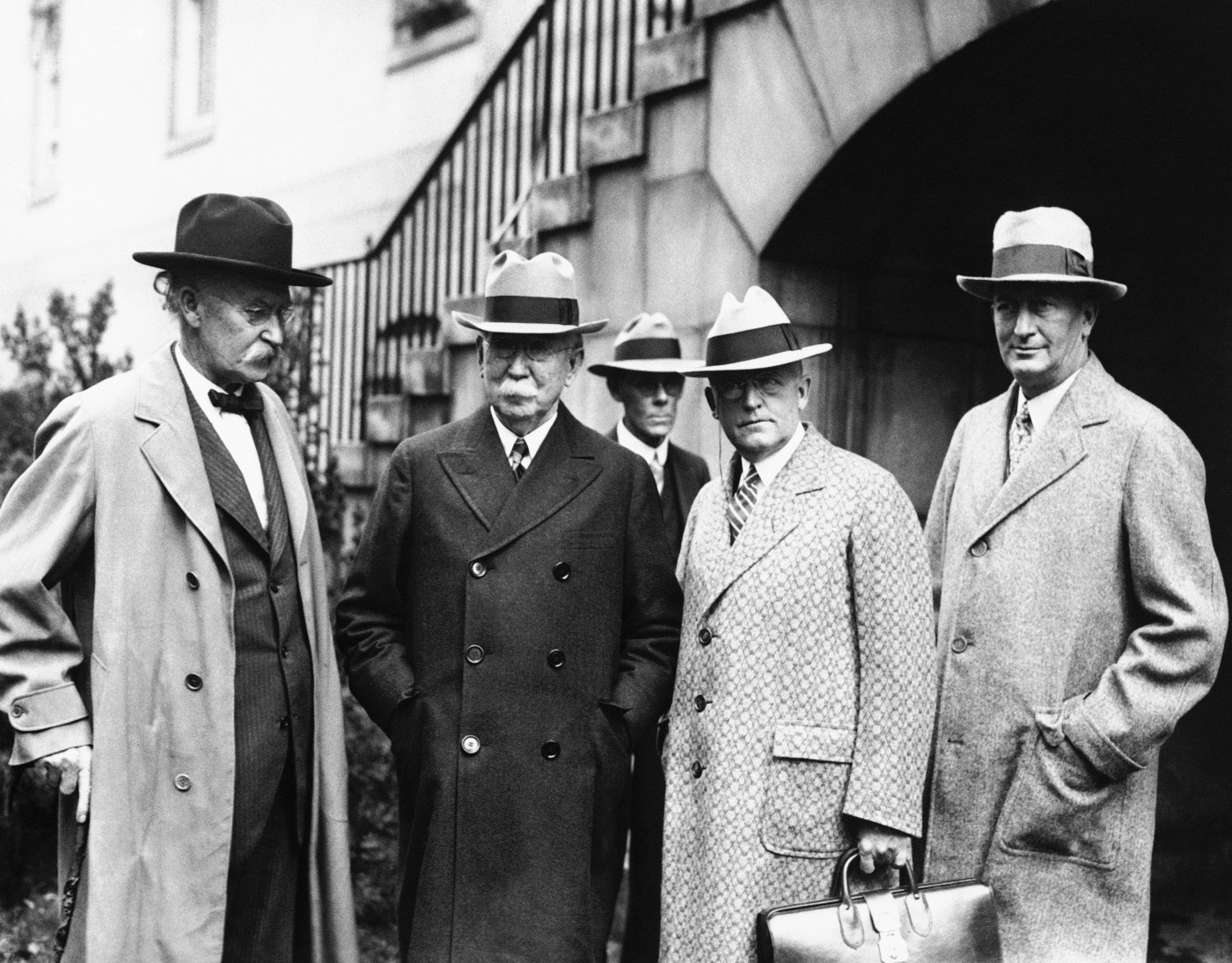
– **1929:** Former Secretary of the Interior Albert B. Fall was convicted of accepting bribes in exchange for oil field leases at Teapot Dome in Wyoming and the Elk Hills and Buena Vista oil fields in California. As a result of the “Teapot Dome Scandal,” Fall became the first U.S. Cabinet member to be imprisoned for crimes committed while in office.

– **1760:** Britain’s King George III succeeded his late grandfather, George II.

– **1859:** Radical abolitionist John Brown went on trial in Charles Town, Virginia, for his failed raid at Harpers Ferry. He was convicted and later hanged.

– **1962:** During an emergency meeting of the U.N. Security Council, U.S. Ambassador Adlai E. Stevenson II demanded that Soviet Ambassador Valerian Zorin confirm or deny the existence of Soviet-built missile bases in Cuba. Stevenson then presented the council with photographic evidence of the bases—a key moment in the Cuban Missile Crisis.

– **1983:** A U.S.-led force invaded Grenada at the order of President Ronald Reagan, who said the action was needed to protect U.S. citizens there.

– **1986:** In Game 6 of the World Series, the New York Mets rallied for three runs with two outs in the 10th inning, defeating the Boston Red Sox 6-5 and forcing a seventh game. The tiebreaking run scored on Boston first baseman Bill Buckner’s error on Mookie Wilson’s slow grounder. The Mets went on to win Game 7 and the Series.

– **1999:** Golfer Payne Stewart and five others were killed when their Learjet lost cabin pressure, flew hundreds of miles off course on autopilot, and crashed in a field in South Dakota. Stewart was 42.

– **2002:** Democratic U.S. Senator Paul Wellstone of Minnesota was killed in a plane crash in northern Minnesota along with his wife, daughter, and five others, a week and a half before the election.

– **2022:** Rishi Sunak became Britain’s first prime minister of color after being chosen to lead the governing Conservative Party.

– **2023:** Robert Card opened fire at a bowling alley and a bar and grill in Lewiston, Maine, killing 18 people and leaving 13 others wounded. Card was found dead by suicide two days after the attack, marking the worst mass shooting in Maine’s history.

**Today’s Birthdays**

– Actor Marion Ross is 96.
– Author Anne Tyler is 84.
– Rock singer Jon Anderson (Yes) is 81.
– Political strategist James Carville is 81.
– Basketball Hall of Famer Dave Cowens is 77.
– Olympic gold medal wrestler Dan Gable is 77.
– Olympic gold medal hockey player Mike Eruzione is 71.
– Actor Nancy Cartwright (TV: “The Simpsons”) is 68.
– Rock drummer Chad Smith (Red Hot Chili Peppers) is 64.
– Actor-comedian-TV host Samantha Bee is 56.
– Country singer Chely (SHEL’-ee) Wright is 55.
– Violinist Midori is 54.
– Baseball Hall of Famer Pedro Martinez is 54.
– Actor Craig Robinson is 54.
– Author Zadie Smith is 50.
– Actor Mehcad (muh-KAD’) Brooks is 45.
– Pop singer Katy Perry is 41.
– Singer Ciara is 40.
– Golfer Xander Schauffele is 32.
– MLB All-Star Juan Soto is 27.
https://www.chicagotribune.com/2025/10/25/today-in-history-albert-b-fall-convicted-of-accepting-bribes/

Kim Davis seeks Supreme Court review in challenge to marriage equality

**U.S. Supreme Court Considers Kim Davis’s Challenge to Same-Sex Marriage, While Conversion Therapy Case Sparks National Debate**

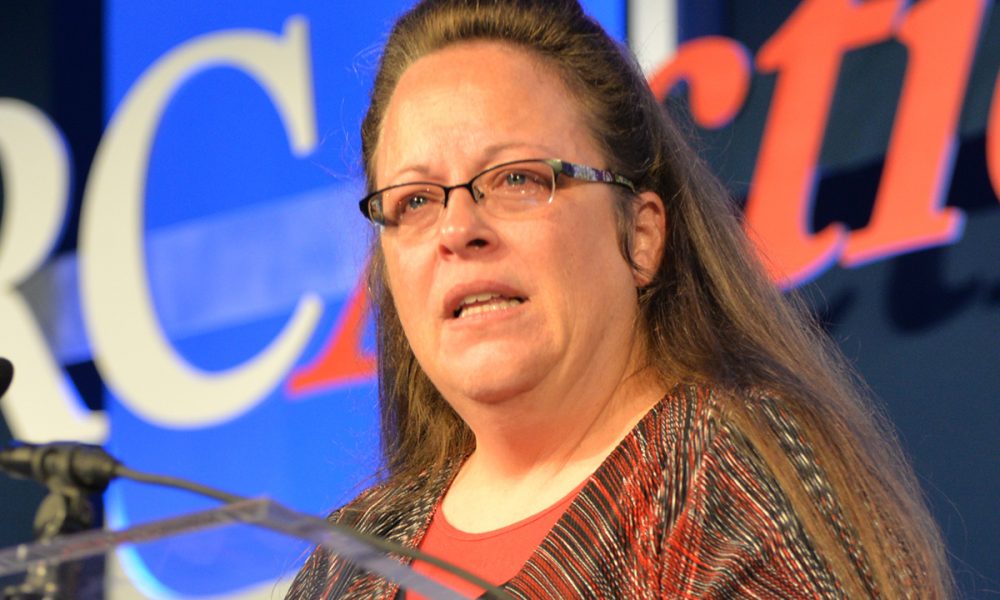
The U.S. Supreme Court is set to consider whether to hear Kim Davis’s latest challenge to same-sex marriage—a case that, if accepted, could have major implications for LGBTQ rights in the United States.

Kim Davis, the former county clerk for Rowan County, Kentucky, made national headlines in 2015 when she defied federal court orders by refusing to issue marriage licenses to same-sex couples and later, to any couples at all. Davis, a Pentecostal Christian, said that signing same-sex marriage licenses would violate her religious beliefs, claiming protection under the First Amendment.

When questioned at the time, Davis told reporters she was acting “under God’s authority” and suggested couples could obtain licenses in other counties. Her refusal came just weeks after the Supreme Court’s landmark decision in *Obergefell v. Hodges*, which guaranteed same-sex couples the constitutional right to marry under the Due Process and Equal Protection Clauses of the Fourteenth Amendment.

One of the couples who sought a license from Davis, April Miller and Karen Roberts, filed a federal lawsuit (*Miller v. Davis*) challenging her actions. Around the same time, another couple, David Moore and David Ermold, also sued after Davis again refused to issue them a license despite a court order directing her to do so.

In Kentucky, marriage licenses bore the county clerk’s name and title—something Davis argued forced her to personally endorse a practice she found morally objectionable. It wasn’t until the state legislature changed the law in 2016, removing clerks’ names from marriage licenses, that Davis and her deputies resumed issuing them.

In 2023, a federal jury awarded Moore and Ermold $50,000 each in damages for Davis’s repeated refusals. Davis appealed the decision, but the 6th U.S. Court of Appeals upheld the verdict earlier this year. The court ruled that Davis’s actions were not protected by the First Amendment because she was acting in her official capacity as a government official, not as a private citizen.

“The Bill of Rights would serve little purpose if it could be freely ignored whenever an official’s conscience so dictates,” the court wrote, emphasizing that personal religious opposition cannot be translated into public policy.

Davis has now asked the Supreme Court to take up her case. Her petition, filed in August, argues that *Obergefell* “has no basis in the Constitution” and should be reconsidered. The justices are scheduled to review her petition in a private conference on November 7, where they will decide whether to grant the case a full hearing.

Whether the court will take the case depends on whether at least four justices vote to hear it. Even if there are four votes to grant review, legal observers note that the justices would likely avoid taking up the case unless they are confident there is a fifth vote to overturn *Obergefell*.

Mathew Staver, Davis’s attorney, told *Newsweek* that *Obergefell* “has no basis in the Constitution” and could be overturned “without affecting any other cases.” Legal experts, however, see such an outcome as unlikely.

According to SCOTUSblog, while the case raises important questions about religious liberty and government authority, it centers on Davis’s personal liability rather than a direct challenge to the constitutionality of same-sex marriage itself. Still, the case has reignited debate over the balance between religious freedom and LGBTQ rights—and whether the Supreme Court’s conservative majority might be open to revisiting one of its most significant civil rights decisions of the 21st century.

### Conversion Therapy Case Ignites Passion as Supreme Court Hears Arguments

As the United States Supreme Court heard oral arguments in *Chiles v. Salazar* last week—a case that could overturn bans on conversion therapy in more than 20 states and the District of Columbia—a group of conversion therapy survivors gathered in Washington, D.C., to support one another and ensure their experiences are not ignored.

Members of the Conversion Therapy Survivor Network (CTSN), a nonprofit providing a safe, non-therapeutic space for survivors nationwide, began their day on the steps of the Supreme Court. The small but dedicated group of protesters held signs, waved Pride flags, and shared stories of survival. They were joined by representatives from the Born Perfect Campaign, the Human Rights Campaign, and The Trevor Project—the LGBTQ suicide prevention nonprofit that has worked to save queer lives since 1998.

The case centers on whether parents have the constitutional right to subject their children to conversion therapy under the First Amendment’s protection of religious freedom. Dozens of states have banned the practice, citing overwhelming evidence that it does not change sexuality or gender identity and often leads to long-term psychological harm.

Survivors of conversion therapy are at significantly higher risk of depression, anxiety, and suicide, according to every major U.S. medical association—including the American Psychiatric Association, the American Psychological Association, and the American Medical Association—all of which have disavowed the practice.

Kaley Chiles, a Christian therapist from Colorado, brought the case after arguing that Colorado’s 2019 law banning conversion therapy for minors violates her First Amendment rights. Chiles, who offers what she describes as “religiously informed care,” contends that the law restricts her ability to counsel clients in accordance with “biblical understandings of sexuality and gender.”

During oral arguments, the Supreme Court’s conservative majority appeared sympathetic to her claim that the law constitutes “viewpoint discrimination.” Justice Samuel Alito went so far as to say the ban represented “blatant viewpoint discrimination,” signaling that the court may be willing to expand First Amendment protections to cover conversion therapy.

For survivors gathered just blocks away, that prospect was devastating.

Following the hearing, CTSN held a vigil and celebration at As You Are, an LGBTQ bar and café in Southeast D.C. that has become a haven for the queer community. On the bar’s second floor, posters from the protest were propped against the wall—bearing messages such as “I refuse to hate myself for your comfort” and “Conversion therapy hurts kids, hurts families, hurts faith”—as two phones livestreamed survivors’ stories on TikTok.

The testimonies were both wrenching and cathartic. The group began with a moment of silence for those who did not survive their experiences with conversion therapy, setting the tone for the urgent need to end the practice.

Tears welled in the audience and among speakers as they shared how conversion therapy had scarred—and in some cases nearly destroyed—their lives.

“Since when is the freedom of religion more important than ‘do no harm?’” one survivor asked, encapsulating the frustration that ran through the room.

Curtis Lopez-Galloway, founder and president of CTSN, emphasized that the only way to end conversion therapy is through awareness. “The one way we’re going to defeat conversion therapy is by education,” he said before sharing his own story. “The more people that know about the harms, the less likely they are to take their children—or themselves—into it.”

Their commitment to breaking the cycle of harm echoed throughout the afternoon. Survivors from across the LGBTQ spectrum—gay, trans, and asexual—shared their experiences of rejection, isolation, and recovery.

Cairn, who once trained as a youth minister, recalled how their church’s teachings were weaponized against them. “We prayed for the gay to go away,” they said. “The Bible was used as a weapon to make me submissive to the normal gender roles I was destined to fill.”

They remembered being instructed on how to “walk like a lady” to suppress their masculinity. “I was advised how to walk like a lady because I have swagger. I still do,” Cairn added with a small smile, drawing laughter and applause from the crowd.

But the damage ran deep. “That year in Bible school ended my career as a youth minister—but it also ended my personal faith in God,” Cairn said. “When you are told repeatedly that you’re going to hell if you choose this lifestyle, it starts to take a toll on you.”

Years later, they found affirming pastors and began rebuilding their life. “After 35 years,” Cairn said, “I started to live my life unashamed.”

Other speakers shared stories of lives fragmented by fear.

“I lost 20 years of my life,” said Gwen Brossard, a queer and nonbinary person living in California. “It’s hard to settle with the enormity of the grief.”

“The inner conflict and continual effort of examining my attractions while trying to counter them left me emotionally and physically exhausted,” she said. “The therapy radically altered the trajectory of my life. I felt adrift, severed from my previous sense of meaning and belonging.”

For Al Linkskoog, a gay man who subjected himself to the practice due to the insurmountable pressure he felt from societal rejection, conversion therapy’s toll was both spiritual and psychological. “They told me I was broken,” he said. “It’s an interesting, although bogus, way of trying to solve a problem—decide what the problem is before even meeting the person.”

“Being called broken is a dismal diagnosis. It means you’re already in pieces,” he continued. “Every prayer, every determination to change—nothing changed. All the years of trying to change were unnecessary. I was perfectly fine as I was.”

Years later, he said, he finally found peace. “No more need for closets. I have full run of the mansion. So now I can truly say: I am not broken.”

Sarah, who identifies as asexual, reminded the audience that conversion therapy does not only target gay and trans people. “Asexuality is sometimes called the invisible sexuality,” she said. “Many ace folks encounter professionals who believe their lack of attraction is a problem to fix instead of a neutral fact of their identity.”

She challenged assumptions about what love and intimacy should look like. “Our existence doesn’t just challenge compulsory heterosexuality—it questions compulsive sexuality,” Sarah said. “We are here. We are queer. We aren’t going anywhere. We don’t need to be fixed—only to love the way we love and be loved for who we are.”

One of the most harrowing stories of the night was from Caleb Bailar, a transgender man from England who was not in attendance but whose story was read by Samuel Nieves, board director for CTSN.

“My phone was taken away, my messages read daily. I was told I was being misled and was too young to know what I wanted from life,” he recalled.

He described a form of punishment his mother practiced called “kid hell”—a conversion therapy method derived from a manual circulated among anti-trans groups.

“My kid hell was to have no time truly alone,” he said. “I could not use the phone, computer, or journal in private. Whenever I would hyperventilate and scream and beg for it to be over, my mom would hold me and tell me this was for my own good.”

“Every time I expressed myself or was interpreted correctly, I would flinch and brace for punishment,” Nieves read. “Once, she threatened to unalive herself if I got a mastectomy. I found out my experience could be considered conversion torture—the horror I had endured was a map. I can joke about it now,” he added quietly. “The pain is real, but so is the healing,” said one organizer after the stories were shared. “We can’t let the Court forget that.”

For those in attendance, the message was clear: Their survival is their protest.

### Supreme Court Hears *Chiles v. Salazar* Case on Conversion Therapy Ban

The Supreme Court heard arguments on Tuesday in the case of *Chiles v. Salazar*, which could reverse conversion therapy bans across the United States. Kaley Chiles, a Christian therapist from Colorado, works as a counselor specializing in serving clients who often seek “religiously informed care” that aligns with traditional biblical understandings of sexuality and gender.

She has argued that a 2019 Colorado law, HB19-1129—also known as the “Prohibit Conversion Therapy for a Minor Act”—violates her First Amendment rights. The act serves as a regulatory law in the state and was put in place to prevent potential harm that numerous studies by health associations across the country have shown this particular form of “therapy” can cause.

From an increased risk of suicide to being comparable to torture by the United Nations, 23 other states, as well as the District of Columbia and Puerto Rico, have passed laws restricting the practice.

Chiles brought forward a pre-enforcement lawsuit against the state, arguing that the law has caused a chilling effect on her ability to provide her “faith-informed” services to clients with religious preferences—often religious parents—and has made her stop any discussions that could be related to sexuality or gender identity. She argues this violates her right to the Free Speech Clause of the First Amendment.

A majority of the justices appeared sympathetic to Chiles’s argument that the conversion therapy ban limits her religious rights on the basis of viewpoint, indicating it may infringe on free speech. Justice Samuel Alito went as far as to say that the law was “blatant viewpoint discrimination.”

Other members of the Court, however, raised questions regarding Chiles’s standing, or the right to challenge the law, as the ban was not explicitly enforced, nor was Chiles charged with anything.

Justice Sonia Sotomayor noted the lack of enforcement undermines the idea of an “imminent threat,” while Justice Ketanji Brown Jackson suggested the law’s regulation of professional conduct falls within a state’s traditional authority to oversee medical practices.

Several justices, notably Amy Coney Barrett, seemed to think this case should be sent back down to a lower court for further examination under a stricter constitutional standard.

Justice Elena Kagan pressed the need for scientific evidence, saying, “You need to have studies, not just intuitions that harm exists. You need a scientific showing of causation rather than rely on your intuitions that this causes harm.”

Justice Brown Jackson expressed skepticism over the First Amendment framing, noting the similarity between Chiles and other medical professionals with the same goals but different methods.

Justice Alito raised concerns about politicization within medicine, asking, “Have there been times when the medical consensus has been politicized, has been taken over by ideology?”

Justice Coney Barrett questioned how far a state’s authority should go in cases of medical disagreement, asking whether states can pick sides when there are competing medical views.

James A. Campbell, who represented Chiles, argued that not only is Chiles’s speech being censored, but by not allowing her to provide this type of “therapy,” the government is causing harm to families seeking such treatment.

“There is irreparable harm going on right now. Ms. Chiles is being silenced. The kids and the families who want help are being left without any support,” Campbell told the justices. “This is an ongoing active dialogue where she’s helping them to explore their goals, and that absolutely has to be protected by the First Amendment.”

Shannon W. Stevenson, Colorado Solicitor General, argued on behalf of the state that an overwhelming amount of medical advice cites this type of “therapy” as harmful and that medical restrictions do not allow doctors to give patients incorrect information just because it goes against their religious beliefs.

“The medical consensus has been around for a very long time. Those types of statutes govern medical professionals, and no one has ever suggested that a doctor has a First Amendment defense to say the wrong advice to their patient,” Stevenson said. “The harms from conversion therapy come from when you tell a young person they can change this innate thing about themselves. They try and fail, and then they have shame and they’re miserable.”

Kelley Robinson, president of the Human Rights Campaign—America’s largest LGBTQ civil rights organization—issued a statement following the court’s arguments:

“Today’s oral arguments made clear that, as Colorado’s solicitor general stated, history, precedent, and commonsense must allow states to hold licensed providers accountable to the recommendations of every mainstream medical and mental health association in this country. The Supreme Court must uphold the constitutionality of these legal restrictions and stand strongly between our children and these abusive practices.”

While it may be months before a decision on this case is brought forward, the ruling—expected by summer—could have sweeping implications for whether states are allowed to regulate conversion therapy as a form of medical treatment, or if they infringe on First Amendment rights.

*The outcomes of these cases will have profound effects on the legal landscape surrounding LGBTQ rights, religious freedom, and the regulation of medical and psychological practices in the United States.*
https://www.washingtonblade.com/2025/10/24/kim-davis-seeks-supreme-court-review-in-challenge-to-marriage-equality/?utm_source=rss&utm_medium=rss&utm_campaign=kim-davis-seeks-supreme-court-review-in-challenge-to-marriage-equality


Five Plead Guilty Over $7.9M Dark Web Crypto Drug Operation

**Manhattan Prosecutors Secure Convictions Against Dark Web Drug Trafficking Network**

Manhattan prosecutors have successfully secured convictions against five members of a dark web drug trafficking network that shipped thousands of packages containing illegal narcotics across all 50 states and Washington, D.C., while laundering millions of dollars through cryptocurrency.

Nan Wu and his four associates — Peng Peng Tang, Bowen Chen, Zixiang Lin, and Katie Montgomery — previously entered guilty pleas for their involvement with the operation known as “FireBunnyUSA.” This network advertised itself on dark web marketplaces as an established supplier offering quality products with fast, discreet delivery.

“This alleged scheme was a brazen attempt to use the dark web to conceal a national drug trafficking operation,” Manhattan District Attorney Alvin L. Bragg, Jr. said in a statement on Wednesday. “Even though this activity originated on the dark web, it can still lead to the same dangerous drug-related violence in our neighborhoods that we see far too often.”

**Sentencing and Seizures**

Wu received a minimum sentence of six and a half years in state prison after pleading guilty to criminal sale of a controlled substance and money laundering on April 3. Additionally, the court ordered Wu to forfeit approximately 20 Bitcoin (BTC), 3,297 Monero (XMR), and $12,857 in cash recovered during searches.

**The Operation**

The FireBunnyUSA operation ran from January 2019 through August 2022, initially based in Flushing, Queens. During this period, the group mailed more than 10,000 packages nationwide.

Manhattan investigators conducted 11 undercover purchases from the vendor between June 2021 and August 2022, buying drugs including cocaine, MDMA, and ketamine, all shipped directly into Manhattan.

Through the operation, the ring laundered over $7.9 million, including more than $3.1 million in proceeds through cryptocurrency exchanges. Wu and Tang alone collected nearly $8 million in BTC payments throughout the operation’s run. Investigators found close to $900,000 worth of cryptocurrency on Tang’s phone.

The network converted funds into Monero (XMR), a privacy-focused cryptocurrency designed to be untraceable, before converting it back to Bitcoin and moving the funds through exchange accounts controlled by Wu, Tang, and others.

Investigators revealed that over $734,000 was laundered through U.S.-based crypto exchanges, and $2.4 million in Bitcoin was converted into Chinese yuan abroad.

**Following the Crypto Trail**

Recent global law enforcement crackdowns have targeted similar dark web and crypto-enabled crimes. These include the seizure of 145 BidenCash domains linked to $17 million in stolen card trades in the U.S.; Operation RapTor’s coordinated raids across 10 countries, which resulted in the seizure of $200 million in cryptocurrency and the arrest of 270 people; and India’s bust of “Edison,” an alleged darknet vendor accused of moving 10,000 LSD blots monthly through Monero.

Andrew Fierman, Head of National Security Intelligence at Chainalysis, previously told Decrypt that while a growing number of criminals migrating to privacy coins such as Monero and Zcash for anonymity is concerning, “the vast majority of criminal activity still uses mainstream cryptos, such as Bitcoin, Ethereum, and stablecoins.”

He added, “Crypto is only useful if you can buy and sell goods and services or cash out into fiat, and that is much more difficult with privacy coins, especially as many mainstream exchanges have offboarded the use of privacy coins, such as Monero.”

Fierman also emphasized that privacy coins, “like other cryptos, operate on an immutable ledger,” meaning records of illicit transactions remain permanent and “such evidence can be investigated and prosecuted even years later.”

This case highlights ongoing law enforcement efforts to combat dark web drug trafficking and the evolving challenges of cryptocurrency-related money laundering.
https://decrypt.co/345833/five-plead-guilty-over-7-9m-dark-web-crypto-drug-operation