Category Archives: military

Trump’s blurry path to peace

In the volatile landscape of Middle East politics, two seismic events unfolded in late September, reshaping narratives around Israel’s war on Gaza.

On September 26, Israeli Prime Minister Benjamin Netanyahu delivered a fiery address to the United Nations General Assembly, vowing to block Palestinian statehood amid walkouts by dozens of delegates. Three days later, on September 29, U.S. President Donald Trump unveiled a 21-point peace plan following a White House meeting with Netanyahu. The plan proposed an end to the Gaza violence, the release of hostages, and a potential pathway to Palestinian statehood.

This new proposal marks a significant shift in Washington’s stance. It contrasts sharply with President Trump’s February suggestion that the U.S. could take over Gaza, build a “Riviera,” and permanently relocate its two million residents. Instead, the plan emphasizes granting Gazans the freedom to choose their own path, with no one forced to leave their homeland. Those wishing to depart would be free to do so and return at their discretion, while a bold initiative encourages Gazans to stay and help shape a brighter future.

The plan also promises that Israel will neither occupy nor annex Gaza, paving the way for redevelopment and self-governance. Importantly, Hamas and similar groups will have no role in Gaza’s future administration, ensuring a focus on stability and progress. A newly formed technocratic, apolitical Palestinian committee, backed by international experts, would manage essential public services and municipal operations, securing stability and support for the region’s people.

To complement this effort, President Trump committed to spearheading an ambitious economic development plan. He aims to assemble a panel of experts behind the Middle East’s thriving modern cities to guide Gaza’s reconstruction.

Significantly, the plan’s suggestion of a potential path to a future Palestinian state—after Gaza is rebuilt and the Palestinian Authority (PA) undergoes reforms—represents a major departure from the Trump administration’s previous refusal to endorse a two-state solution.

### Conditional Pathway to Statehood

Some analysts argue that the proposed 21-point plan offers a pathway to Palestinian statehood that is so heavily conditional it appears watered down, rendering it largely theoretical. Statehood is presented not as a right or guaranteed outcome, but as a distant reward contingent on meeting a series of vaguely defined and immensely challenging prerequisites.

A transitional government led by a technocratic, apolitical Palestinian committee will soon take shape to stabilize and rebuild Gaza. This initiative will be guided by the newly established Board of Peace, an international transitional body tasked with setting the strategic framework and securing funding for Gaza’s redevelopment. The board will be chaired by President Trump and could include former UK Prime Minister Tony Blair. The committee’s work will continue until the PA completes its reform program.

The plan, developed mainly by U.S. Special Envoy Steve Witkoff and expected to be refined further, contains several provisions long demanded by Israel. However, the suggestion of a future Palestinian state conflicts with Netanyahu’s firm stance. In his UN General Assembly speech, Netanyahu stated unequivocally: “Giving the Palestinians a state one mile from Jerusalem after October 7 is like giving Al Qaeda a state one mile from New York City after September 11. This is sheer madness. It’s insane and we won’t do it. Israel will not allow you to shove a terror state down our throats.”

### Diplomatic Tightrope and Core Challenges

These developments highlight a high-stakes diplomatic tightrope between Netanyahu’s unyielding security-first stance and Trump’s deal-oriented vision. By sidelining the PA and declaring zero tolerance for Hamas, the plan risks undermining the most credible foundation for a future Palestinian state.

The foundational steps—creating a de-radicalized, terror-free Gaza under an interim technocratic government—are not mere procedural hurdles but lie at the heart of the quagmire. These demands include the massive undertaking of disarming Hamas and implementing a complex de-radicalization process for a traumatized population. They rely on an untested international force and a long-term peace that does not yet exist.

Mushtaq Shah, Pakistan’s former ambassador to Jordan and Egypt, acknowledges the plan’s selective ambiguity. “It is vague enough to allow for broad interpretation, even manipulation, during implementation. Much remains to be negotiated,” he told The News on Sunday. Despite its shortcomings, Ambassador Shah describes the initiative as a vital lifeline for Palestinians facing relentless violence. “Anything that can help end the bloodshed and allow humanitarian aid to reach people is welcome,” he stresses.

### Key Revisions and Israel’s Security Concerns

During meetings in New York with U.S. envoy Steve Witkoff and adviser Jared Kushner, Netanyahu secured key revisions on the disarmament provisions. While the initial draft offered amnesty to Hamas members pledging peaceful coexistence, the updated plan requires them to surrender. It also strengthens language mandating the destruction and cessation of all offensive military capabilities.

The revised plan includes a map outlining three phases of Israeli withdrawal. The Israel Defense Forces (IDF) will maintain control over most of Gaza after the first withdrawal until an International Stabilization Force arrives to oversee Hamas’s disarmament. After the second phase, Israel will retain more than a third of the Gaza Strip. Even after the final phase of full withdrawal, Israel will preserve a permanent security buffer along Gaza’s perimeter.

Each withdrawal stage is conditioned on milestones tied to demilitarization, effectively allowing Israel to delay its exit until Gaza is deemed secure. Should Hamas delay or reject the plan, it will proceed in terror-free areas, which the IDF will hand over to the International Stabilization Force (ISF).

While the plan proposes new leaders committed to peace, regional security guarantees, and new security forces to replace Hamas, the fundamental question remains: who will govern Gaza?

### Governance and Regional Legitimacy

Ambassador Javed Hafiz argues that while Israel and the U.S. may dismantle Hamas’s visible structure, the group will likely survive as a potent ideological force, much like Hezbollah. The goal of disarmament may, in practice, only reduce its military capacity to manageable levels rather than achieve total elimination.

The alternative—the Mahmoud Abbas-led PA—is widely seen by Gazans as corrupt, illegitimate, and ineffective. Ambassador Hafiz suggests that the most likely, yet fraught, compromise is the installation of a technocratic government under a transitional authority.

President Trump has tapped former British Prime Minister Tony Blair to head Gaza’s interim authority. However, Blair is not trusted by many in the Arab world and the UK due to his controversial role in the Iraq War. This transitional authority will likely include Arab members to provide legitimacy and avoid perceptions of a direct Israeli-American occupation, while Gulf states may fund reconstruction.

Its success will hinge entirely on its ability to deliver tangible improvements to daily life while navigating complex pressures from Palestinian politics, Israel, and wary Arab patrons, says Ambassador Hafiz.

### Annexation Concerns and Ground Realities

The primary focus of Hamas, the Palestinian leadership, and Arab governments remains securing ironclad guarantees against annexation of Gaza and the West Bank and on restoring Jerusalem’s special status, says Ambassador Hafiz.

However, diplomatic maneuvering is starkly disconnected from ground realities. Israel has effectively annexed roughly 60 percent of the West Bank through military control and buffer zones. On July 23, the Knesset approved a bill to impose sovereignty over the West Bank—widely viewed as annexation.

This underscores a stark divide: while international powers oppose such measures, Israel is systematically rendering Gaza uninhabitable to spur a Palestinian exodus and expanding settlements in the West Bank.

The United States has supported Israel’s position. Its ambassador recently used biblical terms—Judea and Samaria—for the West Bank, tacitly endorsing Israeli territorial claims.

Ambassador Hafiz notes that despite Tel Aviv’s strong desire, annexation of the Jordan Valley appears unlikely at present. Gaza’s near-total destruction necessitates an unprecedented, multi-billion-dollar reconstruction effort involving experts to build a modern urban economy—a process likely to take many years.

### Reconstruction Leadership and Challenges

The U.S. and Israel may be reluctant to assign the rebuilding role to the United Nations Relief and Works Agency for Palestine Refugees (UNRWA), given past efforts to undermine the organization.

Coordinating among multiple Arab states, each with differing priorities and foreign policies, will be complex. Ambassador Hafiz suggests two possibilities: either UNRWA is revitalized, or Egypt, Turkey, and Gulf states take the lead in reconstruction. A Middle East-led approach may offer greater regional legitimacy.

He emphasizes that the Arab world must unify to seize the opportunity to rebuild Gaza and foster long-term stability.

### Conclusion: A Conditional and Complex Path Forward

The plan’s explicit pathway to statehood makes this a declared goal contingent on two vague conditions: advancing Gaza’s redevelopment and implementing PA reforms. This intentional vagueness—failing to define “advanced” or specify required reforms—creates a mechanism effectively allowing statehood to be indefinitely postponed.

The plan commits the U.S. to facilitating a final settlement on sensitive issues like borders, Jerusalem, and refugees. However, its launch depends on the success of highly ambitious, prior security and governance steps—a sequencing that has historically doomed similar initiatives.

Ultimately, the proposal offers Palestinians a conditional pathway to statehood, requiring them to build a state tailored to Israeli security needs amid complex political realities and challenging ground conditions.
https://www.thenews.com.pk/tns/detail/1348319-trumps-blurry-path-to-peace

Taiwan detects presence of 9 Chinese sorties, 6 PLAN vessels around strait

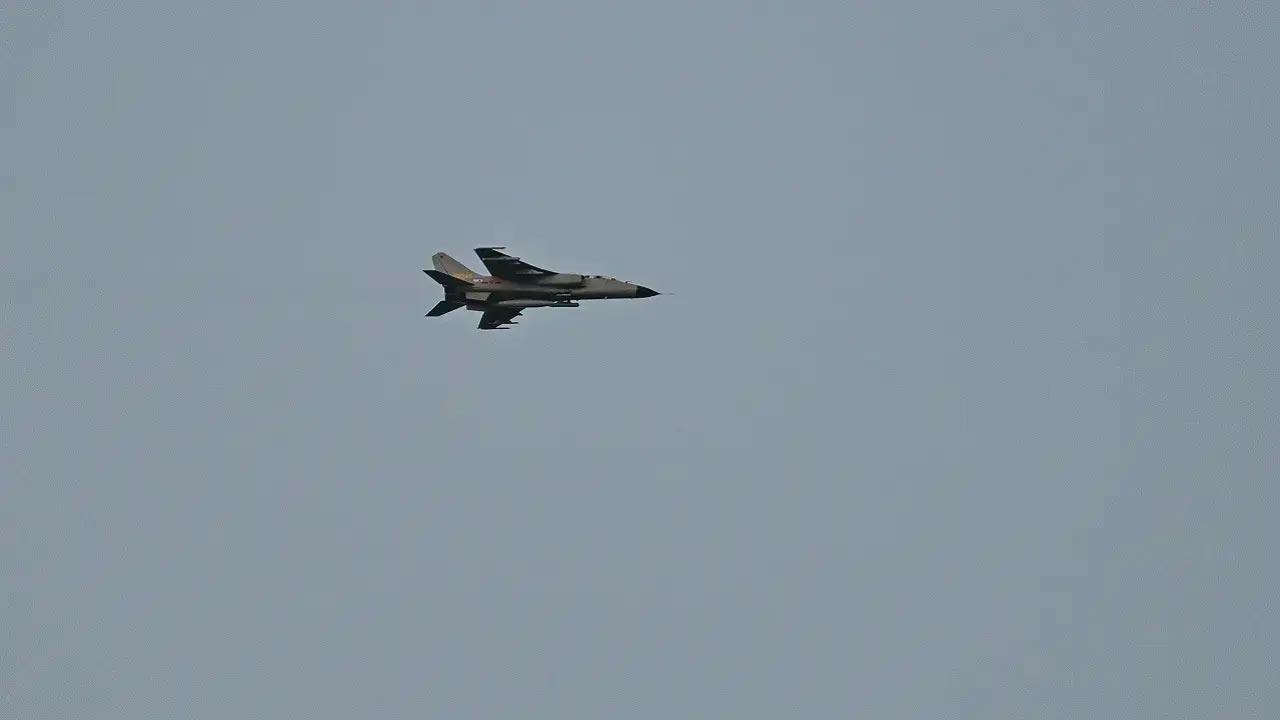
The Ministry of National Defense (MND) of Taiwan reported on ‘X’ that 9 sorties of PLA aircraft and 6 PLAN vessels were detected operating around Taiwan up until 6 a.m. (UTC+8) today. Out of these 9 sorties, 2 crossed the median line and entered Taiwan’s northern Air Defense Identification Zone (ADIZ). The ROC Armed Forces have been actively monitoring the situation and have responded accordingly.

Earlier on Saturday, Taiwan recorded similar activity, with 10 PLA aircraft and 7 PLAN vessels operating near the island. The MND noted that 5 out of those 10 aircraft sorties crossed the median line and entered Taiwan’s northern ADIZ. The official ‘X’ post stated: “10 PLA aircraft and 7 PLAN vessels operating around Taiwan were detected up until 6 a.m. (UTC+8) today. 5 out of 10 sorties crossed the median line and entered Taiwan’s northern ADIZ. ROC Armed Forces have monitored the situation and responded accordingly.”

This recent surge in military activity comes amid warnings from defense experts regarding China’s newly unveiled weapon systems. These systems are reportedly designed to counter Taiwan’s long-standing asymmetric warfare strategy.

According to the Defence and Security Biweekly published by the Institute for National Defence and Security Research (INDSR), assistant research fellow Sheu Jyh-shyang highlighted that Taiwan has invested heavily for decades in asymmetric warfare. This defense strategy relies on low-cost, highly effective systems intended to deter Beijing from launching a large-scale invasion.

The frequent incursions and maritime operations exemplify rising tensions between Taiwan and China, a relationship long marked by geopolitical strain. Taiwan, officially known as the Republic of China (ROC), governs itself independently with its own distinct political and economic systems. However, China continues to claim Taiwan as part of its territory under the “One China” principle, insisting there is only one China with its capital in Beijing.

The roots of this dispute trace back to the end of the Chinese Civil War in 1949, when the ROC government retreated to Taiwan after the Communist Party, led by Mao Zedong, took control of mainland China.

*Disclaimer: This story has been sourced from a third-party syndicated feed/ agencies. Mid-day accepts no responsibility or liability for the dependability, trustworthiness, reliability, or data of the text. Mid-day management and mid-day.com reserve the sole right to alter, delete, or remove (without notice) content at their absolute discretion for any reason whatsoever.*
https://www.mid-day.com/news/world-news/article/taiwan-detects-presence-of-9-chinese-sorties-6-plan-vessels-around-strait-23597278

Trump plans to deploy National Guard in Illinois, governor says

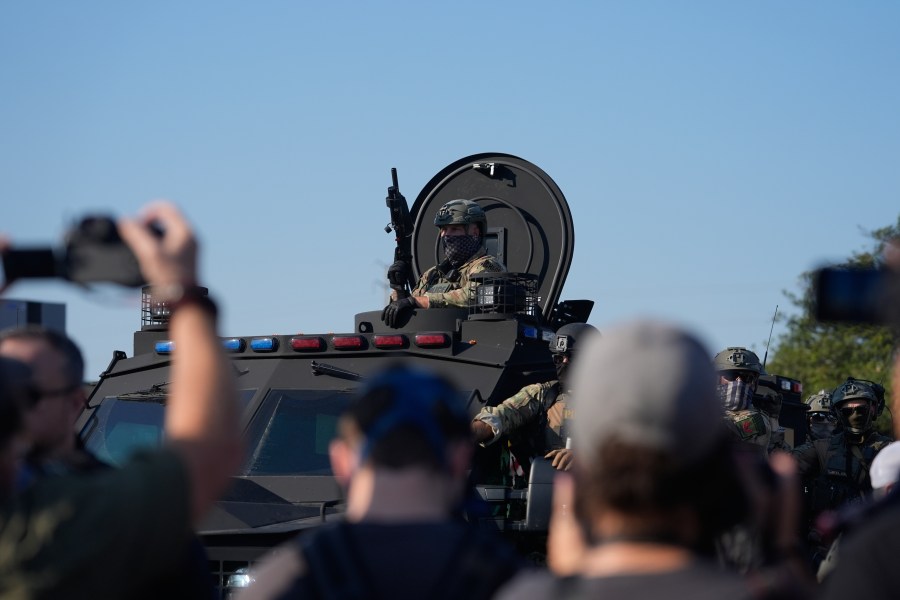
The Trump administration plans to federalize 300 members of the Illinois National Guard, Democratic Governor J.B. Pritzker said Saturday.

Pritzker stated that the Guard received word from the Pentagon earlier that morning indicating that the troops would be called up. However, he did not specify when or where they would be deployed.

President Donald Trump has long […]
https://fox2now.com/news/ap-top-headlines/ap-trump-plans-to-deploy-national-guard-in-illinois-governor-says/

Trump: ‘Hamas must move quickly’ to release hostages ‘or else’

Trump: ‘Hamas Must Move Quickly’ to Release Hostages ‘Or Else’

US President Donald Trump has urged Hamas to act swiftly in releasing hostages, emphasizing the urgency with the warning, “or else.”

In a recent address, Trump thanked Israel for holding off on continued bombing operations to give the ceasefire deal a chance to succeed. His remarks came during a speech at the UN General Assembly, where he highlighted the importance of de-escalation in the conflict.

Photo Credit: AL DRAGO/REUTERS

By Danielle Greyman-Kennard

https://www.jpost.com/israel-news/article-869387

Actualizaciones de la Global Sumud Flotilla tras la intercepción ilegal y el secuestro de voluntarios

Contacto medios:
Hasina Kathrada
Teléfono: +44 1414 620 950
Email: [email protected]
Instagram/Telegram: @globalsumudflotilla

**Mar Mediterráneo, 2 de octubre de 2025**

Después de que las fuerzas navales de ocupación israelí interceptaran ilegalmente los barcos de la Flotilla Global Sumud — un convoy pacífico y no violento que transportaba alimentos, leche en polvo, medicinas y voluntarios de 47 países hacia Gaza — cientos de participantes fueron secuestrados y llevados a bordo del gran buque militar MSC Johannesburg.

Esto ocurrió tras ser atacados con cañones de agua, rociados con agua pestilente y sufrir el bloqueo sistemático de sus comunicaciones, constituyendo nuevos actos de agresión contra civiles desarmados.

Además, varios barcos fueron detenidos por una barrera en forma de cadena en aguas internacionales, donde Israel no tiene jurisdicción, al igual que no la tiene sobre las aguas y la costa de Gaza, lo que agrava sus crímenes de guerra y el bloqueo ilegal.

Los abogados de Adalah, quienes representan a los participantes de la flotilla ante las autoridades israelíes, han recibido información mínima y desconocen si los 443 voluntarios estimados, arrancados por la fuerza de sus embarcaciones, serán trasladados a Ashdod, donde se prevé que sean sometidos a una detención ilegal.

Esto constituye un secuestro ilegal, en violación directa del derecho internacional y de los derechos humanos fundamentales.

Interceptar embarcaciones humanitarias en aguas internacionales es un crimen de guerra; negar acceso a asistencia legal y ocultar el destino de las personas detenidas agrava aún más este crimen.

Exigimos que los gobiernos, líderes mundiales e instituciones internacionales intervengan de inmediato para obtener información sobre los participantes desaparecidos, garantizar su seguridad y exigir su liberación inmediata.

Nuestro compromiso sigue siendo claro: romper el asedio ilegal de Israel y poner fin al genocidio en curso contra el pueblo palestino. Cada acto de represión contra nuestra flotilla, cada escalada de violencia en Gaza y cada intento de reprimir las acciones de solidaridad no hacen sino reforzar nuestra determinación.

El *Mikeno*, que navega bajo pabellón francés, podría haber entrado en aguas territoriales palestinas según los datos AIS, pero sigue sin contacto.

El *Marinette*, bajo pabellón polaco, sigue conectado a través de Starlink y en comunicación, con un total de seis pasajeros a bordo.

**Embarcaciones confirmadas como interceptadas ilegalmente:**
– Free Willy (pabellón polaco)
– Captain Nikos (pabellón polaco)
– Florida (pabellón polaco)
– All In (pabellón francés)
– Karma Oxygono (pabellón polaco)
– Mohammad Bhar (pabellón neerlandés)
– Jeannot (pabellón español)
– Seulle (pabellón polaco)
– Hio (pabellón polaco)
– Morgana (pabellón italiano)
– Otaria (pabellón italiano)
– Grande Blu (pabellón polaco)
– Deir Yassine (pabellón argelino)
– Huga (pabellón polaco)
– Aurora (pabellón italiano)
– Yulara (pabellón español)
– Spectre (pabellón español)
– Adara (pabellón español)
– Alma (pabellón británico)
– Sirius (pabellón británico)

**Embarcaciones que perdieron contacto hace varias horas y se presume que fueron interceptadas ilegalmente:**
[Información pendiente de actualización]

Para más información, por favor contacte a Hasina Kathrada a través de los medios indicados arriba.
https://www.workers.org/2025/10/88203/?utm_source=rss&utm_medium=rss&utm_campaign=actualizaciones-de-la-global-sumud-flotilla-tras-la-intercepcion-ilegal-y-el-secuestro-de-voluntarios

US National Guard soldier charged for attempting to send 3D-printed gun parts to al-Qaeda

US National Guard Soldier Charged for Attempting to Send 3D-Printed Gun Parts to al-Qaeda

Andrew Scott Hastings, 25, a US National Guard soldier, has been charged with attempting to send 3D-printed gun parts to an agent posing as an al-Qaeda contact, according to an announcement from the Justice Department.

Hastings allegedly shipped the 3D-printed components as part of a covert operation. The case highlights the emerging concerns over the use of advanced manufacturing technologies in illicit arms distribution.

A 3D printer creating a pistol; illustrative. (Photo credit: mendlerdaniel/Shutterstock)

By JAMES GENN

https://www.jpost.com/international/islamic-terrorism/article-869306

Trump says U.S. in ‘armed conflict’ with drug cartels after ordering strikes in the Caribbean

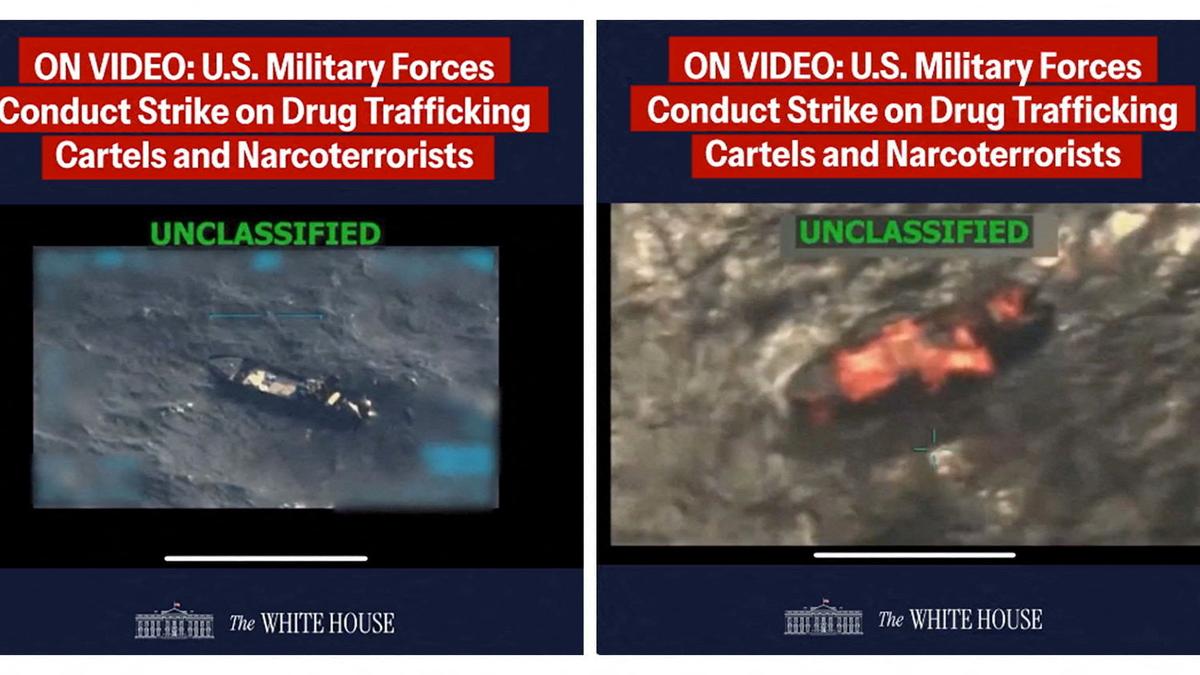
President Donald Trump has declared drug cartels to be unlawful combatants and stated that the United States is now in an “armed conflict” with them. This revelation comes from a Trump administration memo obtained by The Associated Press on Thursday, October 3, 2025, following recent U.S. strikes on boats in the Caribbean.

The memo represents an extraordinary assertion of presidential war powers, with Mr. Trump effectively declaring that drug trafficking into the United States amounts to an armed conflict requiring the use of military force. This is a new rationale for both past and future actions.

> “The President determined that the United States is in a non-international armed conflict with these designated terrorist organizations,” the memo states. Mr. Trump directed the Pentagon to “conduct operations against them pursuant to the law of armed conflict.”

The memo continues, saying, “The United States has now reached a critical point where we must use force in self-defense and defense of others against the ongoing attacks by these designated terrorist organizations.”

This development signals a potential shift not only in the administration’s willingness to exceed traditional presidential authority to wage war but also in Mr. Trump’s stated America First agenda, which typically favors non-intervention overseas. It raises serious questions about the extent to which the White House intends to use its war powers, and whether Congress will assert its authority to approve or reject such military actions.

### Declaration Follows Strikes on Boats in the Caribbean

Last month, the U.S. military carried out three deadly strikes against boats in the Caribbean accused of ferrying drugs. At least two of these operations were conducted against vessels originating from Venezuela. These strikes followed a buildup of U.S. maritime forces in the Caribbean not seen in recent history.

Though the memo did not include a timestamp, it references a September 15 U.S. strike that resulted in the destruction of the vessel, confiscation of illicit narcotics, and the deaths of approximately three unlawful combatants.

White House deputy press secretary Anna Kelly stated, “As we have said many times, the President acted in line with the law of armed conflict to protect our country from those trying to bring deadly poison to our shores. He is delivering on his promise to take on the cartels and eliminate these national security threats from murdering more Americans.”

The Pentagon referred questions to the White House. Pentagon officials briefed senators on the strikes on Wednesday, according to a person familiar with the matter who spoke under conditions of anonymity.

### Legal and Congressional Concerns

During the classified briefing at the Capitol, several senators perceived the Trump administration’s outlined legal framework as a new and controversial approach—raising significant questions about Congress’s role in authorizing such military actions.

The memo sets out the administration’s justification for past military strikes against boats in the Caribbean—actions that have raised concerns among lawmakers about their legality—and potentially legitimizes future operations.

### Details on Targeted Cartels Remain Sparse

President Trump has designated several Latin American drug cartels as foreign terrorist organizations. The administration previously justified military action as a necessary escalation to stem the flow of drugs into the United States.

However, Pentagon officials could not provide a list of the designated terrorist organizations involved in the conflict. This lack of transparency frustrated some lawmakers who were briefed on the matter.

While allied nations have made significant efforts to combat these groups, the memo states that the cartels have become transnational and conduct ongoing attacks throughout the Western Hemisphere as organized entities. It refers to cartel members as unlawful combatants.

### Bipartisan Push for Congressional Authorization

As the Republican administration targets vessels in the Caribbean, lawmakers from both major political parties have expressed objections. They have pressed Mr. Trump to seek war powers authorization from Congress for such military operations.

The first military strike, carried out on September 2 against what the Trump administration described as a drug-carrying speedboat, resulted in 11 deaths. Mr. Trump claimed the vessel was operated by the Tren de Aragua gang, which the U.S. designated as a foreign terrorist organization earlier this year.

Several senators and human rights groups have questioned the legality of these actions, calling them a potential overreach of executive authority—particularly because the military was used for law enforcement purposes.

The Trump administration has yet to explain how the military evaluated the boats’ cargo or determined the passengers’ alleged gang affiliations before conducting the strikes.

### Senator Jack Reed Reacts

Senator Jack Reed of Rhode Island, the top Democrat on the Senate Armed Services Committee, commented on the situation:

> “The drug cartels are despicable and must be dealt with by law enforcement. The Trump Administration has offered no credible legal justification, evidence, or intelligence for these strikes.”

A former Army officer who served in the 82nd Airborne Division, Reed’s criticism underscores the ongoing controversy surrounding the administration’s approach to combating drug cartels.

The unfolding situation highlights the complex balance between national security, executive authority, and legislative oversight as the U.S. grapples with transnational drug trafficking and its consequences.
https://www.thehindu.com/news/international/trump-says-us-in-armed-conflict-with-drug-cartels-after-ordering-strikes-in-the-caribbean/article70119237.ece

IDF intercepts four rockets launched from Gaza on Yom Kippur, fifth falls in open field

**IDF Intercepts Four Rockets Launched from Gaza on Yom Kippur; Fifth Falls in Open Field**

The Israel Defense Forces (IDF) reported that five rockets were launched from the Gaza Strip on Yom Kippur, with sirens sounding in Ashdod, a city in southern Israel.

According to the IDF, four of the rockets were successfully intercepted by the Iron Dome anti-missile defense system. The fifth rocket fell in an open field, causing no injuries or damage.

An Iron Dome battery was seen positioned near Ashdod, ready to defend against incoming threats.

*Photo Credit: REUTERS/AMMAR AWAD, May 13, 2023*

By JERUSALEM POST STAFF
https://www.jpost.com/israel-news/defense-news/article-869250

Japan arms warship with US missiles capable of 1,600km strikes

**Japan Arms Warship with US Missiles Capable of 1,600km Strikes**
*By Akash Pandey | Oct 01, 2025 | 05:52 pm*

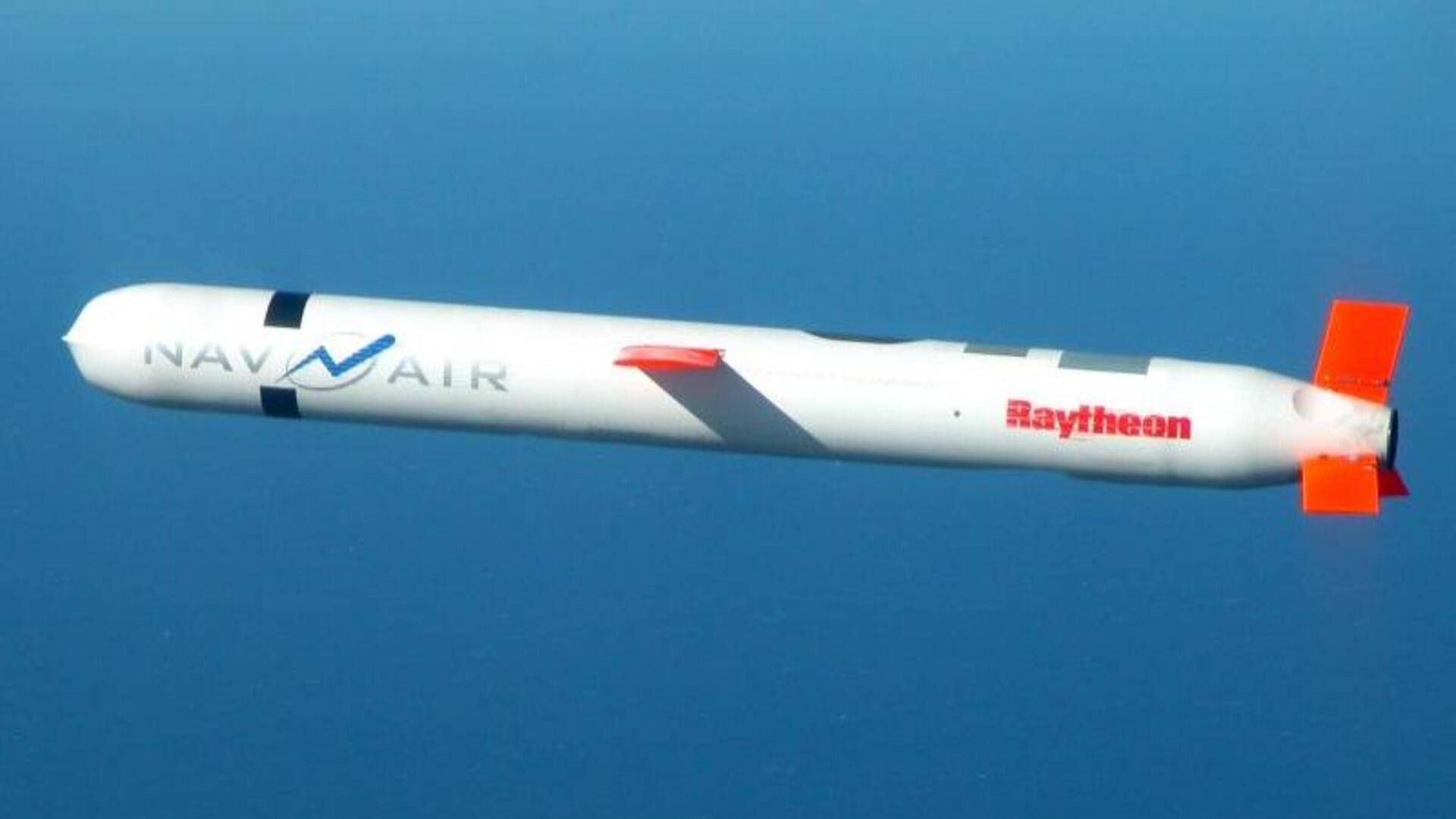
Japan is set to upgrade one of its warships with US-made Tomahawk cruise missiles amid rising military tensions in the region, particularly involving China and North Korea.

The JS Chokai, a guided-missile destroyer equipped with Aegis technology, is scheduled for a year-long deployment to the United States. During this period, the vessel will be modified and the crew trained to operate these advanced weapons systems.

### Strategic Upgrade: Extended Strike Capability

The addition of Tomahawk cruise missiles, which have a striking range of approximately 1,600 kilometers, will empower Japan to target locations deep inside China and North Korea. This upgrade is part of Tokyo’s broader strategy to boost its defense capabilities in response to escalating regional threats.

This move follows a significant deal signed between Japan and the US in early 2024, which included the acquisition of 400 Tomahawk missiles.

### Rising Regional Threats

Japan’s Defense Minister, Gen Nakatani, has described the current security environment as the “most severe and complex” since World War II. The Defense Ministry’s annual white paper, released in July, identified China’s military expansion as “the greatest strategic challenge” facing Japan today.

Minister Nakatani highlighted Beijing’s rapid enhancement of its military capabilities and intensified activities particularly around disputed territories such as the Senkaku Islands.

### Offensive or Defensive?

While Japan emphasizes the Tomahawk missile’s defensive utility, these missiles are widely regarded as offensive weapons. According to a US Navy fact sheet, Tomahawks are designed for “deep land-attack warfare.”

When Japan announced its intention to purchase the Tomahawks in 2023, China criticized the decision, claiming it violates Japan’s post-World War II pacifist constitution, which restricts the country’s military operations to purely defensive actions.

### About Tomahawk Cruise Missiles

Manufactured by Raytheon, Tomahawk cruise missiles are known for their precision strike capability from long distances, even within heavily defended enemy airspace. These versatile missiles can be launched from naval surface ships, submarines, and land-based platforms.

Tomahawks have seen combat over 2,000 times, demonstrating their proven effectiveness on the battlefield.

### Preparing for Deployment

The Japanese Defense Ministry plans to have the JS Chokai ready for “actual missions” by next summer. This timeline includes comprehensive live-fire testing and operational training to ensure full combat readiness.

Japan’s move to arm its warships with Tomahawk missiles marks a significant shift in its defense posture as regional tensions continue to mount. The strategic upgrade reflects Tokyo’s commitment to strengthening its deterrence capabilities in a challenging security environment.
https://www.newsbytesapp.com/news/world/japan-to-equip-warship-with-us-made-tomahawks-amid-china-threat/story