
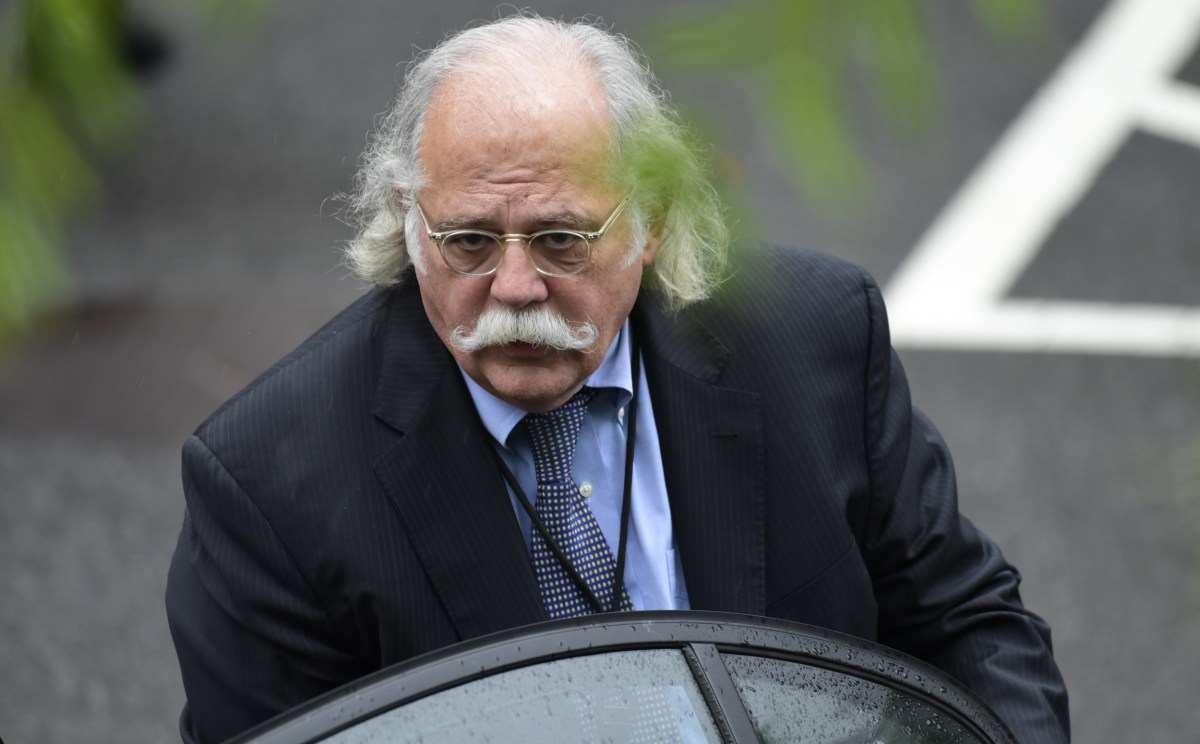
Former White House lawyer Ty Cobb has said President Donald Trump’s attacks on the judiciary seek to “weaken one of the only remaining pillars standing up to him.” Discussing the legality of strikes on alleged drug smuggling boats in the Caribbean Sea, Cobb-a senior administration lawyer in Trump’s first term-said Americans were concerned about the president’s “unprecedented” abuses of power. “The Constitution, really, is not adequate to deal with a president as evil as Trump is-somebody who desires to accumulate and abuse power,” Cobb said. Why It Matters Since early September, the United States has carried out strikes in the Caribbean and Pacific Ocean against alleged drug boats that have killed at least 83 people. According to the Trump administration, the attacks are legitimate, with Trump deploying his authority as commander in chief to take action against a “designated terrorist organization.” The U. S. has deployed the world’s largest aircraft carrier and its strike group to the Caribbean Sea as the military’s campaign on alleged drug smuggling vessels continues. The intensive military buildup is seen as a way to pressurize Venezuela’s authoritarian socialist leader, Nicolás Maduro. The U. S. has accused him of heading a drug cartel, which he denies. What To Know On Sunday, Cobb discussed the president’s actions on MS NOW’s The Weekend, “The main concern is always his resort to violence and authoritarianism.” He cited Trump’s deployment of the National Guard as an example, adding, “Never before in American history, I don’t think, have most Americans been as concerned about their president and his demented narcissism leading him toward revenge and violence. Trump’s abuses of power are unprecedented,” the attorney added, saying the administration was committing war crimes in Venezuela and Colombia. “There is a war, and we should be very concerned about it,” Cobb said. “Lawyers and judges-and, certainly, soldiers this week-should understand that they don’t have to follow illegal orders.” He said of the strikes on alleged drug boats: “There is no question under international law and domestic law that what’s going on in those countries is murder. There’s one standard-which is self-defense, imminent harm-that would allow you to kill civilians in a war or during peace time. “And keep in mind, none of these people, if they were in the United States with a million times the amount of drugs that are on those tiny boats-they would be arrested and detained and they would go to prison. They would not be killed.” Tommy Pigott, a spokesperson for the State Department, previously told Newsweek: “The U. S. is engaged in a counter-drug cartel operation to advance President Trump’s pledge to secure our border, combat narco-terrorists, and stop the flow of deadly drugs into our country. “Maduro is not the legitimate leader of Venezuela; he’s a fugitive of American justice who undermines regional security and poisons Americans.” What People Are Saying Chief Pentagon spokesperson Sean Parnell said in a statement: “Our current operations in the Caribbean are lawful under both U. S. and international law, with all actions in complete compliance with the law of armed conflict.” Venezuelan President Nicolás Maduro said in English during a meeting with labor unions in Caracas last month: “Yes peace, yes peace forever. Peace forever. No crazy war, please!” What Happens Next.
https://www.newsweek.com/cobb-constitution-not-adequate-trump-11096896
Tag Archives: administration

Justice Department says it reverses Michael Gates’ firing, will accept his resignation
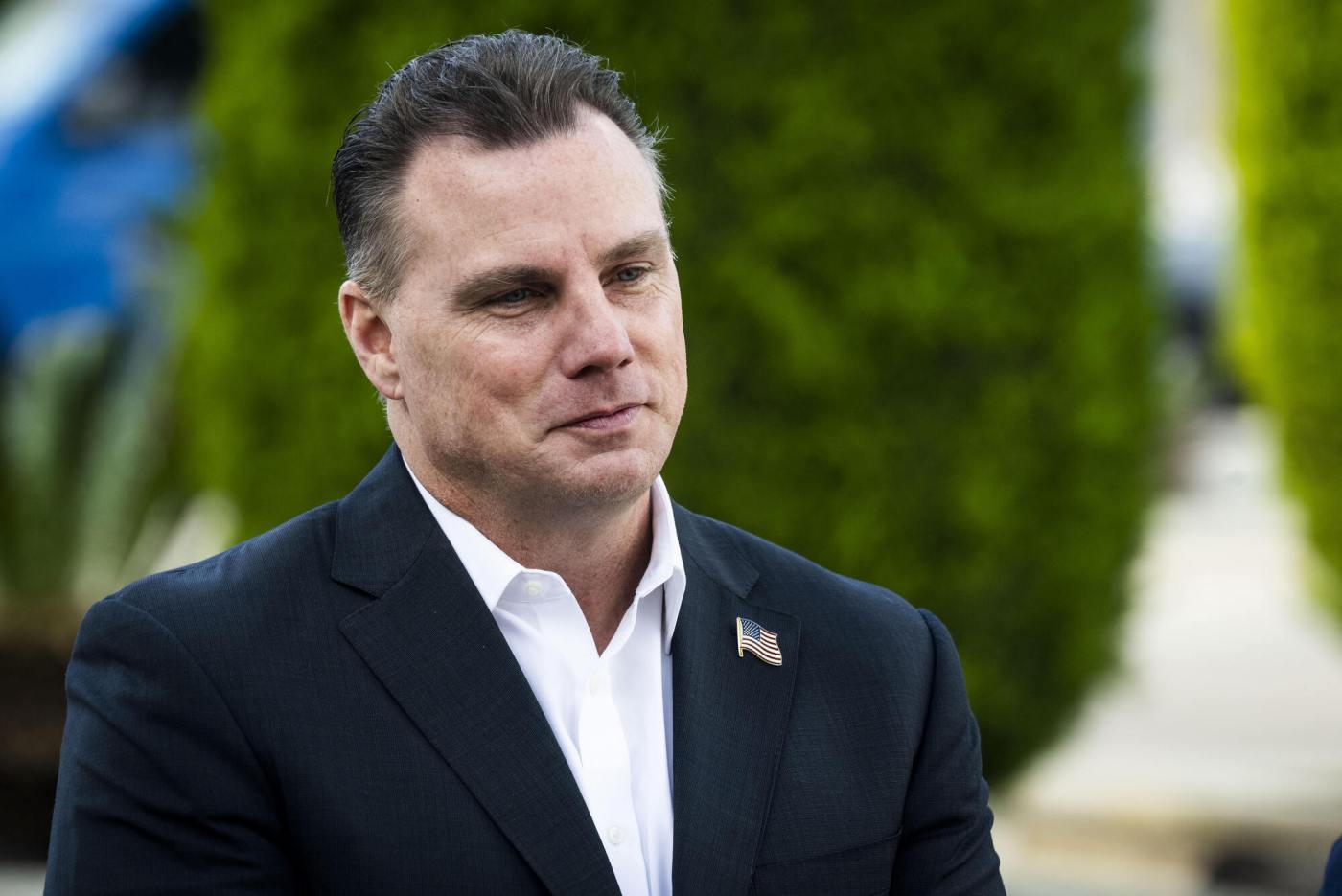
The U. S. Department of Justice said it “rescinds and will remove” records that its former deputy assistant U. S. attorney general, Michael Gates, was terminated and will instead accept his voluntary resignation. The Justice Department, in a letter to Gates dated Friday, Nov. 21, said it will update Gates’ personnel file to note that he voluntarily resigned from his position in its Civil Rights Division. Gates, the former Huntington Beach city attorney, announced on social media on Sunday, Nov. 9, that he had resigned his position in the Trump administration and was returning home to work for the city once more. He said he was “very conflicted” about leaving because the job was “the honor of a lifetime,” but the months felt like years as he missed his family and their events. But the Justice Department had said Gates was terminated from his position “for cause,” personnel records obtained through a records request showed. A Justice Department source did confirm the validity of the letter Gates received on Friday accepting his resignation. There was no further information about the change of decision. “Please accept this letter as formal notification that the Department of Justice Civil Rights Division has accepted your voluntary resignation from the position of Deputy Assistant Attorney General, effective November, 9, 2025. Accordingly, the Division rescinds and will remove from your personnel record any previous reference to your termination.” Gates had maintained that he was fired, but rather was planning to resign from the Justice Department. “They were angry I resigned, and I know this because it was well known throughout the office for months that anybody resigning would make them look bad,” Gates said in an interview last week. “When other people resigned, they were so mad. I’ve seen it with my own eyes because they thought it would make them look bad.” Gates could not immediately be reached for comment Friday evening. But in a Facebook post, Gates called the letter “total vindication.” “DOJ just sent a letter completely reversing now recognizing my resignation!” he posted. Earlier Friday, the Huntington Beach City Council met in closed session for 90 minutes, discussing the rehiring of Gates to work in the city attorney’s office. At its regular meeting on Tuesday, the council called for a special meeting to address “anticipated litigation” in two emails from Gates’ attorney, Benjamin G. Chew, regarding Gates’ employment with the city. In the resignation letter Gates had posted to social media earlier this month, it indicated his last day with the Justice Department would be Nov. 22. The Justice Department’s letter on Friday said his resignation is effective Nov. 9. Gates was elected as Huntington Beach’s city attorney in 2014 and won reelection twice more. He had said he would run for his old post again next year. But in the meantime, Gates said he has accepted the city’s offer to be “chief assistant city attorney” starting Nov. 24. He had been one of the more outspoken elected officials in Huntington Beach and the county, leading his office to fight the state on multiple local control issues, including challenging the state’s sanctuary law, fighting for the city’s voter ID law, and preventing California from mandating the coastal city to build more housing. He announced in February that he was leaving his post as Huntington Beach’s city attorney to head to the Justice Department in Washington, D. C. In his resignation letter, Gates said: “My decision to resign was not made easily but, in light of many circumstances, and after my experiences working at the Civil Rights Division in Washington, D. C., this year, I believe this is the best decision for me and my family.” Staff writer Claire Wang contributed to this report.
https://www.pasadenastarnews.com/2025/11/21/justice-department-says-it-reverses-michael-gates-firing-will-accept-his-resignation/

Keep your receipts: Tech firms told to prepare for possible tariff refunds
For months, the Trump administration has warned that semiconductor tariffs are coming soon, leaving the tech industry on pins and needles after a chaotic year of unpredictable tariff regimes collectively cost firms billions. The semiconductor tariffs are key to Donald Trump’s economic agenda, which is intended to force more manufacturing into the US by making it more expensive to import materials and products. He campaigned on axing the CHIPS Act-which provided subsidies to companies investing in manufacturing chips in the US-complaining that it was a “horrible, horrible thing” to “give hundreds of billions of dollars” away when the US could achieve the same objective by instead taxing companies and “use whatever is left over” of CHIPS funding to “reduce debt.” However, as 2025 winds down, the US president faces pressure on all sides to delay semiconductor tariffs, insiders told Reuters, and it appears that he is considering caving. According to “two people with direct knowledge of the matter and a third person briefed on the conversations,” US officials have privately told industry and government stakeholders that semiconductor tariffs will likely be delayed. A fourth insider suggested Trump was hesitant to impose tariffs that could rock the recent US-China trade truce, while Reuters noted that Trump may also be hesitant to announce new tariffs during the holiday shopping season that risk increasing prices of popular consumer tech products. Recently, Trump cut tariffs on grocery items in the face of mounting consumer backlash, so imposing new tariffs now-risking price hikes on laptops, game consoles, and smartphones-surely wouldn’t improve his record-low approval rating. Back in April, Trump started threatening semiconductor tariffs as high as 100 percent, prompting a Commerce Department probe into potential economic and national security impacts of imposing broad chip tariffs. Stakeholders were given 30 days to weigh in, and tech industry associations were quick to urge Trump to avoid imposing broad tariffs that they warned risked setting back US chip manufacturing, ruining US tech competitiveness, and hobbling innovation. The best policy would be no chip tariffs, some industry groups suggested. Glimmer of hope chip tariffs may never come Whether Trump would ever give up on imposing broad chip tariffs that he thinks will ensure that the US becomes a world-leading semiconductor hub is likely a tantalizing daydream for companies relieved by rumors that chip tariffs may be delayed. But it’s not completely improbable that he might let this one go. During Trump’s first term, he threatened tariffs on foreign cars that did not come to pass until his second term. When it comes to the semiconductor tariffs, Trump may miss his chance to act if he’s concerned about losing votes in the midterm elections. The Commerce Department’s investigation must conclude by December 27, after which Trump has 90 days to decide if he wants to move ahead with tariffs based on the findings. He could, of course, do nothing or claim to disagree with the findings and seek an alternative path to impose tariffs, but there’s a chance that his own party may add to the pressure to delay them. Trump’s low approval rating is already hurting Republicans in polls, New York Magazine reported, and some are begging Trump to join them on the campaign trail next year to avoid a midterm slump, Politico reported. For tech companies, the goal is to persuade Trump to either drop or narrowly tailor semiconductor tariffs-and hopefully eliminate the threat of tariffs on downstream products, which could force tech companies to pay double or triple taxes on imports. If they succeed, they could be heading into 2026 with more stable supply chains and even possibly with billions in tariff refunds in their pockets, if the Supreme Court deems Trump’s “emergency” “reciprocal tariffs” illegal. Gary Shapiro, CEO of the Consumer Technology Association (CTA), attended oral arguments in the SCOTUS case, noting on LinkedIn that “business executives have had to contend with over 100 announcements of tariff changes since the beginning of 2025.” “I hope to see the Supreme Court rule swiftly to provide businesses the certainty they need,” Shapiro said, arguing in a second post that tariffs “cause uncertainty for businesses, snarl supply chains, and drive inflation and higher costs for consumers.” As tech companies wait to see how the court rules and how Trump responds to the conclusion of the Commerce Department’s probe, uncertainty remains. CTA’s vice president of international trade, Ed Brzytwa, told Ars that the CTA has advised tech firms to keep their receipts and document all tariff payments. How chip tariffs could raise prices Without specifying what exactly was incorrect, a White House official disputed Reuters’ reporting that Trump may shift the timeline for announcing semiconductor tariffs, saying simply “that is not true.” A Commerce Department official said there was “no change” to report, insisting that the “administration remains committed to reshoring manufacturing that’s critical to our national and economic security.” But neither official shared any details on when tariffs might be finalized, Reuters reported. And the Commerce Department did not respond to Ars’ request to provide information on when the public could expect to review findings from their probe. In comments submitted to the Commerce Department, the Semiconductor Industry Association warned that “for every dollar that a semiconductor chip increases in price, products with embedded semiconductors will have to raise their sales price by $3 to maintain their previous margins.” That makes it easy to see how semiconductor tariffs risk significantly raising prices on any product containing a chip, depending how high the tariff rate is, including products like refrigerators, cars, video game consoles, coffee makers, smartphones, and the list goes on. It’s estimated that chip tariffs could cost the semiconductor industry more than $1 billion. However, the bigger threat to the semiconductor industry would be if the higher prices of US-made chip made it harder to compete with “companies who sell comparable chips at a lower price globally,” SIA reported. Additionally, “higher input costs from tariffs” could also “force domestic companies to divert funds away from R&D,” the group noted. US firms Trump wants to promote could rapidly lose their edge in such a scenario. Echoing SIA, the Computer and Communications Industry Association (CCIA) warned the Commerce Department that “broad tariffs would significantly increase input costs for a wide range of downstream industries, raising costs for consumers while decreasing revenues for domestic semiconductor producers, the very industry this investigation seeks to protect.” To avoid harming key US industries, CCIA recommended that any semiconductor tariffs imposed “focus narrowly” on semiconductors and semiconductor manufacturing equipment “that are critical for national defense and sourced from countries of concern.” The group also suggested creating high and low-risk categories, so that “low-risk goods, such as the import of commercial-grade printed circuit boards used in consumer electronics from key partners” wouldn’t get hit with taxes that have little to do with protecting US national security. “US long-term competitiveness in both the semiconductor industry and downstream sectors could be greatly impaired if policy interventions are not carefully calibrated,” CCIA forecasted, warning that everyone would feel the pain, from small businesses to leading AI firms. Trump’s plan for tariff funds makes no sense, groups say Trump has been claiming since April that chip tariffs are coming soon, and he continues to use them as leverage in recent deals struck with Korea and Switzerland. But so far, while some countries have managed to negotiate rates as low as 15 percent, the semiconductor industry and downstream sectors remain in the dark on what to expect if and when the day finally comes that broader tariffs are announced. Avoiding so-called tariff stacking-where products are taxed, as well as materials used in the products-is SIA’s biggest ask. The group “strongly” requested that Trump maintain “as simple of a tariff regime for semiconductors as possible,” given “the far-reaching consequences” the US could face if chip tariffs become as complex and burdensome to tech firms as reciprocal tariffs. SIA also wants Trump to consider offering more refunds, perhaps offering to pay back “duties, taxes, and fees paid on imported parts, components, and materials that are incorporated in an exported product.” Such a policy “would ensure the United States remains at the forefront of global chip technology,” SIA claimed, by making sure that tariffs collected “remain available for investments in expanding US manufacturing capacity and advanced research and development, as opposed to handed over to the US Treasury.” Rather than refunding firms, Trump has instead proposed sharing tariffs as dividends, perhaps sending $2,000 checks to low and middle-income families. However, CNN talked to experts who said the math doesn’t add up, making the prospect that Trump could send stimulus checks seem unlikely. He has also suggested the funds-which were projected to raise $158. 4 billion in total revenue in 2025, CNN reported-could be used to reduce national debt. Trump’s disdain for the CHIPS Act, casting it as a handout to tech firms, makes it seem unlikely that he’ll be motivated to refund firms or offer new incentives. Some experts doubt that he’ll make it easy for firms to get refunds of tariffs if the Supreme Court drafted such an order, or if a SCOTUS loss triggered a class action lawsuit. CTA’s Shapiro said on LinkedIn that he’s “not sure” which way the SCOTUS case will go, but he’s hoping the verdict will come before the year’s end. Like industry groups urging Trump to keep semiconductor tariffs simple, Shapiro said he hoped Trump would streamline the process for any refunds coming. In the meantime, CTA advises firms to keep all documents itemizing tariffs paid to ensure firms aren’t stiffed if Trump’s go-to tariff regimes are deemed illegal. “If plaintiffs prevail in this case, I hope to see the government keep it simple and ensure that retailers and importers get their tariff payments refunded swiftly and with as few hoops to jump through as possible,” Shapiro said.
https://arstechnica.com/tech-policy/2025/11/keep-your-receipts-tech-firms-told-to-prepare-for-possible-tariff-refunds/


What to know about expanded work requirements about to kick in for SNAP
After a disruptive U. S. government shutdown, federal SNAP food assistance is again flowing to low-income households. But in the months ahead, many participants will have to abide by new work requirements. The Supplemental Nutrition Assistance Program provides monthly benefits averaging around $190 per person to about 42 million people nationwide. During the first couple weeks of November, many of those recipients missed their regular allotments as President Donald Trump’s administration battled in court over whether to tap into reserves to fund the program while the government was shut down. Here’s what to know about SNAP: The benefits are available across the country after lapses For the first part of the month, the situation was chaotic after the federal government said SNAP would not be funded because of the government shutdown. Some states replenished the electronic benefit cards used in the program either fully or partially, using their own funds or federal dollars that were part of court orders. Others didn’t. Most states boosted food charities, but lines were long and some shelves were empty. As soon as the government reopened on Nov. 12, many states rushed to get out benefits. By Tuesday, all states either had loaded full November benefits onto people’s electronic spending cards or were working on it, according to an Associated Press review. Participants should receive December SNAP benefits according to their normal schedule. More SNAP recipients will face work requirements A massive tax and spending bill signed into law in July by Trump expanded requirements for many adult SNAP recipients to work, volunteer or participate in job training for at least 80 hours a month. Those who don’t are limited to three months of benefits in a three-year period. The work requirements previously applied to adults ages 18 through 54 who are physically and mentally able and don’t have dependents. The new law also applies those requirements to those ages 55 through 64 and to parents without children younger than 14. It repeals work exemptions for homeless individuals, veterans and young adults aging out of foster care. And it limits the ability of states to waive work requirements in areas lacking jobs. The Trump administration waived the work requirements in November, but the three-month clock on work-free SNAP benefits will be in full force for much of the country in December. Under a Nov. 1 court order, the count will not yet begin in places with existing waivers in place due to relatively high local unemployment rates. Those waivers extending past this month cover all or parts of 10 states, the District of Columbia and the U. S. Virgin Islands, and are set to expire between the end of 2025 and January 2027, depending on the place. The new requirements are expected to reduce the average monthly number of SNAP recipients by about 2. 4 million people over the next 10 years, according to the Congressional Budget Office. Agriculture secretary casts doubt about SNAP In the aftermath of the shutdown, Agriculture Secretary Brooke Rollins, whose department administers SNAP, has cast doubt on the program. Rollins has said it is rife with fraud, including deceased people receiving benefits and some people receiving multiple benefits. Rollins suggested that everyone who receives SNAP be required to reapply. But it’s not clear whether Rollins was suggesting an additional requirement or referring to the current one that mandates people to periodically recertify their income and other information. An Agriculture Department spokesperson didn’t clarify but instead said in a statement that the standard recertification processes for households is part of a plan to eliminate fraud, abuse and waste. Under federal law, most households must report their income and basic information every four to six months and be fully recertified for SNAP at least every 12 months. Full recertification can occur every 24 months for households where all adults are age 60 and above or have disabilities. But states can require more frequent eligibility verifications. Last year, 27 states required at least some households to be fully recertified every four to six months, depending on their household circumstances, according to a USDA report. ( ).
https://whdh.com/news/what-to-know-about-expanded-work-requirements-about-to-kick-in-for-snap/
The Embarrassments of Ideology Rigid ideologies like DEI, climate dogma, and anti-Trump obsession keep collapsing under their own contradictions, leaving their loudest champions looking increasingly absurd. By Victor Davis Hanson
Diversity, Equity, and Inclusion (DEI) is a euphemism for a rigid racialist theology. It deductively postulates that a large percentage of the population is oppressed by racism and sexism, mostly by white males. DEI makes no allowance for the class or wealth of the alleged victims or their supposed victimizers. So once that rigid party line is set, it cannot account for tens of millions of affluent and privileged non-white Americans or like numbers of poor and non-privileged whites. Absurdities and ridicule must then follow. One example is the spectacle of former First Lady Michelle Obama on her current book tour. Mrs. Obama cannot finish an interview without whining about the racism she allegedly encountered as the once most influential and powerful woman in the United States. According to Michelle, she was not given the exemptions that other white first ladies received. She did not get enough free stuff for the First Family. She had to hire three stylists daily to straighten her hair to meet “white” expectations-as if also Asians and Hispanics do not have straight hair, or many whites do not have hard-to-comb curly hair. Indeed, she now claims blacks cannot even swim because of white-induced pressures to maintain dry and straight hair. Because her DEI creed ignores class and wealth, Michelle has no idea how absurd she sounds. She and husband Barack Obama own three estates in addition to their former Chicago home, together valued somewhere around $40 million. Their net worth is estimated at between $70 and $100 million. They fly private, surrounded by a throng of Secret Service guardians. The more Michelle clings to the fossilized dogma of unchanging racial victimization, the more she becomes ridiculous or offensive. Trump Derangement Syndrome is another rigid ideology that deductively mandates that Trump is evil and thus must be exposed as such by any means necessary. Take the “Epstein files.” For four years, the Biden administration had no desire to release any names that appeared in the thousands of the infamous Jeffrey Epstein’s emails and text messages under its control. To the extent that Trump’s name leaked out of the files, most had agreed on the mostly innocuous circumstances of the references. There was not just a lack of evidence that Trump was ever entrapped by the spider-like Epstein’s blackmail webs. In fact, eventually, Trump ostracized Epstein well before he was convicted and jailed. Had he been compromised, the Democrats-who raided the Trump home, tried to de-ballot him, and used lawfare to drag him into five different local, state, and federal courtrooms-would have released the files in a nanosecond. So when Trump continued the prior Biden policy of keeping the files private, the left mindlessly shouted that the hated Trump must be hiding his own culpability. They shrilly demanded that he release all the files-without a second thought about the reasons why their fellow Democrats had previously kept them private. So a compliant but cagey Trump has begun releasing the trove of documents. The evidence does not reveal any new Trump bombshells. Instead, there are lots of new references to the Democrats, like the former Harvard President Larry Summers. A Democratic member of Congress, Delegate Stacey Plaskett of the U. S. Virgin Islands, is exposed in the files as a partisan, compliant tool of the predator Epstein. In her hatred of Trump, the files show Plaskett texting for live prompts from the odious Epstein as he tutors her on how best to coax a congressional witness to demonize none other than Donald Trump. Was there not a single cool Democratic head who could have seen where the party’s obsessions with Trump were headed? Similarly, Democrats embrace climate-change orthodoxy-regardless of the obvious contradictions and paradoxes that follow. Climate change religion exposes Democratic grandees like the shore-residing Obamas, the jet-setting Al Gore and John Kerry, and the multi-estate-owning Nancy Pelosi. All fly on private jets. They heat and cool with fossil fuels their various energy-guzzling huge homes-while demanding hoi polloi turn down their air conditioners or give up their diesel pickups. But even green guru billionaire Bill Gates has become conflicted and a climate apostate. Why? Wind and solar “renewables” will never supply left-wing techies like Gates the additional 100 gigawatts of electrical generation per year that they need to fulfill their lucrative artificial intelligence dreams. Nor does climate orthodoxy make allowances for vastly more U. S. oil and gas production to supply a left-wing, but energy-short Europe, or to flood the world with cheap energy to bankrupt Putin’s oil and gas exporting Russia. The problem with a party line is that it is deductive, not inductive. Ideology makes facts fit dogmas, rather than evidence leading empirically to conclusions. So inflexible cults like climate-change orthodoxy, DEI, and Trump Derangement Syndrome make their adherents look utterly ridiculous. Comments are closed.
http://www.ruthfullyyours.com/2025/11/20/the-embarrassments-of-ideology-rigid-ideologies-like-dei-climate-dogma-and-anti-trump-obsession-keep-collapsing-under-their-own-contradictions-leaving-their-loudest-champions-looking-increasingly/


PM Karki on Simara event: We take youths’ anger, dissatisfaction seriously
Kathmandu, Nov 20: Prime Minister Sushila Karki expressed sadness over the tension and violence in Simara, Bara, on Wednesday. Writing on social media, she said this kind of disorder cannot be accepted in a democracy. “I want to make it clear that this kind of chaos has no place in a democracy. We have taken the anger of young people and the political dissatisfaction they feel very seriously,” she wrote. She said there is no excuse for damaging public property, blocking airports or taking the law into one’s own hands. “We respect freedom of expression, but that does not give anyone the right to damage public property, obstruct an airport or act outside the law,” she added. She said she has directed the home administration and security agencies to maintain peace and order, ensure safe movement for leaders of all political parties, and create a fair and fear-free environment for the election. She asked them to work with restraint and full readiness. She said young people’s expectations can be met only through the democratic process. She urged all sides to stay away from unnecessary political provocation and to trust the democratic system. People’s News Monitoring Service.
https://mypeoplesreview.com/2025/11/20/pm-karki-on-simara-event-we-take-youths-anger-dissatisfaction-seriously/

Trump urges Treasury Secretary Bessent to take Federal Reserve job
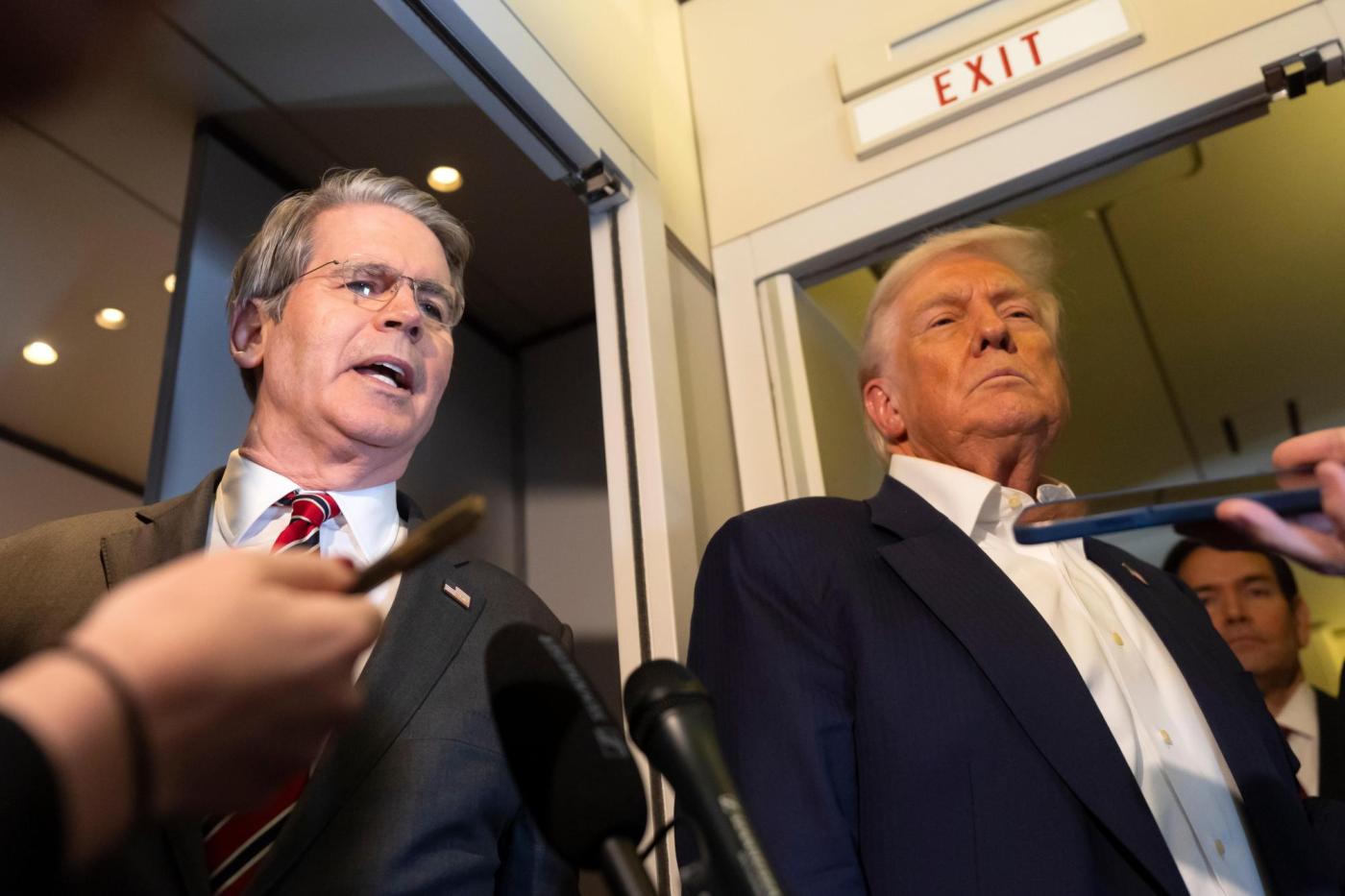
By CHRISTOPHER RUGABER and JOSH BOAK WASHINGTON (AP) For the second time in two days, President Donald Trump said Wednesday that he would like to appoint Treasury Secretary Scott Bessent to chair the Federal Reserve. Yet Bessent keeps saying he doesn’t want the job, Trump added, in comments to the U. S.-Saudi Investment Forum. “We’re thinking about him for the Fed, but he wants no part of it, he likes being secretary of the Treasury,” Trump said. “I think we’ll leave him so let’s cross your name off right, officially, right?” Trump has been sharply critical of the current Fed chair, Jerome Powell, whose term ends in May, for not cutting interest rates quickly enough. Trump’s pick as a replacement will almost certainly push for rapid interest rate cuts and likely institute wide-ranging changes in how the Fed operates. Bessent earlier this year published extensive criticisms of the Fed’s groundbreaking efforts to shore up financial markets and the economy after the 2008-2009 Great Recession and during the pandemic. Bessent is heading up the Trump administration’s search for a new Fed chair. Yet despite his protestations, he is also widely seen as a leading potential replacement for Powell. “He’s a top-tier candidate right now,” Stephen Moore, a senior economic adviser to Trump in his first term, said. Trump “wants to shake things up, so I think he wants an outsider.” Two of the five candidates Bessent has named are current Fed officials: Governors Christopher Waller and Michelle Bowman. The other three would fit the outsider criteria: Kevin Hassett, currently a top White House economic official; Kevin Warsh, a former Fed governor who has been highly critical of the Fed; and Rick Rieder, a senior managing director at asset manager BlackRock. Late Tuesday, in an interview By mid-December, “the president will meet the final three candidates and hopefully have an answer before Christmas,” Bessent said. Associated Press Writer Fatima Hussein contributed to this report.
https://www.dailydemocrat.com/2025/11/19/federal-reserve-bessent/
Trump nominates new CFPB director, but White House says agency is still closing
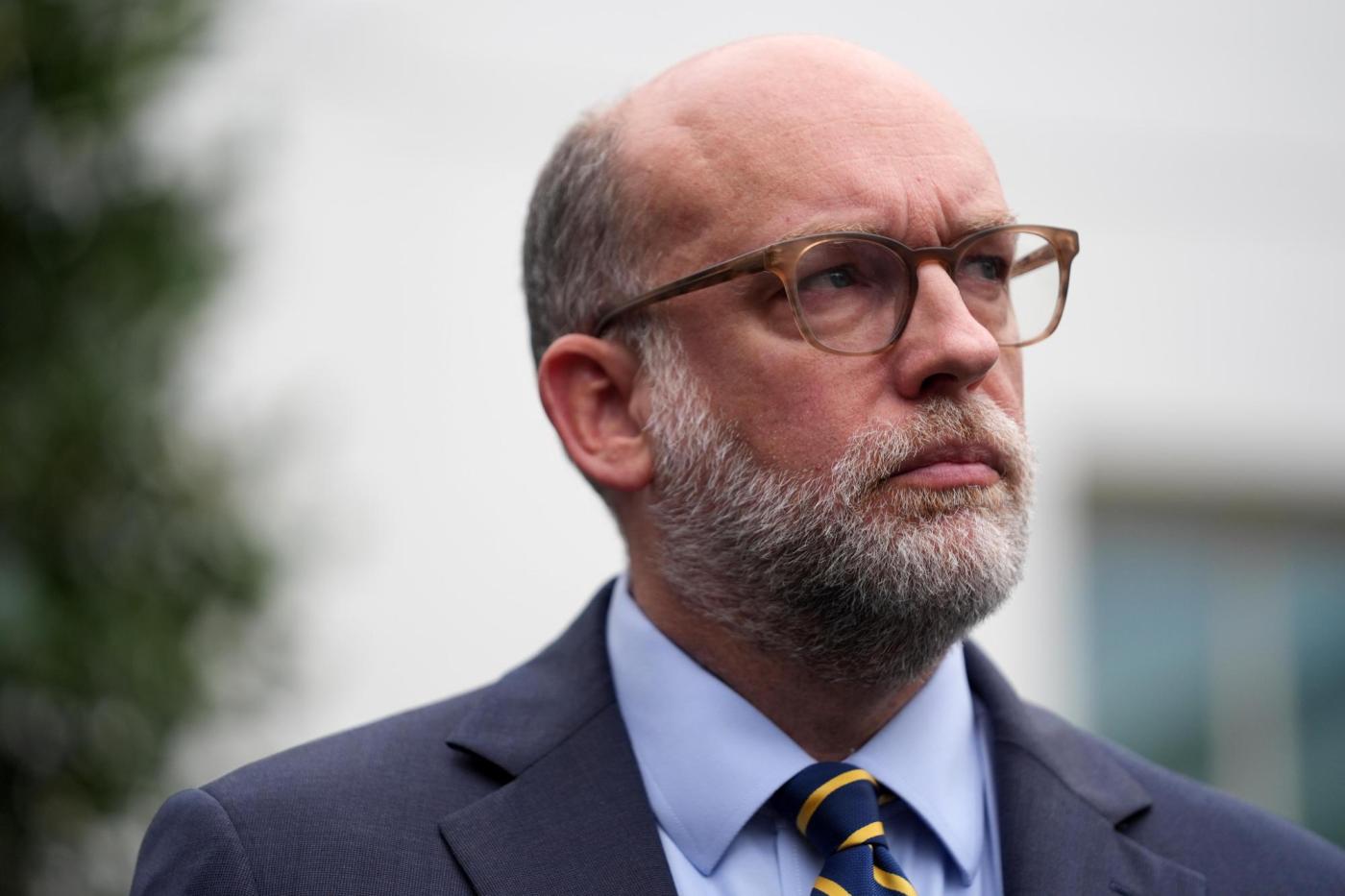
By KEN SWEET, AP Business Writer NEW YORK (AP) President Trump nominated Stuart Levenbach as the next director of the Consumer Financial Protection Bureau, using a legal maneuver to keep his budget director Russell Vought as acting director of the bureau while the Trump administration continues on its plan to shut down the consumer financial protection agency. Levenbach is currently an associate director inside the Office of Management and Budget, handling issues related to natural resources, energy, science and water issues. Levenbach’s resume shows significant experience dealing with science and natural resources issues, acting as chief of staff of the National Oceanic and Atmospheric Administration during Trump’s first term. Levenbach’s nomination is not meant to go through to confirmation, an administration official said, speaking on condition of anonymity to discuss personnel matters. Under the Vacancies Act, Vought can only act as acting director for 210 days, but now that Trump has nominated someone to the position, that clock has been suspended until the Senate approves or denies Levenbach’s confirmation as director. Vought is Levenbach’s boss. The CFPB has been nonfunctional much of the year. Many of its employees have been ordered not to work, and the only major work the bureau is doing is unwinding the regulations and rules it put into place during Trump’s first term and during the Biden administration. While in the acting director role, Vought has signaled that he wishes to dismantle, or vastly diminish, the bureau. The latest blow to the bureau came earlier this month, when the White House said it does not plan to withdraw any funds from the Federal Reserve, which is where the bureau gets its funding, to fund the bureau past Dec. 31. The White House and the Justice Department used a legal interpretation of the law that created the bureau, the Dodd-Frank Act, that the Fed must be profitable in order to fund the CFPB’s operations. Several judges have rejected this argument when it was brought up by companies, but it’s never been the position of the government until this year that the CFPB requires the Fed to be profitable to have operating funds. “Donald Trump’s sending the Senate a new nominee to lead the CFPB looks like nothing more than a front for Russ Vought to stay on as Acting Director indefinitely as he tries to illegally close down the agency,” said Sen. Elizabeth Warren, the top Democrat on the Senate Banking Committee, in a statement. The bureau was created after the 2008 financial crisis as part of the Dodd-Frank Act, a law passed to overhaul the financial system and require banks to hold more capital to avoid another financial crisis. The CFPB was created to be a independent advocate for consumers to help them avoid bad actors in the financial system.
https://www.whittierdailynews.com/2025/11/19/trump-cfpb-nomination/

Trump-ordered report that found almost no evidence to support ‘gender-affirming care’ for kids gets scientific seal of approval
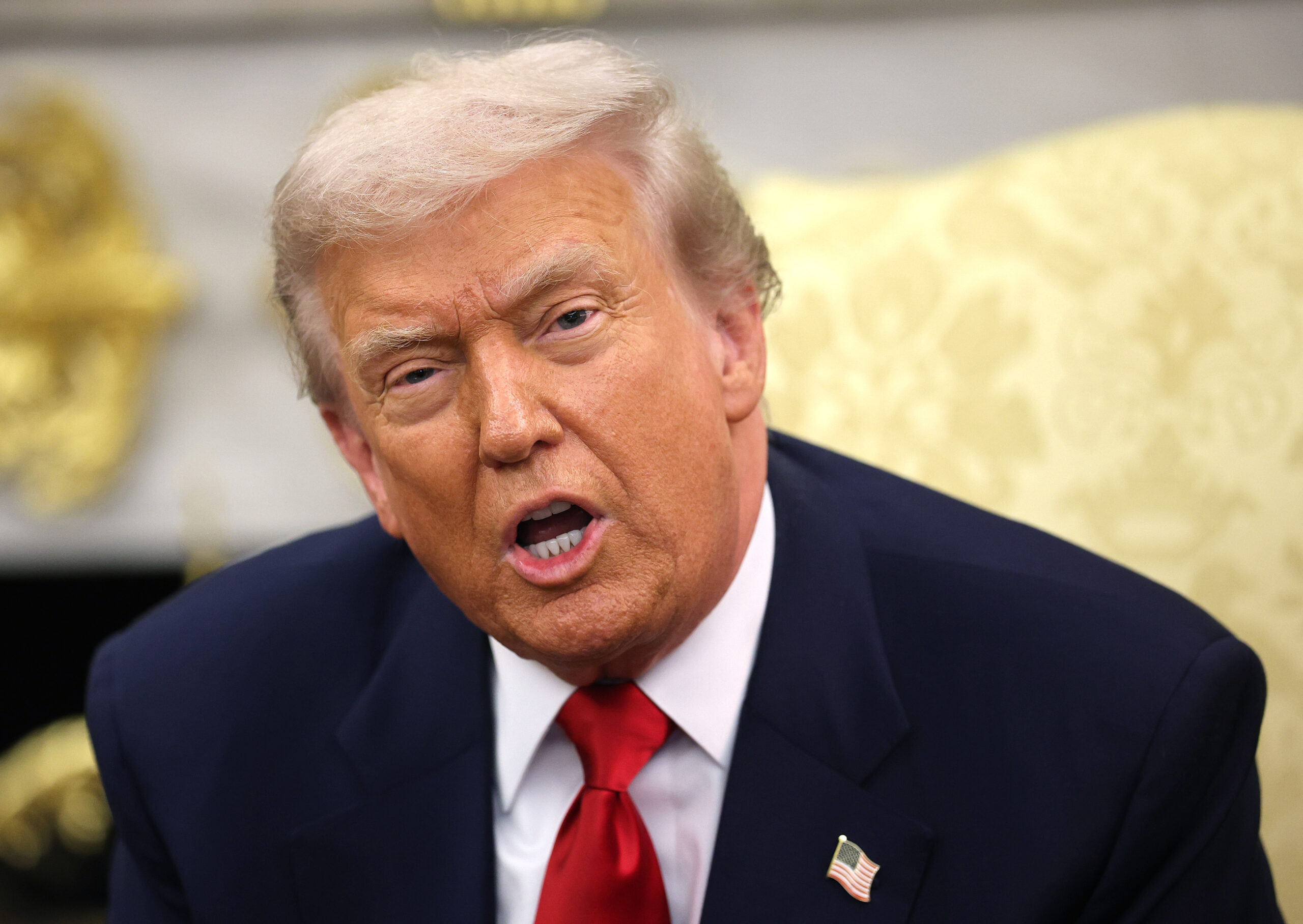
A Trump-ordered review of the scientific basis for providing “gender-affirming care” to kids which found almost no medical evidence to support hormone therapy and other treatments for minors who identify as transgender was published in its final version Wednesday after passing scientific peer review. The report was reviewed by 10 different experts and research groups and none identified major faults in the findings that US doctors should pause giving common gender dysphoria treatments until more is known about the long term effects on patients, the lead author told The Post. “They were given the chance to show mistakes, show errors. And they were not able to identify any,” said Dr. Leor Sapir, a senior fellow at the Manhattan Institute and one of the project researchers. “They had some minor comments here and there, but nothing that gets to the main findings about evidence and ethics,” he said. “So they agreed with it.” “And that includes the former president of the Endocrine Society, the very organization that has been one of the chief proponents of these interventions,” Sapir added. The report was first released in May after President Trump issued Executive Order 14187 after taking office. The order claimed that US doctors were “maiming” teens with gender-affirming treatment that “must end,” and ordered the Department of Health and Human Services (HHS) to compile an assessment of the standards of care of minors who identify as transgender. The subsequent report found that many of the studies that proponents of gender-affirming care use to back their treatments were of “very low quality,” and that little is really known about the long-term psychological and quality-of-life effects of treatment, along with how often patients regret about undertaking them. Because of that, the report recommended that the US limit the use of puberty blockers and other treatments for minors noting that the UK has banned such treatments for kids altogether. Instead, the report said, doctors should focus on psychotherapy until more is known about the effects of gender-affirming care treatments for children. The report was widely denounced by trans advocates when it was released in May with many complaining that the authors’ names had been withheld and that it was biased by the Trump administration’s open hostility toward the trans community. But Sapir noted that the report’s nine authors and their research process were “completely independent of HHS” and that most are Democrats. Including Sapir, they were Dr. Alex Byrne, a philosophy and linguistics professor at MIT; Evgenia Abbruzzese, a health care researcher at the Society for Evidence-Based Gender Medicine; Dr. Farr Curlin, a professor at the Duke University School of Medicine; and Dr. Moti Gorin, who teaches philosophy at Colorado State University. The others were Dr. Kristopher Kaliebe, a psychiatrist who teaches at the University of Southern Florida Morsani College of Medicine; Dr. Michael Laidlaw, a private practicing endocrinologist; Dr. Kathleen McDeavitt, a psychiatrist teaching at the Baylor College of Medicine; and Dr. Yuan Zhang, a researcher at the health care policy group Evidence Bridge. “We are very politically and ideologically a diverse group,” he said. “Most of the authors are liberals, Democrats. They wouldn’t vote for Trump if he forced them to. This is a bi-partisan initiative.” He added that keeping names anonymous was also standard practice in peer review processes, so that responses are not colored by preconceived notions of authors. And when the report was submitted to three organizations that had been critical so they could join the peer review process, only one responded. That group was the American Psychiatric Association, which Sapir said took no issue with the report’s ultimate findings about the lack of evidence driving gender-affirming care. Seven other experts from across the medical field participated in the peer review, too, and also found no fundamental problems. They included Dr. Richard Santen, a University of Virginia professor emeritus of endocrinology and metabolism who used to be president of the Endocrine Society which Sapir said has been one of the leading proponents of gender-affirming practices. Santen called the HHS review “scientifically sound.” Others readers were Dr. Johan Bester, an associate dean at St. Louis University School of Medicine who called the reports main findings “correct”; Karleen Gribble, a professor at the School of Nursing and Midwifery; and Dr. Lane Strathearn a professor of pediatrics, neuroscience and other fields at the University of Iowa who called the report “a valuable and much needed contribution to this important field of practice.” And none of their critiques matched the outcry from some the report faced when it was first released in May. “They can condemn the report all they want, but they were not able to identify a single mistake. Not one,” Sapir said. Exactly what the Trump administration will do with the report remains to be seen, but Sapir said he hopes that the medical community will take a step back from the culture war debate over gender-affirming care and look at the science. “Let’s reassess. At minimum, let’s allow for open debate. Let’s listen to dissenting perspectives. Let’s do rigorous analysis,” he said.
https://nypost.com/2025/11/19/us-news/trump-ordered-report-that-found-almost-no-evidence-to-support-gender-affirming-care-for-kids-gets-scientific-seal-of-approval/


It’s the cost of living, stupid: The MAGA agenda will only succeed if Americans feel material relief
Spectator World ^ | 11/17/2025 | Bridget Phetasy Posted on by SeekAndFind What’s clear is that the 2024 election was not the final boss. It didn’t destroy wokeism. You have to picture the spider in The Lord of the Rings, Shelob, crawling back into her cave after being stabbed by Samwise. Is she injured? Yes. Dead? No. She will probably be back to kill you. Republicans and pundits and podcasters will come up with all sorts of reasons for the latest losses (including blaming the Jews), but it comes down to fundamentals. Ground game. Optics. And of course, “It’s the economy, stupid!” The GOP has no ground game in part because it depends on cultural momentum, in part because many of the biggest voices in conservatism right now are more concerned with grabbing market share in the attention economy than they are about winning elections. All of this underlines the tragic loss of Charlie Kirk. It appears Charlie really was the glue holding the entire conservative movement together. He was phenomenal at mobilizing and organizing Republican “get out the vote” efforts. Charlie knew that politics was about changing hearts and minds. He also understood that the only way to win an election is to do the hard work and compete on the ground. Knock on doors. Register people to vote. Encourage them to get to the polls or mail in their ballot. Zohran Mamdani won in New York because he focused on fundamentals. He ran a great ground game. He came up with creative ways to engage voters. He knocked on doors. He relentlessly spoke to the anxiety people feel about the cost of living. It appears Trump may have overestimated his mandate, his popularity and just how far the average American is willing to go to correct some of the problems we face, such as immigration. Americans are happy with the borders being secured. But the Trump administration’s attempt to bring back deterrence by turning ICE into a dystopian reality show is wildly unpopular with independents. I don’t think the average person is cool with masked men zip-tying abuela and throwing her into an unmarked van while tasing her grandson for trying to interfere. Obama deported more people than Trump has. But he did it the way Americans like: out of sight. People are still poor (and getting poorer). AI is taking jobs. Grocery prices are high. Healthcare costs just increased astronomically. My groceries continue to go up in price. My electricity bill jumped 25 percent. Our healthcare premium went up a whopping 43 percent. All our insurances have increased in cost. Gas prices are down so that saves me about. $10 a month. In my podcasting business, I’ve also been giving work to talented freelance writers and designers who have been replaced with AI at big companies, just to help keep them afloat. Recovering investment banker and best-selling author of You Will Own Nothing, Carol Roth, has been warning everyone about the K-shaped economy for years. “A K-shaped economy describes an economy (or recovery or trend) where there is stark divergence in the experience or outcome of different groups like the visual of the letter K,” Roth says. “Part of the country is experiencing an upward economic trajectory (you can think of that as the asset holders, with portfolios, 401(k)s, homes, etc.) that have been doing great (at least on nominal terms, meaning not inflation-adjusted). Others are experiencing a downward economic trajectory, dealing with a more expensive cost of living across [many] categories, as well as job losses or underemployment and wage stagnation.” For a media genius, Trump doesn’t seem to get that optics matter. Building a gilded ballroom while the government is shut down and people are cut off from food stamps and aren’t receiving paychecks and flights are being canceled does not suggest that he cares about the struggles of the average American. I think a big problem with our K-shaped economy is that those at the top have zero idea how bad it is for those sliding down. They assume that the people whining about the fact that the average age of a first-time home buyer is 40 must just be bad with money. And lots of boomers have no empathy. Yes, young people have some bad habits, but the game is very different for them. Fielding questions from reporters and getting defensive about the economy, Trump says: “I don’t want to hear about affordability.” He doesn’t seem to understand that people can be pro-tax breaks and still think bananas are too expensive. (And thanks to his tariffs, banana prices happen to be up about 8 percent since April.) Americans will put up with a lot of crap from their leaders, but this administration should have learned from Joe Biden that we won’t put up with being gaslit about rising prices. We know. We are the ones buying things. We are the ones choosing to get this instead of that. We are the ones who go to bed with crippling financial anxiety, wondering how we are going to pay for childcare and utilities and insurance and kids’ activities and student loans. We are the ones worrying about what the future will look like for our children if it’s already this unsustainable for us. I said it before when Trump won and I’ll repeat it: if Americans don’t feel real material relief, the right-wing vibe shift will be a one-hit wonder. TOPICS: Business/Economy; Culture/Society; Government; News/Current Events KEYWORDS: affordability; bordersecurity; currencydebasement; debt; deficit; freaksversusnormals; inflation; lawandorder; maga Click here: to donate by Credit Card Or here: to donate by PayPal Or by mail to: Free Republic, LLC PO Box 9771 Fresno, CA 93794 Thank you very much and God bless you. 1 posted on by SeekAndFind To: SeekAndFind 2 posted on by Angelino97 Disclaimer: Opinions posted on Free Republic are those of the individual posters and do not necessarily represent the opinion of Free Republic or its management. All materials posted herein are protected by.
https://freerepublic.com/focus/f-news/4353322/posts