Category Archives: economy

Depending on China for rare-earths is one of our dumbest mistakes — and must be corrected PRONTO

In the 1960s, conservative intellectual James Burnham wrote a book arguing that the decline of Western civilization was a self-imposed choice. His volume, famously titled *The Suicide of the West*, desperately needs an update—one that includes an epilogue about the United States’ growing dependence on China for the mining and processing of rare earth elements. This vulnerability ranks as one of the most fantastically self-damaging strategic missteps of our time.

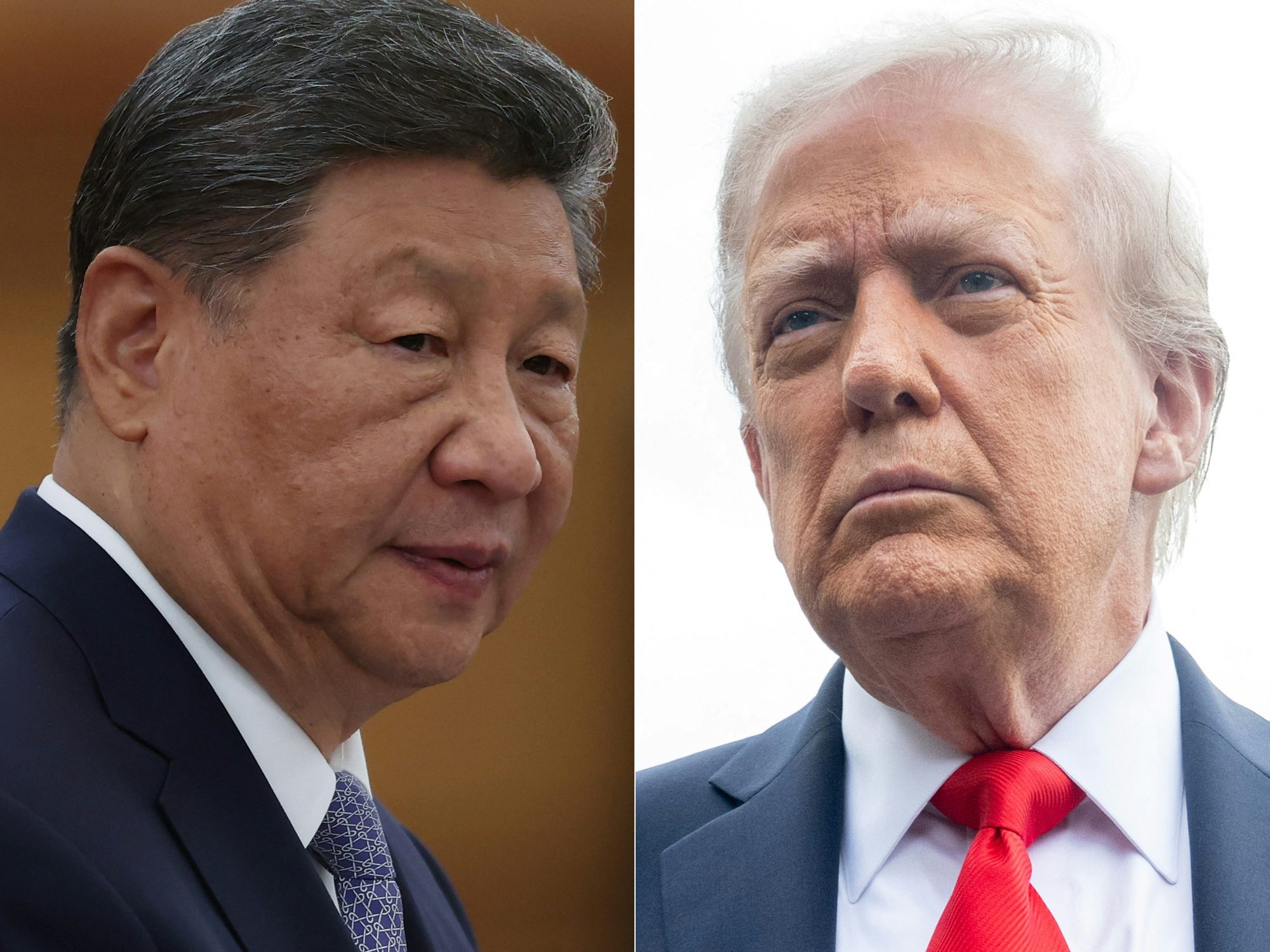
China is exploiting its advantage in trade negotiations with the United States by restricting the supply of rare earths to gain leverage. A key focus of President Donald Trump’s recent meeting with Australian Prime Minister Anthony Albanese was forging an agreement to jointly invest in critical-minerals projects. There has to be more where that came from. The United States must push on all fronts to address this truly dangerous strategic vulnerability.

Rare earth materials are crucial for manufacturing cars, smartphones, drones, medical devices, and, most importantly, high-tech weapons. For example, approximately 800 pounds of rare earths go into making a single F-35 fighter jet. Between 2019 and 2022, the Government Accountability Office reports, the United States imported more than 95% of the rare earths it consumed—and overwhelmingly from China.

It would be one thing if we relied on Norway or Canada—both allied nations with whom we have no prospect of military conflict (despite the occasional presidential joking about annexation). Instead, China, an adversary bent on surpassing the United States as a global power, is the country we are most likely to confront in a potentially ruinous war.

This scenario echoes the 1930s, when Imperial Japan imported 80% of its oil from the United States, even as it hurtled toward collision with American forces. Today, we are repeating that dynamic, except without a good reason, and playing the role of resource-starved Japan.

It’s a little like King Harold needing Norman goodwill to supply his men with shields in 1066 or Lord Nelson requiring French materials to build his ships of the line in 1798.

Not so long ago—in 1991—the United States was the biggest supplier of rare earths. Then, China undertook a concerted and highly successful effort to wrest the mining and processing of rare earths out from under us. It handed out tax rebates to boost production, bought a key U.S. rare-earths business, and shipped its equipment to China. Over time, it squeezed out the U.S. rare-earths industry and has maneuvered to maintain its dominance ever since.

This is industrial policy as highly consequential geopolitics.

There is no alternative but to respond in kind, which the Trump administration, to its credit, is now undertaking. According to Treasury Secretary Scott Bessent, the administration will establish a price floor for the domestic rare-earths industry. The Defense Department has taken an equity stake in our largest rare-earths miner, with more such moves anticipated.

Public-private cooperation, akin to what characterized Trump’s Operation Warp Speed, is necessary, along with the relaxation of permitting and environmental restrictions. It will take years to make up lost ground, but with enough resources and staying power, this problem is solvable.

Friendly countries have ample supplies of rare earths. The bigger challenge is processing—the sector where China holds an almost complete monopoly. Processing requires specialized know-how and considerable time to build facilities. Still, this is not a technical or logistical challenge on the scale of, say, the Manhattan Project.

Of all the elements of our post–Cold War vacation from history—when defense spending, geography, and supply chains were no longer considered paramount—the outsourcing of the rare-earths industry to China was the most improvident.

If nothing else, China’s recent use of rare earths as a weapon in trade disputes is a cautionary signal of what could come during a more momentous conflict. We can’t say we weren’t warned.

X: @RichLowry
https://nypost.com/2025/10/20/opinion/depending-on-china-for-rare-earths-is-one-a-dumb-mistake-we-must-correct-pronto/

Florida’s housing market was skewed wildly by the pandemic. It’s finally coming to grips with a ‘realistic middle ground’

Florida’s housing market was one of the hottest during the pandemic, driven by the state’s appeal to remote workers, retirees, and investors relocating from high-cost states like New York and California. These buyers were seeking more space, lower taxes, and lenient COVID restrictions. Between March 2020 and June 2022, home prices in Florida surged by a remarkable 51%.

Demand remained high during this period, which kept inventory levels low. However, Florida’s inventory is now dwindling for a very different reason. Experts say the decline isn’t due to renewed demand, but rather rampant delistings and fewer new listings. According to Zillow data, home prices have dropped about 5.4% year over year.

“Low prices and low demand are making people who aren’t in a hurry simply withdraw listings rather than sell at a low price,” explained Alexei Morgado, a Florida real estate agent and founder of real-estate exam prep company Lexawise, in an interview with Fortune. “Inventory is down, but not because of big sales, but rather because of delistings and slow demand. So it’s all a mixed bag.”

Data from Realtor.com in August highlights this trend. Some parts of Florida saw nearly 60 homes delisted for every 100 newly listed homes. Miami had the highest delisting-to-listing ratio at about 59, followed by Tampa at 33 and Orlando at 28.

Overall, the number of single-family homes for sale in Florida fell from more than 100,000 in the spring to about 96,000 after years of rapid growth, according to Simonsen, founder and president of real-estate analytics firm Altos Research.

This downward trend is a signal that the market is “clearing out” would-be sellers, said Jenna Stauffer, a Florida-based real-estate broker and global real estate advisor for Sotheby’s International Realty. According to Stauffer, those who needed to sell have most likely already done so, even if it meant lowering prices or offering concessions.

Stauffer describes the current pullback as “healthy” because it helps reset home prices and balances supply and demand. “It also shows that sellers are becoming more in tune with market conditions,” she added.

### Is the Florida Housing Market Crashing or Correcting?

While experts acknowledge the major changes occurring in Florida’s housing market, they insist these shifts are not indicative of a crash—a swift and severe decline in prices driven by an imbalance of supply and demand. Instead, the trend of declining inventory reflects a market correction.

“Higher inventory had been putting downward pressure on prices and giving buyers the upper hand,” Stauffer explained. “Buyers had so many options, no urgency, and plenty of time to negotiate.”

Now that inventory is tightening, the market dynamic could start to shift. Buyers may lose some of the leverage they previously held, while sellers could regain “a little” power.

Stauffer emphasized, “It’s not a crash in Florida, but a reset. Sellers have to recognize that this is a different market than a few years ago. Demand isn’t the same and supply isn’t the same. It’s forcing everyone to a more realistic middle ground.”

### What Does This Mean for Buyers and Sellers?

Alexei Morgado advises caution for sellers in the current market. “It may not be the best time to sell your home in Florida,” he said, “but it could be the right time to buy.”

“If you must sell, of course, go ahead,” Morgado added. “But if you can wait, wait. And for buyers: You can get a good price, with lower rates and discounts, so take advantage of that now.”

As Florida’s housing market continues to evolve, understanding these shifts can help both buyers and sellers make informed decisions in an ever-changing landscape.
https://fortune.com/2025/10/20/florida-housing-market-correction-inventory-home-prices-delisting-inventory/

SEC chair Atkins prioritizes innovation in crypto rulemaking

**SEC’s Evolving Approach to Crypto Regulation: From Enforcement to Innovation**

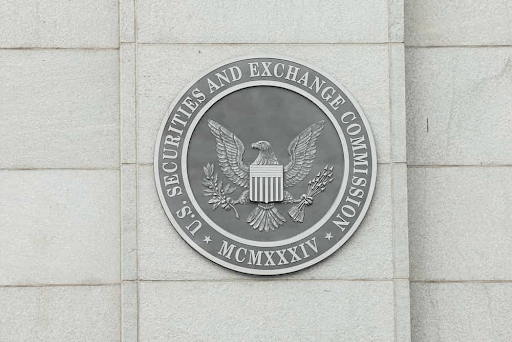
Enforcement and crackdowns have long characterized the U.S. Securities and Exchange Commission’s (SEC) stance on cryptocurrencies and other digital assets. After years of standoffs, the agency’s new willingness to engage with the crypto industry could mark the start of a genuine experiment in regulatory change.

### A New Priority: Crypto and Tokenization

SEC Chair Paul Atkins has designated crypto and tokenization as the agency’s “job one” priority, signaling a shift toward a pro-innovation stance. This marks a departure from the agency’s previous approach under former Chair Gary Gensler, who primarily relied on enforcement actions. Under Atkins, the SEC appears to be asking a different question: how to let innovation thrive while maintaining effective oversight.

### Gensler-Led SEC: Enforcement as Policy

Gary Gensler treated most cryptocurrencies as “securities” and centered his regulatory strategy on aggressive enforcement and litigation. During his tenure, the SEC filed over 125 crypto-related enforcement actions, achieving substantial monetary settlements.

– Approximately 64% of these actions alleged unregistered securities offerings rather than fraud.
– About 37% of these actions were unanimously approved by the SEC Commissioners.

Between late 2020 and 2024, the SEC initiated lawsuits against several high-profile crypto firms, including Ripple (December 2020), Bittrex (April 2023), Coinbase (June 2023), Binance (June 2023), and Kraken (November 2023). These lawsuits primarily alleged violations such as unregistered securities offerings and operating unlicensed exchanges.

Ripple’s Chief Legal Officer, Stuart Alderoty, criticized Gensler’s approach, asserting that he “prejudged crypto” and pursued lawsuits against firms “without investigation,” which stifled the industry’s growth in the U.S.

The enforcement-heavy environment prompted some crypto businesses to exit the market. Even firms registered with the SEC faced challenges staying afloat under such strict regulations.

### Atkins-Led SEC: Innovation as Strategy

Following Gensler’s departure in January 2025, Acting Chairman Mark T. Uyeda announced the creation of the Crypto Task Force led by Commissioner Hester Peirce. This task force aimed to adopt a more balanced approach to cryptocurrency and digital assets, moving beyond a sole focus on enforcement.

A significant policy shift occurred in January 2025 when the SEC rescinded Staff Accounting Bulletin (SAB) 121. This move eased barriers for financial institutions offering crypto custodial services.

Since taking office in April 2025, Chair Paul Atkins has guided the SEC toward withdrawing or pausing select crypto lawsuits. In July 2025, the agency launched Project Crypto, an initiative aimed at “modernizing the securities rules and regulations” to enable U.S. financial markets to operate on-chain.

At DC Fintech Week on October 15, Atkins emphasized the goal of building a future-proof crypto framework “to actually attract people back into the United States who may have fled.” By jokingly dubbing the SEC a “Securities and Innovation Commission” during the Forum, he signaled the agency’s innovation-friendly agenda.

### Looking Ahead

Ultimately, the SEC under Atkins plans to initiate rulemaking around its “innovation exemption” vision by the end of 2025 or early 2026, depending on developments related to the ongoing U.S. government shutdown. This evolving approach suggests a new era where regulation and innovation might coexist more harmoniously in the crypto landscape.
https://bitcoinethereumnews.com/crypto/sec-chair-atkins-prioritizes-innovation-in-crypto-rulemaking/?utm_source=rss&utm_medium=rss&utm_campaign=sec-chair-atkins-prioritizes-innovation-in-crypto-rulemaking

Weekend Crypto Meltdown: What Happened and Why

**Historic $19 Billion Crypto Liquidation Rocks Markets Over Weekend of October 10-11, 2025**

Over the weekend of October 10-11, 2025, the cryptocurrency market faced its biggest liquidation event in history. Approximately US$19 billion worth of leveraged trading positions were wiped out within just 24 hours, impacting over 1.6 million traders worldwide.

To put this into perspective, this crash ranks alongside previous infamous events such as the COVID-19 market crash of March 2020 and the FTX collapse. This is a significant moment in crypto history — one that we’ll still be discussing years from now. So, let’s unpack what happened over that turbulent weekend so you can keep up with your crypto mates.

### What Does Liquidation Mean?

Before diving deeper, it’s important to note that in the UK, leverage tied to cryptoassets is not permitted. This explanation focuses on what traders abroad—particularly in the USA—are doing that affects Bitcoin’s price globally.

Imagine a USA-based investor wants to buy Bitcoin because they believe its price will rise. They have $100 of their own money but seek to buy more Bitcoin than that would normally allow. They use a crypto trading platform offering loans and borrow $900 more, enabling them to purchase $1,000 worth of Bitcoin. This is called **10x leverage** — controlling ten times more money than they actually own.

The platform agrees, but with a crucial condition:
*“If Bitcoin’s price starts dropping, we’ll automatically sell the investor’s Bitcoin before losses get too large.”*

When things go wrong and Bitcoin’s price drops by 10%, the investor’s $1,000 position is now worth only $900. Since they borrowed $900 and only had $100 of their own money, they have lost everything they invested.

The platform steps in and says:
*“We need to protect our $900. We’re selling your position right now.”*

This forced automatic sale is called a **liquidation**.

**The Result:**
– The investor loses their entire $100 — it’s completely gone.
– The platform recovers their $900 by selling the investor’s position.
– Typically, the platform doesn’t lose money.

### The Chain Reaction

Now, imagine millions of traders in similar situations with billions of dollars at stake. When the market starts dropping, it triggers a devastating chain reaction:
1. Prices begin to fall.
2. Thousands of leveraged positions hit their liquidation thresholds.
3. Platforms automatically sell assets to recover loans.
4. This massive selling pushes prices down even further.
5. More liquidations get triggered.
6. The cycle keeps snowballing downhill.

Unfortunately, the severity of such a crash means some traders can lose everything — sometimes even ending up “moving in with their weird uncle” after suffering total losses.

### What Triggered This Crash?

The immediate catalyst was geopolitical. On October 10, 2025, President Trump announced 100% tariffs on Chinese imports effective November 1, 2025, alongside export controls on critical software.

Although cryptocurrency is often considered independent of traditional finance, it behaves similarly to a high-risk tech investment. When Trump announced these massive tariffs, investors feared an escalating US-China economic conflict.

As a result:
– Investors sold risky assets such as stocks and crypto.
– They moved toward safer havens like cash, gold, and bonds.
– Crypto prices plunged sharply.
– Leveraged traders began getting liquidated.
– Liquidations accelerated price drops even more.

Markets inherently dislike uncertainty, and a trade war between the world’s two largest economies creates enormous doubt about global economic growth — exacerbating the crypto crash.

### The Scale of Destruction

– **Total liquidations:** Over US$19 billion in 24 hours
– **Traders affected:** 1,618,240 people
– **Long positions liquidated:** US$16.7 billion (bets on prices going up)
– **Bitcoin liquidations:** US$1.37 billion
– **Ethereum liquidations:** US$1.26 billion
– **Largest single trade wiped out:** US$87.53 million on one Bitcoin trade

### How Leverage Works When Things Go Right

Leverage can amplify profits — here’s a winning example for a USA-based trader:

– Using $100 of their own money and borrowing $900 (10x leverage), they buy $1,000 worth of Bitcoin.
– If Bitcoin rises 10%, their position grows to $1,100.
– After repaying the $900 loan (plus small fees), they keep $200 — doubling their initial $100 investment.

A small move in price can lead to enormous gains.

### Leverage When Things Go Wrong

But leverage cuts both ways. The more leverage you use, the faster you can get liquidated:

| Leverage | Own Money | Borrowed | Total Position | Price Drop to Liquidation | Result |
|———-|———–|———-|—————-|————————–|———————————|
| 10x | $100 | $900 | $1,000 | 10% | Lose entire $100, position liquidated |
| 5x | $100 | $400 | $500 | 20% | Lose entire $100, position liquidated |
| 2x | $100 | $100 | $200 | 50% | Lose entire $100, position liquidated |

### Who Actually Loses Money?

The trader who uses leverage loses their entire collateral — the money they put in. Most of the time, that’s the only party losing real money.

Exchanges and lending platforms generally don’t lose money because they automatically liquidate positions before losses exceed collateral. They also maintain insurance funds for extreme cases, such as rapid price crashes where selling speed can’t keep up. However, these situations are rare.

The system prioritizes protecting the lender over the trader.

### Where We Are Now

Just days before this crash, Bitcoin had been soaring, pushing past $125,000 and setting new all-time highs. The rally was fueled by strong institutional investment through ETFs in the USA and rising concerns about traditional currency devaluation.

As of Monday morning, October 13, 2025:
– Bitcoin is trading around $115,000.
– Ethereum has recovered from approximately $3,400 to about $4,100.

The market is catching its breath after the violent weekend selloff.

If confidence returns, traders may see current prices as a buying opportunity. But if bad news or trade tensions escalate, selling could continue.

There could be sideways movement or a period of relative stability as the market digests recent news. Of course, with crypto’s famous volatility, anything can happen.

### What We Have Learned

For those new to crypto volatility, this weekend taught us several key lessons:

– **Leverage trading lets traders control far more money than they actually own, but it’s extremely risky.**
– There’s potential for high rewards, but equally high risks — you have to ask yourself how much risk you can live with (or how comfortable you’d be moving in with your weird uncle).
– Even a small price drop can wipe out an entire leveraged investment.
– Despite claims of independence, crypto behaves very much like a high-risk asset tied to traditional market sentiments.
– Leverage trading is like flooring the accelerator pedal in an electric vehicle: you can take off fast, but one wrong move might mean costly crash repairs.
– What traders do overseas, especially USA-based leveraged traders, influences crypto prices worldwide — affecting all traders, even those in countries like the UK where leveraged crypto trading is banned.

**Stay informed, trade carefully, and always understand the risks before using leverage in cryptocurrency markets.**
https://blog.coinjar.com/weekend-crypto-meltdown-what-happened-and-why-2/

Legacy Automakers Tap the Brakes on EVs as Road to Mass Adoption Gets Bumpy

After years of ambitious pledges and multibillion-dollar bets on the future of electric vehicles, legacy automakers are facing a cold market reality. Consumer adoption has slowed, incentives have dried up, the political and cultural debate around EVs has grown more partisan, and Wall Street’s patience is wearing thin.

Just this week, General Motors took a $1.6 billion loss on its EV unit because it had built more production capacity than it currently needs. Earlier, Volkswagen Group idled two EV plants in Germany as sales stalled. Stellantis scrapped its target of reaching 100 percent EVs by 2030. Meanwhile, Ford delayed full-size EV truck and van programs and reallocated capital once earmarked for EVs to hybrids and gas-powered vehicles.

Despite what looks like a massive retreat from earlier EV promises, analysts say this moment reflects a recalibration, not a surrender.

Sam Abuelsamid, a longtime auto analyst and vice president of market research at Telemetry, described it as a “temporary correction” rather than a full retreat. “Electrification is the direction for the future; it’s just going to take longer to get there,” he told Observer in an email, noting that in today’s highly divisive political climate, many executives have become quieter about long-term plans, but none are completely “jumping ship.”

Consumer behavior, rather than corporate or regulatory retreat, is driving the current EV “correction,” said Stephanie Brinley, a principal automotive analyst at S&P Global Mobility. “[But] pricing, direct consumer experience and education, and concerns over infrastructure remain the hurdles to more widespread adoption.”

In fact, EV market share is still growing. From January to August, EVs accounted for 8.1 percent of the U.S. market, up from 7.7 percent during the same period last year, according to S&P Global data.

Still, EVs remain more expensive than hybrid or combustion rivals. Even Tesla, despite promising a sub-$25,000 model for more than a decade, has yet to crack the affordability barrier.

“The issues have not changed, but moving from early adopters to mainstream buyers is difficult, choppy and not as easy to predict,” Brinley said.

Abuelsamid admitted that the industry’s earlier projections that EVs would make up more than half of the U.S. market by 2030 were overly optimistic. He expects hybrids to dominate in the near future, gradually replacing internal combustion engines as the default powertrain.

For American buyers, hybrids offer what EVs have struggled to provide: no lifestyle changes and a longer range for less fuel. They’re also cheaper to produce than EVs because they use smaller batteries and require less complex software development.

Both analysts agree that automakers are navigating a long and uneven bridge toward a fully electric future, not abandoning it. What happens next will depend on breakthroughs in cost and technology, particularly in battery chemistry and cell-to-pack architectures, Abuelsamid said.

Automakers, he added, should shift focus away from high-end, high-performance EVs and collaborate to cut spending on expensive features customers don’t actually see, such as software platforms and electrical architecture.

“Even most mainstream EVs are plenty quick for everyday driving needs,” he said.

For now, automakers are balancing profitability with progress, trying to meet consumers where they are while continuing to invest in where they’ll eventually be.
https://observer.com/2025/10/legacy-automakers-tap-the-brakes-on-evs-as-road-to-mass-adoption-gets-bumpy/

Wipro GAAP EPS of $0.03 misses by $0.01, revenue of $2.56B in-line

Wipro Limited announced its Q2 earnings with a GAAP EPS of $0.03, missing analyst expectations by $0.01. The company reported revenue of $2.56 billion, which was in line with market estimates.

The results were released on October 16, 2025, at 7:10 AM ET.

**Key Highlights:**
– GAAP EPS: $0.03 (missed by $0.01)
– Revenue: $2.56 billion (in-line with expectations)

Wipro Limited (Ticker: WIT) continues to be a notable stock to watch, with recent trends and related news influencing investor sentiment.

Stay tuned for more updates and detailed analysis on Wipro’s financial performance.
https://seekingalpha.com/news/4504714-wipro-gaap-eps-of-0_03-misses-by-0_01-revenue-of-2_56b-in-line?utm_source=feed_news_all&utm_medium=referral&feed_item_type=news

ChainUp Marks 8-Year Anniversary as Institutional Demand for Crypto Infrastructure Surges

SINGAPORE, Oct. 16, 2025 /PRNewswire/ — As the digital asset industry evolves from a speculative frontier into a core pillar of global finance, ChainUp is celebrating its eighth anniversary by reaffirming its commitment to building secure, compliant infrastructure that powers this new era. This milestone highlights a strategic vision aimed at meeting the accelerating demand for institutional-grade digital asset solutions, with a clear focus on scaling in the world’s most dynamic markets.

“The demand for institutional-grade solutions is driving the next wave of global digital asset growth. This is no longer an industry of a few pioneers, but an ecosystem built for sophisticated businesses that require trust and security at their core,” said Sailor Zhong, Founder & CEO of ChainUp. “Our focus has always been on providing the essential infrastructure that builds trust in this industry, and the market’s overwhelming response validates that vision.”

**Institutional Momentum Reshaping the Market**

The broader digital asset landscape is entering a new growth phase, driven by regulated products, tokenized assets, and increased participation from traditional finance. Key indicators of this structural shift include:

– **ETF Expansion:** Global Bitcoin ETFs have surpassed US$153 billion, highlighting soaring institutional interest. This momentum is creating a powerful spillover effect into corporate treasury strategies, giving treasurers and CFOs the confidence to consider holding digital assets directly on their balance sheets. As new crypto-related exchange-traded product (ETP) approvals accelerate, digital assets are becoming a normalized component of modern financial portfolios.

– **Regulatory Clarity:** Landmark events such as the passage of the GENIUS Act, which provided crucial clarity to stablecoins, along with new frameworks streamlining spot ETF approvals, are creating a more predictable and favorable environment for digital asset adoption in major global markets.

– **Tokenization’s Ascent:** Assets Under Management (AUM) for tokenized funds have nearly quadrupled over the past year as institutions embrace on-chain liquidity. This signals a clear transition toward a financial system built on secure, digital rails.

– **Market Convergence:** Leading crypto exchanges are progressing toward a Universal Exchange (UEX) model that unites digital assets, tokenized securities, and traditional markets within a single ecosystem.

**A Strategic Roadmap for a Digital-First Future**

With institutional adoption accelerating, ChainUp is well-positioned to lead the industry’s next chapter by delivering the infrastructure required for secure, compliant, and scalable digital finance. The company’s strategic vision is based on a multi-pillar approach:

### The Foundation of Trust: Institutional Custody

The institutional digital asset custody market is experiencing unprecedented growth. This increase is driven not only by ETFs but also by a fundamental shift in how corporations manage their reserves. With over $113 billion in Bitcoin held in corporate treasuries, demand for secure, professional crypto asset management is at an all-time high.

ChainUp’s zero-incident security record over the past eight years underscores its commitment to providing the ultimate safeguard for digital assets. Utilizing advanced technologies such as multi-party computation (MPC), ChainUp’s institutional-grade custody solution serves as the essential bridge between traditional finance and the crypto economy.

### Driving Value: Real-World Assets (RWAs) Tokenization

Tokenization of real-world assets has emerged as a key trend, with the market projected to reach $10 trillion by 2030. ChainUp’s infrastructure directly addresses this growing market by offering secure, scalable models needed to unlock trillions in value.

The company’s white-label tokenization platform enables the creation, management, and secure custody of diverse assets, including tokenized private equity, commodities like gold, real estate, fine art, intellectual property, and more.

### A Regulatory Backbone: Compliance-First Infrastructure

Navigating a complex and evolving regulatory landscape remains a top priority for institutional clients. ChainUp’s infrastructure is designed to meet this challenge with modular solutions that quickly adapt to new international standards.

Complemented by a suite of compliance tools and advisory services, this approach empowers businesses to achieve regulatory clarity, mitigate legal risk, and conduct thorough due diligence and risk assessments in an increasingly regulated environment.

### Real-World Utility of Crypto: Infrastructure for the Digital Economy

The global stablecoin market is projected to exceed US$3.7 trillion by 2030, establishing stablecoins as a key driver of transactional volume. ChainUp is positioned to power this growth by providing secure infrastructure for crypto real-world utility, including next-generation payment solutions designed to seamlessly integrate digital assets into everyday transactions for both businesses and consumers.

**A New Frontier: Global Strategic Expansion**

With key markets such as North America and Europe leading in regulatory clarity and institutional adoption, they represent a central pillar of ChainUp’s expansion strategy. The company is committed to building a strong presence in these dynamic regions, leveraging recent regulatory progress to accelerate its delivery of secure, compliant infrastructure. This move aims to attract a broader client base and support ChainUp’s global scaling ambitions.

**Pioneering the Future of Digital Assets**

To celebrate its eight-year milestone, ChainUp recently hosted “The All-Time High (ATH) Night” in Singapore. The exclusive event, held ahead of the globally acclaimed TOKEN2049 conference, brought together over 400 industry leaders and partners to discuss the critical infrastructure needed for mainstream digital asset adoption.

Commenting on the industry’s maturation and ChainUp’s role, Chung Ho, Chief Operating Officer of ChainUp, said, “This is an industry moving from promise to purpose. Our focus remains on empowering our clients to drive the future of digital assets by delivering trusted, secure, and scalable solutions that turn their vision into value in every major market—from Asia to EMEA and the U.S.”

**About ChainUp**

ChainUp, founded in 2017 and headquartered in Singapore, is a leading global provider of digital asset solutions. The company empowers businesses to navigate the complexities of the evolving digital economy, serving a diverse clientele that ranges from Web3 companies to established financial institutions.

ChainUp’s comprehensive suite of solutions includes crypto exchange technology, liquidity solutions, white-label MPC wallets, KYT crypto tracing analytics, asset tokenization, crypto asset management, and Web3 infrastructure such as mining, staking, and blockchain APIs.
https://usethebitcoin.com/crypto-live-feed/chainup-marks-8-year-anniversary-as-institutional-demand-for-crypto-infrastructure-surges/

NY円、151円近辺

2025年10月16日 6:47(2025年10月16日 6:49 更新)
[有料会員限定記事]

【ニューヨーク共同】
15日のニューヨーク外国為替市場の円相場は午後5時現在、前日比77銭の円高・ドル安で、1ドル=150円99銭~151円09銭を付けました。

また、ユーロは1ユーロ=1.1642~1.1652ドル、175円となっています。

※この記事は有料会員限定です。
残り82文字をお読みいただくには、7日間無料トライアルをご利用ください。
1日37円で読み放題、年払いならさらにお得です。

クリップ機能は有料会員の方のみお使いいただけます。

【西日本新聞meとは?】

[facebookでシェアする] [twitterでシェアする] [threadsでシェアする]
https://www.nishinippon.co.jp/item/1411856/

DOF set to form group to ease investor tax, nontax concerns

MANILA, Philippines — The Department of Finance (DOF) will establish a multisectoral working group with private sector partners to address tax and nontax issues that have unsettled investors.

This initiative is part of a broader effort to improve the country’s business climate.

The move was a product of a dialogue held on October 14 between Finance Secretary Ralph Recto and various stakeholders.
https://business.inquirer.net/552757/dof-set-to-form-group-to-ease-investor-tax-nontax-concerns

Antitrust body clears City & Land, CDC merger

MANILA, Philippines — City & Land Developers Inc. has moved a step closer to its exit from the Philippine Stock Exchange (PSE) through a merger with its parent company, Cityland Development Corp. (CDC).

This development comes after securing clearance from the Philippine Competition Commission (PCC).

In a regulatory filing on Wednesday, CDC announced that the antitrust body had approved the merger, paving the way for the planned transaction.
https://business.inquirer.net/552750/antitrust-body-clears-city-land-cdc-merger